
Mattress stain removal is easier when you act carefully and avoid adding too much moisture. A fresh mark can often be treated with sensible first steps, but older stains, strong odours, widespread discolouration or moisture deep inside the mattress may need assessment by a professional mattress cleaning service. This guide explains what to do before arranging cleaning in Kuala Lumpur and which mistakes can make the condition worse.
Why mattress stains need a careful approach
A mattress is made from layers rather than one washable surface. The cover, fabric, padding and inner support materials can all react differently to liquid and cleaning products. A treatment that appears to remove a mark from the top may push moisture deeper into the mattress or leave a visible ring as it dries.
The type of stain also matters. A recent drink spill is different from an old body-fluid mark, cosmetic residue, food, ink or a stain accompanied by an unpleasant smell. Before choosing a method, consider what caused the mark, how long it has been present and whether the mattress is made from a material that requires special care.
| What to check | Why it matters |
|---|---|
| Stain type | Different residues respond differently to moisture and cleaning products. |
| Stain age | Fresh marks are generally easier to address than set-in discolouration. |
| Area affected | A small surface spot may be manageable, while widespread staining needs a broader assessment. |
| Mattress material | Foam, fabric covers and other constructions may have different moisture tolerances. |
| Odour or dampness | These signs may indicate that the problem extends below the visible surface. |
First steps for mattress stain removal
1. Remove bedding and identify the affected area
Take off sheets, protectors and other bedding so you can see the full extent of the mark. Wash removable items according to their care instructions, but do not assume that treating the bedding has solved the mattress problem. Inspect around the original spot for spreading, discolouration or dampness.
If the mattress is still wet, begin by absorbing the liquid. Use clean, dry towels and press down gently. Avoid rubbing, because friction can spread the residue through the surface fibres and make the marked area larger.
2. Blot rather than scrub
Blotting is one of the safest general first steps for a fresh spill. Place a clean towel over the area and apply steady, moderate pressure. Replace the towel as it becomes damp. Continue until no more liquid transfers easily, then allow the surface to ventilate.
Scrubbing may seem useful for a stubborn mark, but it can damage the fabric, disturb the padding and spread the stain outward. It can also create a patch that looks different from the surrounding mattress even when some of the original residue has been lifted.
3. Check the care label and test discreetly
Look for the manufacturer’s care instructions before applying any product. If the label is unavailable, use caution. Test any proposed cleaning solution on a small, less visible area first and wait to see whether the fabric changes colour or texture.
Do not mix different cleaning chemicals. Household products can react with one another, and stronger does not necessarily mean more effective. A mattress should not be saturated simply because a stain is difficult to see or remove.
Handling common types of mattress stains
Drink and water-based spills
Tea, coffee, juice and other drinks should be addressed as soon as possible. First absorb as much liquid as you can with towels. If the drink contains sugar, leaving residue behind may make the area sticky and attract more dirt. Use only a small amount of a suitable, mild cleaning solution if the care instructions permit it, and apply it to a cloth rather than pouring it directly onto the mattress.
Work from the outer edge towards the centre to reduce the risk of spreading. Follow with a lightly damp cloth to pick up residue, then blot again with a dry towel. The goal is to remove surface residue while keeping moisture controlled.
Food and greasy marks
Lift solid food particles with a spoon or blunt edge before dealing with the remaining mark. Do not press crumbs into the fabric. Greasy stains can be challenging because liquid alone may not lift the residue, while excessive rubbing can enlarge the affected area.
Use the care label as your guide and avoid applying a large amount of detergent. Any cleaning product left in the fabric can attract dirt later. If the mark remains visible after a cautious attempt, professional assessment may be more appropriate than repeatedly treating the same spot.
Body-fluid stains
For stains such as perspiration or other body-fluid marks, absorb fresh moisture promptly and avoid using hot water without checking the material and cleaning method. Heat can make some protein-based residues more difficult to remove. Keep the area as dry as possible while you decide whether further treatment is suitable.
Older or widespread marks may have travelled below the surface. In that situation, surface wiping may only change the appearance temporarily. Tell the mattress cleaning service what caused the stain, if known, and whether the mattress has previously been treated with any products.
Ink, cosmetics and coloured products
Ink, make-up, hair products and similar substances can contain pigments, oils or solvents that react differently with fabric. Avoid immediately reaching for strong household chemicals, bleach or abrasive products. These may fade the surrounding material or create a larger damaged patch.
Use a minimal, targeted approach only when the care information supports it. If the colour transfers, the fabric becomes rough or the mark spreads, stop and seek professional advice. Accurate information about the product involved can help a cleaner decide how to assess the area.
Unknown stains and unpleasant odours
An unidentified mark should be treated conservatively. Do not combine several home remedies in an attempt to discover what works. Note its location, approximate age and any associated smell. If odour remains after the surface has dried, the source may not be limited to the visible stain.
Ventilation can help a lightly damp surface dry, but it is not a substitute for cleaning when moisture has penetrated the padding. Avoid covering the mattress with sheets until it is completely dry.
Mistakes to avoid before professional cleaning
- Do not soak the mattress. Excess water can move into inner layers and may be difficult to dry fully.
- Do not scrub aggressively. Friction can spread the stain and affect the fabric or padding.
- Do not use bleach casually. It may discolour fabric and is not suitable for every mattress material.
- Do not mix chemicals. Combining products can create unwanted reactions and leave residues.
- Do not use heat without checking first. Hot water, steam or heated equipment may not suit every construction.
- Do not hide a damp mattress under bedding. Air circulation is needed while the surface dries.
- Do not assume a visible improvement means the stain is gone. Residue below the surface may still affect appearance or odour.
- Do not keep repeating failed DIY treatments. Multiple applications can build up product residue and make later assessment harder.
When to contact a mattress cleaning service
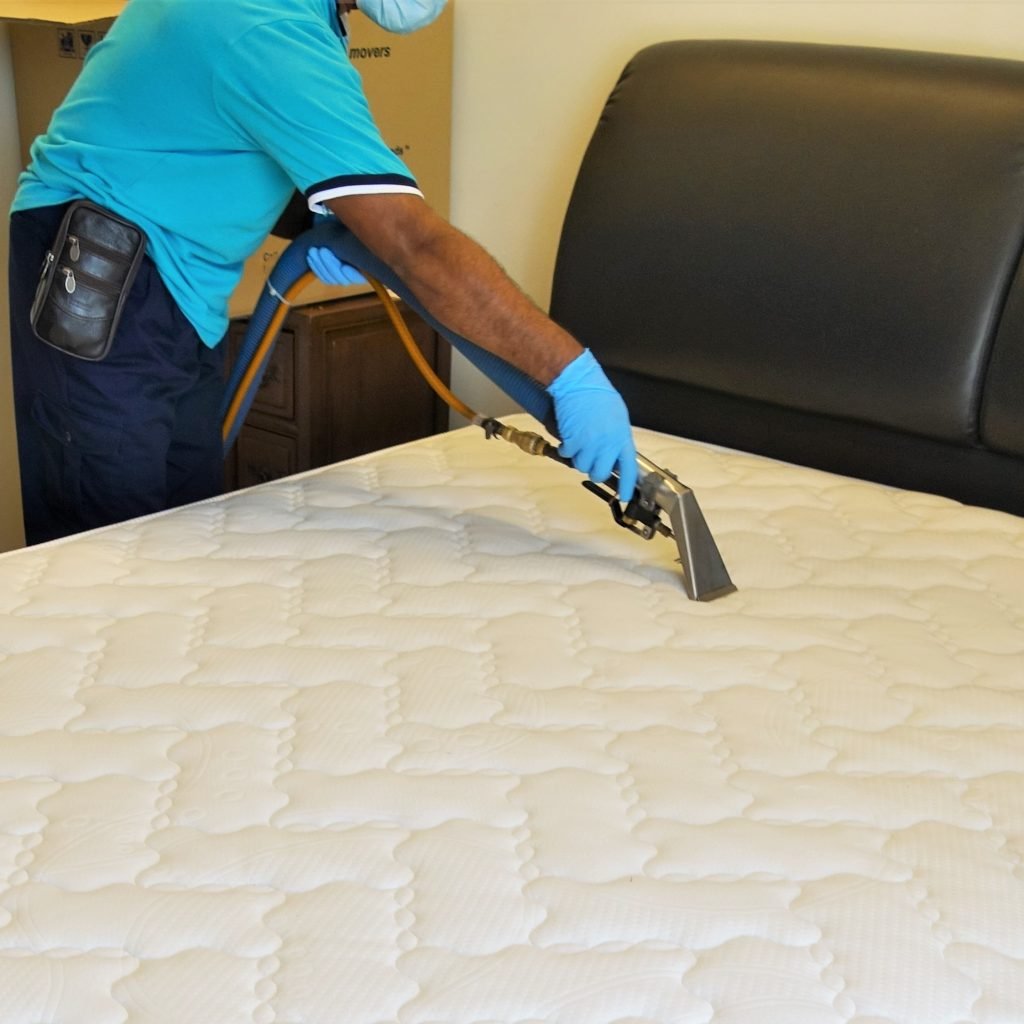
A professional mattress cleaning service may be worth considering when the stain is large, old, recurring or difficult to identify. It is also sensible to ask for an assessment when liquid has soaked deeply, an odour persists, a previous cleaning attempt left rings or the mattress has several affected areas.
Professional cleaning does not mean every mark can be removed completely. Results can depend on the stain type, the material, how long the residue has been present and whether earlier products have altered the fabric. A responsible assessment should consider the mattress condition before selecting a cleaning approach.
Signs that a surface-only treatment may not be enough
- The mark returns after drying.
- The affected area feels damp below the surface.
- An odour remains despite ventilation.
- There are several stains across different parts of the mattress.
- The fabric has changed colour or texture.
- The mattress has already been treated with multiple products.
- You are unsure which material or construction you are dealing with.
How to prepare for professional mattress cleaning
Before contacting a provider, gather useful information rather than trying several more products. Take note of the stain type, approximate date, size and location. Mention whether the mattress is foam or another construction if you know, and explain whether it is currently damp or has a persistent odour.
Remove bedding and personal items from the mattress area. Make the mattress accessible and tell the cleaner about any care-label restrictions. If you used a home treatment, describe the product and when it was applied. This information can help the provider decide whether the condition is suitable for the requested service and what precautions may be needed.
| Information to provide | Example details |
|---|---|
| Cause of stain | Coffee, food, cosmetic product, perspiration or unknown residue |
| Time since staining | Fresh, several days old or long-standing |
| Previous treatment | Blotted only, detergent used or several products applied |
| Current condition | Dry, damp, discoloured or associated with odour |
| Access and surroundings | Bedroom access, nearby furniture and any items that need protection |
What a professional assessment should consider
A suitable assessment should look beyond the stain’s colour. The cleaner may need to consider the fabric, padding, overall condition, moisture level and the possibility that the mark has penetrated deeper than expected. The appropriate cleaning method should be chosen for the mattress rather than based only on a general stain-removal recipe.
It is also useful to discuss realistic expectations before work begins. Some stains fade rather than disappear, and earlier chemical treatments can affect the final appearance. If the mattress is heavily worn, damaged or affected through several layers, cleaning may improve its condition without making it look new.
Reducing the chance of future mattress stains
Prevention starts with practical habits. Use a washable mattress protector that fits correctly, respond quickly to spills and avoid eating or drinking over an unprotected mattress. Wash bedding regularly according to its care instructions and inspect the mattress when changing sheets.
Keep the room ventilated when practical, particularly after cleaning or a spill. Do not put damp bedding back on the mattress. If a stain keeps returning in the same area, investigate the source instead of repeatedly treating the surface. A recurring problem may require a different cleaning plan or a condition assessment.
Mattress cleaning in Kuala Lumpur
Uniqcare Cleaning lists professional mattress cleaning among its deep-cleaning services for residential and commercial customers. The company serves Kuala Lumpur, Selangor, Putrajaya and Cyberjaya. If you are considering a mattress cleaning service, provide the stain details and ask for the mattress condition to be assessed before treatment.
Uniqcare Cleaning also provides other cleaning services for homes, offices and commercial spaces, including carpet, sofa and upholstery, curtain and floor cleaning. Service suitability can depend on the item and its condition, so describe the affected surface clearly when making an enquiry.
FAQ
What is the first step in mattress stain removal?
Remove the bedding, identify the affected area and blot fresh liquid with clean, dry towels. Avoid rubbing and do not pour cleaning products directly onto the mattress.
Can I scrub a mattress stain until it disappears?
Scrubbing is usually not advisable because it can spread the mark, damage fibres and push residue deeper. A controlled blotting approach is safer for an initial response.
Should I use bleach for mattress stain removal?
Do not use bleach casually. It may discolour the fabric, leave residue or be unsuitable for the mattress material. Check the care information and seek professional advice if uncertain.
When should I arrange a mattress cleaning service?
Consider professional assessment for old, large or recurring stains, persistent odours, deep moisture, multiple affected areas or a mattress that has already received several home treatments.
Can professional cleaning remove every mattress stain?
No cleaning method can guarantee the same result for every stain. The outcome depends on the material, stain type, age, depth and previous treatment. A professional should explain realistic expectations.
What should I tell a mattress cleaner before the appointment?
Share what caused the stain, how long it has been present, whether the mattress is damp or odorous and which products you have already used. Also mention any care-label restrictions you know about.


