
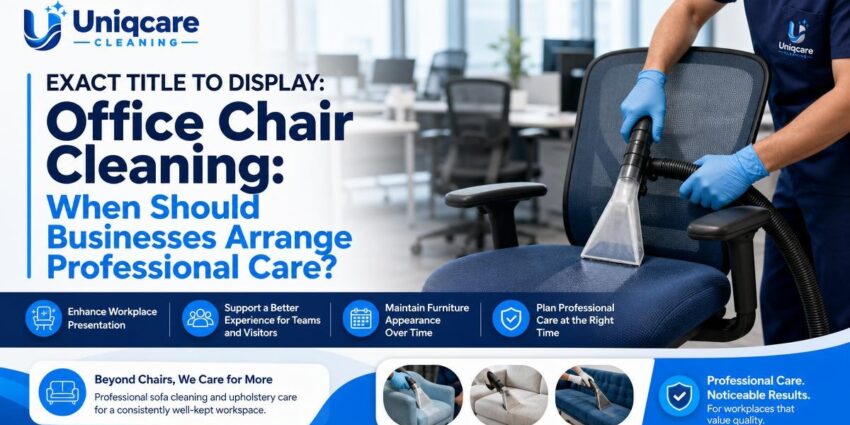
Office chair cleaning is easy to postpone because chairs rarely look as visibly dirty as carpets or floors. Yet shared fabric seating can collect dust, food marks, drink spills and everyday surface grime over time. For businesses in Kuala Lumpur, arranging professional upholstery care at the right time can help keep office furniture looking presentable and may extend the useful life of chairs without making unsupported hygiene promises.
Why office chairs need more than occasional wiping
Office chairs are used repeatedly throughout the working week. Employees may spend many hours sitting in the same chair, while meeting-room chairs, visitor seating and hot-desk furniture can be used by many different people. Contact areas such as seat cushions, armrests, backrests and headrests are therefore exposed to regular friction and handling.
A quick wipe can be suitable for some hard surfaces, but it does not provide the same approach for fabric, textured upholstery or stitched cushions. Moisture, dust and spills may settle into the material rather than remain on top. Abrasive scrubbing or using an unsuitable household product can also affect colour, texture or the finish of the upholstery.
Common signs of build-up
- Visible marks on seat cushions, armrests or backrests
- Darkened areas where people sit or rest their arms frequently
- Food and drink spills that have dried into the fabric
- Dust gathered in seams, piping and folds
- An uneven appearance between heavily used and lightly used chairs
- Furniture that looks tired even though the surrounding office is cleaned regularly
These signs do not automatically mean that a chair is beyond recovery. They do indicate that routine surface cleaning may no longer be enough and that the material should be assessed before a deeper cleaning method is selected.
When should a business arrange professional office chair cleaning?
There is no single schedule that suits every office. The right timing depends on the type of upholstery, the number of users, the amount of food and drink in the workplace, the presence of meeting or visitor seating, and the condition of the furniture. Instead of waiting for every chair to look visibly dirty, facilities teams can use a combination of regular inspections and event-based cleaning.
| Situation | Why professional care may be suitable | Planning consideration |
|---|---|---|
| Visible stains or marks | Spills and traffic marks may be difficult to remove safely with basic wiping | Arrange an assessment before stains become more established |
| Furniture refresh or office move | Existing seating can look more presentable before staff or visitors use it | Plan around access, drying and furniture availability |
| High-use shared seating | Hot desks and meeting chairs receive repeated use from different people | Inspect these items more often than low-use chairs |
| After a significant spill | Prompt attention may reduce the chance of a mark becoming more difficult to treat | Record the material and product used, if known |
| Uneven or tired appearance | Deep cleaning may improve the overall look of suitable upholstery | Ask about fabric condition and realistic results |
Before a new office opening or refurbishment
Office furniture is often moved, stored or rearranged during a relocation or refurbishment. This is a practical time to inspect chairs and other upholstered items. Cleaning them before the space is fully occupied can make scheduling easier and allows the business to address visible marks without disrupting normal work as much.
The same applies to meeting-room furniture, reception seating and breakout-area sofas. A business does not have to clean every item at once if the budget or timetable does not allow it. A phased plan can start with the most visible or heavily used furniture, followed by lower-use items.
After spills, food marks or accidental staining
Prompt action is sensible after a coffee, tea, sauce or other liquid spill, but office staff should avoid experimenting with multiple cleaning products. Blotting a fresh spill with a suitable clean material may be preferable to rubbing it deeper into the fabric, but the correct response depends on the upholstery and the substance involved.
When a mark remains, professional assessment is useful. A cleaning provider can consider the fabric, the age of the stain and the likely effect of a chosen method. Results can vary, and not every stain can be completely removed, so businesses should seek a realistic assessment rather than a blanket promise.
Hot-desking arrangements, training rooms and visitor areas can create more frequent demand on furniture than private workstations. Chairs in these areas may also be moved between rooms, increasing contact with floors, walls and other surfaces. A simple inspection checklist can help facilities teams identify which chairs need attention first.
High-use furniture does not necessarily require constant professional cleaning. However, it benefits from a planned review rather than being ignored until there is an obvious odour, heavy discolouration or a complaint about its appearance. The aim is to manage the condition of the furniture before cleaning becomes a rushed response.
Which office furniture can be included?
Office chair cleaning may involve more than standard task chairs. Depending on the material and the service assessment, businesses may also need care for visitor chairs, meeting-room seating, reception sofas, booth seating and other upholstered furniture. Treating the office as a group of related items can create a more consistent appearance.
Task chairs and ergonomic seating
Task chairs often include fabric seat cushions, mesh or upholstered backrests, plastic components and adjustable mechanisms. The cleaning approach should focus on the upholstered sections while protecting controls, electrical components and metal parts from unnecessary moisture. Chairs with complex construction should be assessed rather than saturated indiscriminately.
Meeting-room and visitor chairs
Meeting-room seating may receive concentrated use during presentations, interviews or events. Visitor chairs are also part of the first impression created by a workplace. Marks on a small number of prominent chairs can be more noticeable than general wear across a larger open-plan area, making these items a sensible priority when planning cleaning.
Office sofas and lounge furniture
Reception and breakout sofas can collect similar marks to office chairs, particularly where people eat, drink or wait. Professional sofa cleaning may be appropriate for fabric and selected leather upholstery, subject to the material and its condition. Cleaning chairs and sofas as part of the same maintenance project may help the furniture look more consistent.
What businesses should check before booking
A good preparation process reduces avoidable problems. Before requesting office upholstery cleaning, a facilities manager should gather basic information about the furniture and the access conditions. Photographs can also help communicate the condition of visible marks, although an on-site assessment may still be needed.
- Identify whether the upholstery is fabric, leather, vinyl, mesh or a combination of materials.
- Check care labels or manufacturer guidance where available.
- List the number and type of chairs involved.
- Mark areas with stains, worn fabric, loose seams or damaged padding.
- Tell the cleaning provider about previous products or treatments used.
- Confirm which rooms need access and whether furniture can be grouped together.
- Plan how the area will remain accessible while cleaned furniture is being handled.
Businesses should also distinguish cleaning from repair. A professional cleaning service may improve the appearance of suitable upholstery, but it cannot restore torn fabric, broken mechanisms, collapsed padding or permanent colour damage. Identifying these issues in advance helps the business decide whether an item should be cleaned, repaired, replaced or excluded from the project.

How professional upholstery care differs from DIY cleaning
DIY spot cleaning can be useful for minor, recent marks when the manufacturer’s instructions allow it. The difficulty begins when staff apply strong detergents, excessive water or vigorous brushing without knowing how the material will react. A small test area may not fully predict the result on an older or heavily soiled chair.
Professional cleaning involves assessing the upholstery and choosing a method suited to the material and condition. Depending on the item, this may include controlled application, agitation or extraction. The exact process should be confirmed by the service provider rather than assumed for every chair.
The most useful question is not whether every mark can be removed, but which method is suitable for this particular fabric and what result is realistic.
Why material identification matters
Different textiles absorb moisture and respond to cleaning products in different ways. Colourfastness, age, previous wear, backing material and construction can all affect the outcome. Leather and fabric also require different care, while mesh and mixed-material office chairs need attention to their separate components.
For this reason, businesses should provide accurate information and be open about the chair’s history. If the original care instructions are unavailable, the provider can still assess the visible material and condition, but uncertainty should be acknowledged before work begins.
Planning office chair cleaning with minimal disruption
Commercial cleaning should fit the way the workplace operates. Instead of removing every chair from service at once, a business may schedule work by department, floor or furniture type. This can be useful when employees need continued access to workstations and meeting rooms.
Choose a practical time
Consider quieter office periods, room availability and the time needed to handle the furniture safely. The cleaning provider can advise on access requirements and the next steps for the items being cleaned. Businesses should not assume that every chair will be ready for immediate use; drying and handling arrangements depend on the upholstery and cleaning method.
Prioritise visible and heavily used areas
A staged programme can begin with reception chairs, conference-room seating, shared hot desks and visibly marked furniture. Lower-use chairs can be reviewed during a later phase. This approach gives the facilities team a clearer picture of how the furniture responds to cleaning before expanding the programme.
Coordinate with other upholstery needs
Offices often have chairs, sofas and fabric partitions in the same environment. If multiple upholstered items require attention, ask whether they can be assessed together. Uniqcare Cleaning provides sofa and upholstery cleaning for residential and commercial clients, including selected chairs and office furniture. The company describes on-site service for sofa and curtain cleaning, while the exact arrangements for an office project should be confirmed in advance.
Office chair cleaning as part of a wider maintenance plan
Clean chairs are only one part of workplace presentation. Carpeted floors, curtains, reception sofas and other surfaces influence how an office looks and feels to employees and visitors. A maintenance plan can note the condition of each furniture group and assign different review points instead of treating the whole office as one undifferentiated space.
For example, a business might inspect task chairs and meeting seating more frequently, while scheduling deeper care for reception sofas or curtains when marks become visible. Carpet cleaning can also be considered where chair movement and foot traffic contribute to visible wear around workstations. This is a maintenance decision, not a guarantee of a particular hygiene or indoor-air result.
What to record after cleaning
- The furniture or rooms included in the service
- Visible stains and areas where results may be limited
- Any upholstery damage identified before work
- Care instructions provided for future maintenance
- Items that should be monitored or reviewed later
Keeping these notes helps the next inspection become more objective. It also prevents the business from repeating unsuitable DIY treatments or expecting a previously damaged item to look new after cleaning.
Choosing a cleaning provider for a Kuala Lumpur office
When comparing providers, look for clear communication about upholstery types, access, preparation and expected results. A suitable provider should be willing to discuss limitations instead of presenting every chair as identical. Ask whether the service covers office furniture, whether the work is carried out at the premises, and what the business needs to do before the appointment.
Uniqcare Cleaning provides professional deep-cleaning services for homes, offices and commercial spaces. Its listed services include sofa and upholstery cleaning, carpet cleaning, curtain cleaning and other cleaning work. The company serves Kuala Lumpur, Selangor, Putrajaya and Cyberjaya. Businesses can contact the provider on 019-309 7102 to discuss the furniture, location and cleaning requirements. Current operating arrangements should be confirmed before booking.
A practical decision checklist
Professional office chair cleaning is worth considering when furniture has visible marks, receives heavy shared use, forms part of a refurbishment or contributes to an office that no longer looks consistently maintained. It is less helpful to book blindly without identifying the material, the affected items and any existing damage.
- Inspect chairs, sofas and other upholstered furniture.
- Separate surface dust from stains, wear and physical damage.
- Record the material and any available care instructions.
- Prioritise reception, meeting and shared seating.
- Ask for a realistic assessment of likely results.
- Schedule the work around access and furniture use.
- Keep the cleaning advice for future maintenance.
With this approach, cleaning becomes a planned part of office upkeep rather than an emergency response. The result may be a more consistent presentation and better-informed decisions about which furniture to maintain, repair or replace.
Frequently asked questions about office chair cleaning
How often should offices arrange professional office chair cleaning?
There is no universal interval. Review chairs according to use, material, visible condition and the number of people sharing them. High-use seating may need more frequent inspection than private, lightly used chairs.
Can every office chair be professionally cleaned?
Many upholstered chairs can be assessed for cleaning, but the suitable method depends on the fabric, construction, condition and care instructions. Mesh, leather and mixed-material chairs may require different handling.
Will professional cleaning remove every stain?
No. Results depend on the stain type, age, fabric, previous treatment and condition of the chair. A provider should explain what outcome is realistic before work begins.
Should staff clean a coffee spill themselves?
Follow the manufacturer’s care guidance and avoid rubbing aggressively or applying several products. For a persistent mark, professional assessment is safer than repeated trial-and-error treatment.
Can office sofas and chairs be cleaned during the same project?
They may be assessed together, especially when a consistent appearance is desired. The provider should confirm which materials and furniture types are suitable for the planned service.
Does office chair cleaning guarantee a healthier workplace?
Cleaning can address visible dirt and marks, but it should not be presented as a medical treatment or guarantee of improved indoor air quality or health outcomes. Results vary by material and condition.


