

When a carpet is flooded, the first response can affect what happens next. Before professional flooded carpet cleaning arrives in Putrajaya, focus on safety, stop the source of water if possible, move suitable items away from the affected area and record the condition carefully. These practical steps help a cleaning team understand the incident and assess whether the carpet, underlay and surrounding floor may be salvageable.
Why a flooded carpet needs prompt attention
Water does not remain only on the visible surface of a carpet. It can travel into the backing, underlay, floor edges and nearby furnishings. A carpet may look less wet after some time while moisture remains underneath. This is one reason household fans or surface wiping alone may not resolve the problem.
The longer a carpet stays damp, the more difficult it may be to control musty odours, staining, backing damage and other signs of prolonged moisture. The outcome depends on factors such as the amount of water, how long the carpet was exposed, the water source, the carpet material and the condition of the floor below. A professional assessment is therefore more useful than assuming that every wet carpet can be treated in exactly the same way.
Identify the likely water source
Try to establish whether the water came from a clean supply leak, rainwater, an overflowing drain, a plumbing problem or another source. Do not enter or handle standing water if there may be an electrical hazard, sewage contamination or unstable flooring. If the source is still active, contact the appropriate plumber, building management or emergency service before attempting extensive cleaning.
In an office, shop or managed property in Putrajaya, notify the building manager or landlord as soon as possible. They may need to isolate utilities, inspect nearby rooms or coordinate access for contractors. Tenants should avoid making permanent changes to the carpet or flooring before documenting the condition and checking the property’s reporting requirements.
First steps before flooded carpet cleaning
- Make the area safe. Keep children, pets and unnecessary visitors away from wet flooring. Avoid electrical equipment in or near standing water unless the area has been confirmed safe.
- Stop the water source if you can do so safely. Turn off an accessible valve or report the leak to the responsible person. Do not take risks to reach a valve in a hazardous area.
- Separate clean and affected items. Move dry boxes, documents, electronics and loose furnishings away from the wet zone where possible.
- Record the incident. Take photographs and notes before moving too many items, especially if an insurer, landlord or facilities manager may need the information.
- Arrange professional advice. Provide details about the water source, affected rooms, carpet type if known and how long the carpet has been wet.
Do not pour additional water or cleaning chemicals onto the carpet to dilute marks. Floodwater can spread soil and debris, while unsuitable products may affect carpet fibres, backing or later cleaning. The immediate aim is to limit exposure and preserve useful information for assessment, not to make the carpet appear clean at any cost.
What to move and what to leave in place
Move loose items that can be handled safely
Remove small furniture, storage containers, toys, floor mats and other loose items from the wet area if they are safe to lift. Place them on a dry, protected surface. If a piece of furniture is heavy, unstable or made from a material that may have absorbed contaminated water, leave it for trained personnel or ask for instructions first.
Use caution with wooden furniture. Wet carpet can transfer moisture to legs and bases, while moving a heavy item carelessly may stretch the carpet or damage the floor underneath. Photograph the position of larger furniture before moving it so the original layout remains clear.
Protect items that cannot be moved immediately
If a heavy item must remain in place, separate it from the wet carpet only when this can be done without creating a safety risk. Avoid placing untested materials under furniture, as dyes or coatings may transfer to the carpet. A professional cleaner can advise whether an item should be raised, removed or treated as part of the assessment.
For a wall-to-wall carpet, do not pull up edges, cut sections or remove the underlay unless the property owner or a qualified professional has approved the step. Carpet installation methods vary, and unnecessary removal may create additional damage or make later restoration more difficult.
What to document after carpet flooding
Good documentation gives a clearer picture of the incident than memory alone. Take wide photographs showing the room and close photographs showing water lines, stains, soiling, lifted edges, damaged furniture and nearby walls. If possible, record the date and approximate time the flooding began, when the water was stopped and when each area was discovered.
For offices and commercial premises, also note the affected workstations, equipment, storage areas and access routes. Keep a list of items moved or discarded. If the water came from a burst pipe, roof leak or building system, retain relevant messages, maintenance reports and invoices. This information may help property managers or insurers understand the scope of the problem.
| Information to record | Why it helps |
|---|---|
| Likely water source | Helps determine the type of assessment and precautions required. |
| Rooms and approximate area affected | Gives the cleaning team a practical starting point when planning inspection and extraction. |
| Time the carpet became wet | Shows how long moisture may have remained in the carpet and underlay. |
| Photographs before and after moving items | Preserves a visual record of the original condition and any changes. |
| Carpet, rug or flooring details | Material, backing and installation can affect the recommended approach. |
| Odour, visible soil or discolouration | Highlights areas that may need closer inspection during cleaning. |
Temporary drying: useful steps and limits
Air movement may help reduce surface moisture while you wait, but only use fans, dehumidifiers or wet vacuums where the electrical setup is safe and the water is not contaminated. Open doors or windows only when outdoor conditions support drying. In a humid environment, ventilation does not always solve moisture trapped below the carpet.
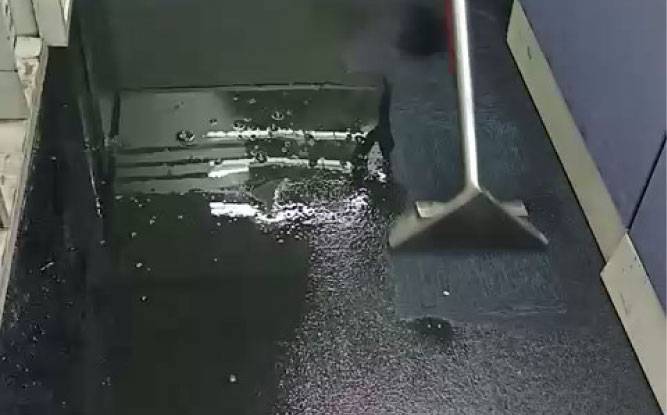
A household wet vacuum may remove some accessible water, but repeated passes do not guarantee that moisture has been extracted from the backing or underlay. Do not use a standard household vacuum on wet carpet. Also avoid high heat, open flames and improvised electrical connections. Heat or aggressive scrubbing may damage fibres, spread staining or affect adhesives.
Drying is not the same as restoration. A carpet can feel drier on top while moisture remains beneath it, so professional assessment is still worthwhile after significant flooding.
When not to attempt DIY extraction
- The water may contain sewage, chemicals, drain overflow or unknown contamination.
- Standing water is close to sockets, appliances, extension leads or electrical equipment.
- The affected area is large, deep or difficult to access.
- The carpet is fixed wall-to-wall and the underlay may also be saturated.
- There is a strong odour, visible debris or extensive soiling.
- People may slip or fall because the floor remains unstable or wet.
In these situations, isolate the area and wait for appropriate assistance. Flooded carpet cleaning is not simply a matter of applying detergent. The water source, material condition and hidden moisture all influence what should happen next.
What a professional flooded carpet cleaning assessment may cover
A professional assessment should begin with questions about the incident and an inspection of the affected carpet and surrounding area. The cleaner may need to identify the carpet construction, check how far water has travelled and consider whether the underlay or floor surface is also affected.
Uniqcare Cleaning lists flooded carpet cleaning and water-damage restoration for homes and businesses in Putrajaya and other service regions, including Kuala Lumpur, Selangor and Cyberjaya. Its listed service includes industrial water extraction, carpet cleaning and restoration, drying and optional sanitisation. The suitable combination of work depends on the condition of the affected materials and the findings at the property.
Possible stages of the work
- Inspection: Reviewing the water source, affected rooms, carpet type and visible condition.
- Water extraction: Removing accessible water with appropriate equipment to reduce the moisture load.
- Carpet cleaning: Treating soil and residues using a method suited to the carpet and its condition.
- Drying: Supporting the drying process and checking areas where moisture may remain.
- Restoration advice: Explaining what may be cleaned, what requires further attention and what may not be suitable for salvage.
- Optional sanitisation: Considering this where appropriate to the situation and requested service.
Cleaning results cannot be guaranteed in every flooded-carpet situation. Staining, odour and material damage may depend on the water source, exposure time, fibre type and condition of the backing. Ask for an assessment rather than assuming that a single treatment will resolve every visible or hidden issue.
Questions to ask when arranging help in Putrajaya
When contacting a flooded carpet cleaning provider, give a concise description of the incident. Mention whether the affected property is a home, office or commercial space, whether the water has stopped, how much carpet is wet and whether there is standing water or visible debris.
It is also sensible to ask what preparation is required, whether the team needs clear access, what parts of the carpet and underlay will be inspected, and whether drying equipment or follow-up assessment is recommended. Clear questions help avoid misunderstandings about the work that can be performed on site.
Uniqcare Cleaning can be contacted at 019-309 7102. The business lists operating hours as Monday to Saturday, 8:30 to 17:00, while its flooded carpet cleaning service information describes 24/7 emergency support. Confirm current availability and the details of the response when you make contact.
How to reduce the chance of further damage
Keep foot traffic off the wet carpet as much as possible. Walking repeatedly across it can push water into deeper layers and spread soil to adjacent areas. If a room connects to a hallway or another carpeted space, restrict movement between the affected and unaffected areas.
Remove dry paper goods and electronic equipment from nearby floors, but do not move electrical items through standing water. Keep photographs and written notes organised. If you rent the property or manage an office, report the incident promptly and follow any building, landlord or insurance instructions before disposal or major removal.
After the initial cleaning
Continue to observe the carpet, skirting boards, furniture bases and nearby flooring after the initial response. Changes in odour, staining, lifting edges or recurring dampness should be reported to the property owner or cleaning provider. Do not cover a damp carpet with rugs, plastic sheets or furniture simply to hide the appearance, as this may restrict air movement and make inspection harder.
A professional carpet cleaning company can explain whether further drying, cleaning or restoration attention is appropriate. In some cases, the carpet may be suitable for continued treatment; in others, the underlay, adhesive or floor surface may require separate consideration.
FAQ about flooded carpet cleaning in Putrajaya
What should I do first when my carpet floods?
Make the area safe, stop the water source if possible, keep people away from hazards, move loose items and document the condition. Then contact a suitable professional for assessment.
Can I use a normal vacuum to remove floodwater?
No. A standard household vacuum is not designed for water and may create an electrical hazard. Use only suitable wet-extraction equipment in safe conditions.
Should I remove a wall-to-wall carpet myself?
Usually, do not pull up or cut a fixed carpet without advice. The installation, underlay and floor beneath may need to be assessed together.
Is flooded carpet cleaning the same as ordinary carpet cleaning?
No. Flood response may involve water extraction, assessment of hidden moisture, drying and consideration of the water source before normal cleaning methods are selected.
How long can I wait before arranging professional help?
Arrange an assessment as soon as reasonably possible after the area is safe. Prompt attention may improve the chance of managing moisture and limiting further damage, although results depend on the materials and flooding conditions.
Does Uniqcare Cleaning provide flooded carpet cleaning in Putrajaya?
Yes. Uniqcare Cleaning lists flooded carpet cleaning and water-damage restoration for Putrajaya, including extraction, carpet cleaning and restoration, drying and optional sanitisation. Confirm current availability when contacting the company.
What information should I give the cleaning company?
Share the location, water source, affected rooms, approximate timing, carpet type if known, visible debris, standing-water level and any safety concerns. Photographs can also help explain the situation before the visit.