

With the right approach, you can effectively clean your sofa and make it look brand new. This guide will provide you with 10 easy steps that are simple to follow, ensuring that you tackle even the toughest stains and odors in your upholstery. Maintaining your sofa not only enhances its appearance but also contributes to a healthier living environment by removing dust and allergens. Whether you have a fabric or leather sofa, these steps will help you achieve professional-looking results without the need for expensive sofa cleaning services.
Contents
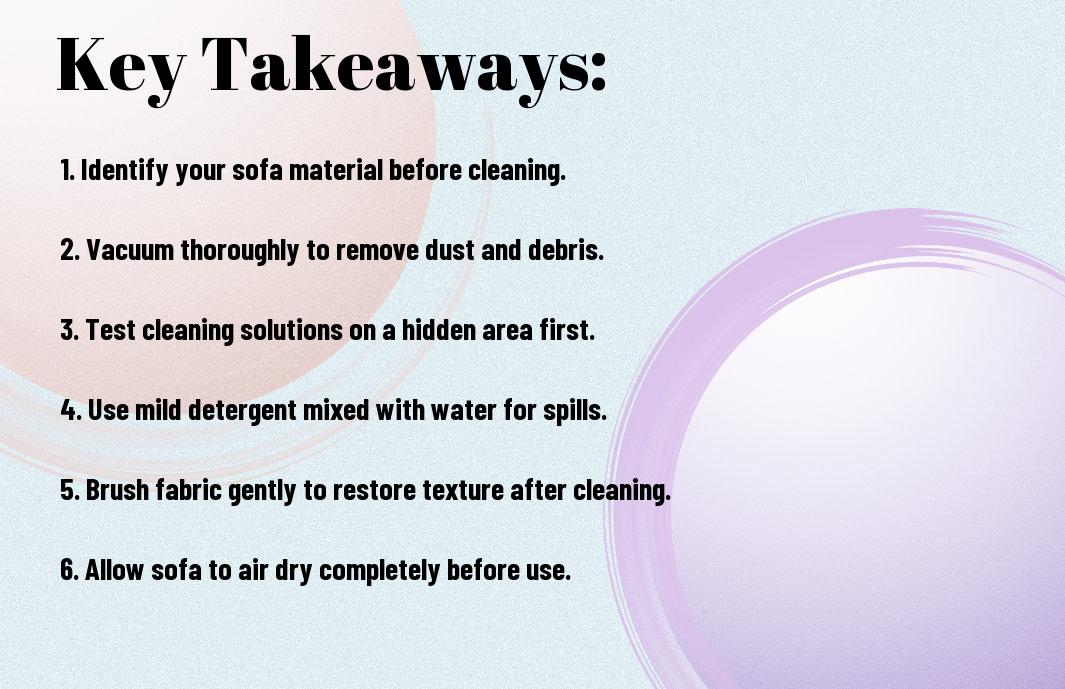
Key Takeaways:
- Identify the fabric type of your sofa to choose the appropriate cleaning method and products.
- Vacuum the sofa thoroughly to remove dust, crumbs, and pet hair before applying any cleaning solution.
- If applicable, spot clean stains immediately using a suitable cleaner or homemade solution tailored to the sofa’s material.
- Use a soft brush or cloth to gently scrub the fabric, ensuring not to damage the fibers during the cleaning process.
- Allow the sofa to dry completely before using it again to prevent mold or mildew from developing.
Understanding Your Sofa Material
The right approach to cleaning your sofa begins with understanding its material. Each type of sofa fabric has unique characteristics that can influence cleaning methods. Pay attention to materials like cotton, polyester, or microfibers, which require gentle cleaning, while others, like leather, may need specific treatments to maintain their appearance. Knowing your sofa’s material will guide you toward the best cleaning products and techniques.
Fabric Types
Against the backdrop of various fabric choices, understanding the different types can simplify your cleaning journey. Here are some common sofa fabric types:
| Cotton | Soft and absorbent, often machine-washable. |
| Polyester | Durable, stain-resistant, easy to clean. |
| Microfiber | Luxurious, repels spills, needs simple spot treatment. |
| Velvet | Soft and stylish, requires careful cleaning. |
| Canvas | Heavy-duty fabric, often washable. |
Perceiving the differences in fabric types will greatly enhance your cleaning effectiveness.
Leather vs. Fabric
Below the surface, the choice between leather and fabric can make a significant difference in maintenance and care. Leather generally requires less frequent cleaning but demands specialized products to keep it conditioned, while fabric can withstand frequent washing but may stain easier.
Your cleaning habits will be influenced by your sofa’s material choice. With leather, you benefit from its durability and easier cleanup, but you must invest in specific cleaners to preserve its finish. Fabric sofas, on the other hand, allow for greater variety but tend to be more vulnerable to stains and damage. Each option has its positive attributes and challenges; consider your lifestyle when choosing the right fit for your home.
Gathering Cleaning Supplies
You are ready to start the cleaning process, but first, you need to gather all the necessary cleaning supplies. This will not only streamline your efforts but also ensure you have everything on hand to tackle your sofa efficiently. Organizing your cleaning tools in advance will allow you to focus on making your sofa look fresh and inviting without unnecessary interruptions.
Essential Cleaning Tools
Before you start, make sure you have vital cleaning tools such as a vacuum cleaner, soft brush, microfiber cloths, and a sponge. These items are invaluable for lifting dirt and debris from your sofa’s surface and ensuring every nook and cranny is effectively cleaned.
Recommended Cleaning Solutions
To ensure your sofa is cleaned properly, you need effective cleaning solutions. Depending on the fabric type, you may consider using a gentle upholstery cleaner, a homemade solution of water and vinegar, or even a fabric-safe soap. Each option helps remove stains while being kind to your sofa’s materials.
Understanding your sofa’s material will guide you in choosing the right cleaning product. For natural fabrics like cotton or linen, a simple mixture of water and vinegar can effectively tackle stains. However, synthetic fabrics often require a commercial upholstery cleaner to properly lift dirt and grime. Always check labels for non-toxic and fabric-safe options to avoid damaging your sofa. By opting for eco-friendly solutions, you not only protect your sofa but also contribute positively to your home environment.
Clearing the Area
Now, it’s imperative to clear the area around your sofa before starting the cleaning process. This step not only allows you to have enough space to work but also ensures that cleaning products do not damage other items in your living room. Remove any items such as coffee tables, lamps, or decorative pieces from the vicinity. This will help you focus on your sofa and make the cleaning task easier and more effective.
Preparing Your Cleaning Space
After you’ve removed nearby furniture and accessories, take a moment to prepare your cleaning space. Ensure you have all cleaning supplies within reach, such as microfiber cloths, cleaning solutions, and a vacuum cleaner. Consider placing towels or a drop cloth on the floor to catch any debris or spills during the cleaning process. This preparation will help you work efficiently and avoid unnecessary mess.
Moving Furniture and Accessories
With the area cleared, it’s time to tackle any remaining furniture and accessories that may obstruct your cleaning. Make sure to carefully lift and move any items that are too heavy to avoid straining yourself or damaging your belongings.
In addition, be cautious when moving large pieces of furniture, as they can be unwieldy and may scratch your floor or walls. Use felt pads under furniture legs for safe movement and to protect your surfaces. Always lift items correctly to prevent injury, and consider asking someone for help if you feel you can’t manage alone. This thoughtful approach will ensure a smooth cleaning experience while protecting both your furniture and yourself.
Vacuuming Your Sofa
Not all cleaning methods are equal, and vacuuming your sofa is a vital first step in keeping it fresh. Make sure you are thorough in this process to remove dirt and allergens. For more tips on cleaning your fabric couch, check out How do you sanitize or clean fabric couch? : r/CleaningTips.
Techniques for Effective Vacuuming
On your journey to a cleaner sofa, start by using a vacuum with the appropriate attachments. Utilize the upholstery tool for deep cleaning and be sure to go over seams and cushions where dirt tends to accumulate. Don’t forget to adjust the suction power if your sofa has delicate fabric to avoid damage.
Removing Loose Debris
Effective vacuuming begins with eliminating loose debris from your sofa. This step is necessary for a more thorough cleaning, as it prevents dirt and dust from spreading to other areas of your home.
Sofa maintenance should include a regular vacuuming routine to remove debris like crumbs, pet hair, and dirt. Use your vacuum’s crevice tool to access hard-to-reach areas such as under the cushions, where sharp objects may potentially cause damage. Tackling these spots regularly not only keeps your sofa looking fresh but also prevents the buildup of allergens that can negatively impact your health. Always be gentle while vacuuming to maintain the integrity of your sofa fabric.

Spot Cleaning Stains
Keep your sofa looking fresh by addressing stains as soon as possible. Spot cleaning requires quick action to prevent stains from setting in and becoming difficult to remove. Always have the right tools and cleaning solutions on hand to tackle those unexpected messes. With the right techniques, you can maintain the integrity of your upholstery while keeping it clean and inviting.
Identifying Stains
On your journey to clean your sofa, it’s imperative to identify the type of stains you’re dealing with. Different stains, such as food, beverages, or ink, require different treatment methods. Spend a moment evaluating the color, texture, and source of the stain, as this information will guide you in choosing the most effective cleaning solution.
DIY Spot Cleaning Methods
Spot clean as needed to address spills and stains promptly. Use a mix of water and mild detergent for most fabric types, applying the solution with a soft cloth and blotting gently. Avoid over-saturating the fabric to prevent damage, and always test any cleaner on an inconspicuous area first.
Hence, using these DIY methods can be effective in addressing stains without the need for harsh chemicals. If you’re working with strong stains like wine, consider using a mixture of white vinegar and water, applying the solution to a cloth and blotting the stain gently. For grease, sprinkle some baking soda on the area to absorb the oil before vacuuming it off. Just remember to act quickly for best results, and your sofa can remain in top condition for years to come.
Deep Cleaning Your Sofa
All sofas accumulate dust, dirt, and allergens over time, making deep cleaning necessary for maintaining both hygiene and appearance. Consider using professional cleaning methods, which can revitalize your upholstery and extend its lifespan. Whether you choose steam cleaning or dry cleaning methods, ensure that you follow the appropriate instructions for your specific fabric type to achieve the best results.
Steam Cleaning
An effective method for deep cleaning your sofa is steam cleaning, which utilizes high-temperature steam to sanitize and lift stains. This process not only eliminates odors but also kills bacteria and allergens, making your sofa cleaner and safer for your family. Be sure to test a small, inconspicuous area first to ensure fabric compatibility before proceeding.
Dry Cleaning Methods
After steam cleaning, you might consider dry cleaning methods for certain upholstery fabrics, as these can effectively remove stains without the need for extensive drying time. Dry cleaning involves the use of specialized solvents that dissolve dirt without water, preserving the integrity of delicate materials.
Hence, dry cleaning methods can be particularly beneficial for fabrics that are not water-friendly, such as silk or certain synthetics. Using commercial dry cleaning products or hiring a professional service can yield impressive results. However, you must handle these solvents with care as they can be harmful if inhaled or improperly used. Always follow the instructions on the product label and conduct proper ventilation to ensure safety while achieving a fresh, clean sofa.
Protecting Your Sofa After Cleaning
Despite all your hard work in cleaning your sofa, it is necessary to protect it from future stains and wear. Implementing preventative measures will keep your sofa looking fresh and new for longer. Regular protection techniques can help to maintain its beauty and prolong its lifespan, ensuring you enjoy your investment for many years.
Applying Fabric Protector
Your sofa deserves an extra layer of defense against stains and spills. Applying a high-quality fabric protector creates a barrier that repels liquids and prevents dirt from adhering to the fibers. Make sure to follow the manufacturer’s instructions for the best results, and reapply the protector periodically to keep your sofa well-guarded.
Routine Maintenance Tips
At the heart of sofa care are necessary routine maintenance tips that can significantly extend your furniture’s life. Consider the following actions as part of your cleaning strategy:
- Vacuum your sofa regularly to eliminate dust and debris.
- Rotate cushions to ensure even wear.
- Address spills immediately to avoid stains.
- Keep your sofa out of direct sunlight to prevent fading.
Perceiving the importance of these tips ensures your sofa remains a stunning centerpiece in your home.
Routine maintenance is the foundation for keeping your sofa in prime condition over time. In addition to the previous tips, consider using a soft brush to remove pet hair and providing a thorough cleaning every few months. Regular dusting and avoiding excess moisture exposure will help protect the fabric and overall structure. Implement these maintenance strategies into your schedule:
- Use coasters to prevent moisture damage.
- Encourage family members to follow rules about eating on the sofa.
- Use soft pillows or throws to absorb wear.
Perceiving these steps as part of your routine will maintain the aesthetic and comfort of your sofa.
Conclusion
To wrap up, cleaning your sofa at home can be a straightforward task when you follow these 10 easy steps. By regularly maintaining your upholstery, you enhance its appearance and extend its lifespan. Take the time to assess the fabric type, use appropriate cleaners, and implement these strategies to keep your sofa looking fresh and inviting. With this guide, you’re equipped to tackle any mess and enjoy a clean, comfortable space for relaxation and gatherings.


