
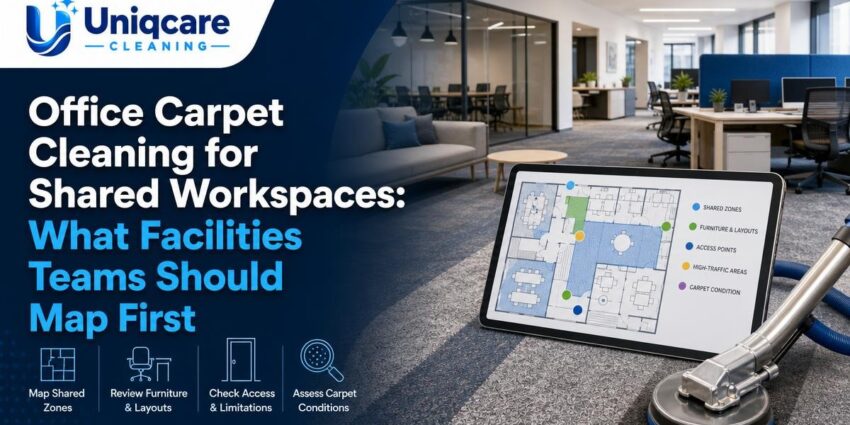
Office carpet cleaning is easier to plan when facilities teams map the workspace before requesting a quotation or scheduling professional work. Shared desks, meeting rooms, reception areas and access restrictions can all affect the scope, sequence and practical requirements of a cleaning visit.
A shared office rarely has one consistent level of carpet use. The carpet near an entrance may receive frequent foot traffic, while a quiet focus area may show little visible soiling. Breakout spaces, pantry approaches, printer points and meeting rooms can also develop different patterns because people gather, eat, carry drinks or move furniture there.
Without a clear map, a facilities team may describe the job simply as “clean the office carpet”. That description leaves important questions unanswered: Which zones are included? Which furniture must be moved? Can cleaners reach the area after hours? Are there sections with old stains, loose edges or water exposure? Mapping first gives the cleaning provider a more useful picture and helps the team prepare the site responsibly.
| Workspace detail to map | Why it affects planning | Useful information to record |
|---|---|---|
| Shared zones | Different areas receive different levels and types of use. | Reception, corridors, desk areas, meeting rooms, pantries and breakout spaces. |
| Furniture layout | Desks, chairs and cabinets may limit access to the carpet. | Items that can be moved, items that must stay in place and clearance around fixed furniture. |
| Access conditions | Loading, lifts, security and operating schedules may affect the visit. | Building entry process, lift access, parking or loading instructions and permitted working hours. |
| Carpet condition | Material, wear and existing damage influence the cleaning approach. | Carpet type, visible stains, worn areas, odours, loose sections and previous water exposure. |
| Workplace constraints | Staff activity and equipment can interrupt the cleaning sequence. | Occupancy, sensitive areas, cables, stored documents and areas that must remain available. |
1. Divide the office into practical carpet zones
Start with a floor plan or a simple hand-drawn layout. Mark every carpeted section rather than relying on the office department names. A “sales area”, for example, may include open desks, a corridor, a small meeting room and a refreshment point, each with different access and cleaning considerations.
High-traffic entrance and circulation areas
Reception zones, lift lobbies, corridors and routes between departments are usually the first areas to review. They may collect more outdoor soil than less-used rooms, particularly where people enter from different access points. Note whether these areas connect directly to hard flooring, entrances or washrooms, because the transition points may need specific attention during planning.
Hot-desking areas can be difficult to assess by room name alone. Chairs, mobile pedestals, cable channels and personal storage may cover a significant portion of the carpet. Mark which furniture can be cleared by the facilities team and which items require approval before movement. If desks remain occupied, the provider may need to work in sections rather than treat the entire floor as one open area.
Meeting rooms and collaboration spaces
Meeting rooms often have movable chairs and tables, but the furniture may still be heavy or arranged for scheduled events. Record the number and type of items, the room’s usual booking pattern and whether there is a suitable place to stage furniture temporarily. Smaller meeting rooms can also be overlooked when teams estimate the total carpeted area.
Pantry approaches and breakout areas
Carpet near refreshment areas deserves its own mark on the plan. Spills may be more likely there, and furniture can include sofas, stools or tables that are not easy to relocate. Note visible marks without assuming that every stain can be completely removed. The final result may depend on the carpet fibre, the substance involved, how long it has been present and the condition of the carpet.
2. Record furniture and items that restrict access
Furniture layout is one of the most useful details to share before arranging office carpet cleaning. A provider needs to understand whether the carpet is mostly open, partly obstructed or covered by fixed workstations. The cleaning plan may be different for an empty training room than for a fully furnished open-plan floor.
Classify items by how they can be handled
- Moveable by the facilities team: lightweight chairs, small tables and selected bins may be cleared before the appointment if the office approves.
- Moveable with coordination: larger tables, meeting-room furniture, mobile pedestals and grouped chairs may need several people or a planned staging area.
- Fixed or sensitive items: built-in cabinets, equipment, server-related items, display units and connected workstations may need to remain in place.
- Items requiring protection: cables, power strips, documents, electronics and personal belongings should be identified before work begins.
Do not assume that a cleaning provider will dismantle workstations, disconnect equipment or move every object. Include those questions when discussing the scope of carpet cleaning services. A clear division of responsibility helps avoid delays and reduces the risk of moving items without the right approval.
3. Map access limitations before the appointment
Access is not just a matter of opening the office door. Shared workspaces may be inside managed buildings with security desks, visitor registration, loading rules, lift restrictions or limited parking. These details can affect how equipment and cleaning materials reach the carpeted areas.
Building and security information
- Identify the entrance that a cleaning team should use.
- Confirm whether visitors, vehicles or equipment require advance registration.
- Record lift dimensions or restrictions when equipment must travel between floors.
- Check whether loading bays have time limits or booking requirements.
- Identify stairs, narrow corridors or doors that may restrict movement.
- Provide the name or role of the person who will grant access and approve the work area.
Also map internal restrictions. Some offices contain secure rooms, occupied departments, storage areas or equipment zones that should not be entered. Mark these clearly on the plan. If only part of the office can be cleaned during a particular period, divide the work into sections rather than presenting the entire floor as available.
4. Note occupancy, timing and work sequencing
Shared offices are active environments. Staff may be able to work elsewhere, but that should be agreed rather than assumed. A facilities team should record which rooms are occupied, which meetings are already scheduled and whether certain departments need continuous access.
A simple zone sequence can make the arrangement easier. For example, the team might begin with a vacant meeting-room cluster, move to one side of the open-plan area and finish with the main circulation route. The exact order should be discussed with the cleaning provider because it depends on the site layout, chosen method and practical access conditions.
| Planning question | What the facilities team should clarify |
|---|---|
| Who will be present? | List the departments, contractors or visitors expected during the planned work period. |
| Which rooms can be closed? | Mark vacant rooms and areas that can be temporarily taken out of use. |
| Which paths must remain open? | Identify emergency routes, staff access paths, washrooms and essential workplace connections. |
| Where can furniture go? | Choose a temporary staging area that does not block doors, exits or other workspaces. |
| Who signs off the result? | Nominate a facilities representative to review the agreed scope and accessible areas. |
Facilities teams should also ask about the carpet’s expected condition after cleaning and any site-specific precautions. Do not promise staff that every area will be ready for immediate normal use unless that timing has been confirmed for the selected method and conditions.
5. Assess carpet condition, not just visible dirt
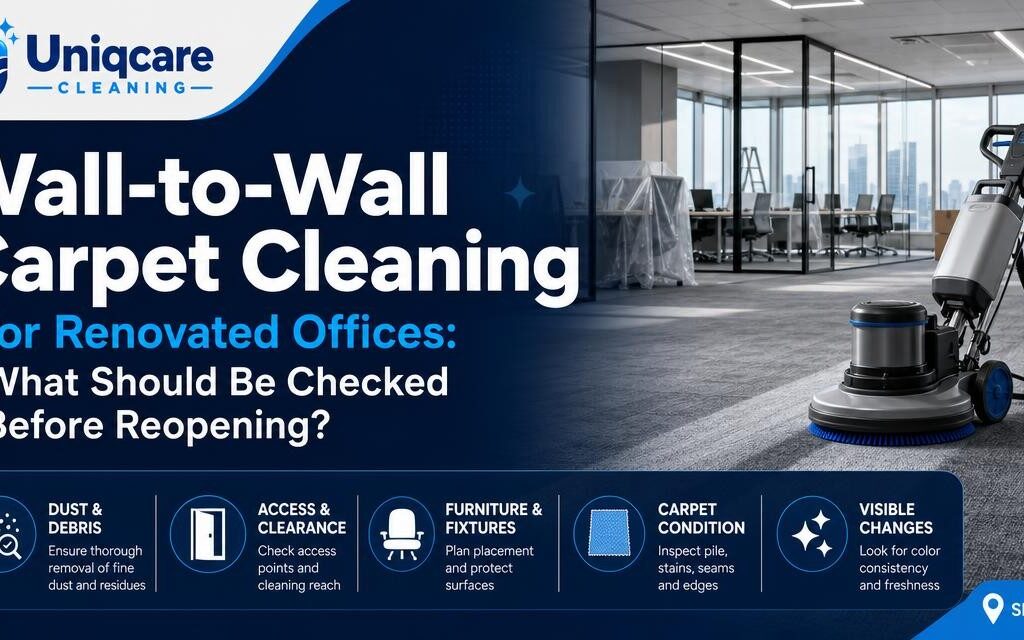
A useful pre-cleaning map records the state of the carpet before anyone moves furniture. Take notes by zone and, where company policy allows, photographs for internal reference. The purpose is not to diagnose the carpet from appearance alone. It is to give the professional cleaner enough context to assess the material and discuss suitable options.
Details worth recording
- Carpet type, pattern and whether it is wall-to-wall or made from area rugs.
- High-wear lanes, flattened pile and sections with visible colour changes.
- Stains, including their approximate location and whether the source is known.
- Odours that appear limited to a particular zone or material.
- Loose edges, lifted transitions, damaged backing or other pre-existing defects.
- Areas affected by a previous leak, spill or flooding event.
- Evidence of earlier spot treatment or repeated cleaning attempts.
Existing damage should be recorded before the visit so it is not confused with a cleaning issue. Carpet cleaning can improve the appearance of many surfaces, but outcomes vary according to fibre, dye, backing, wear, stain type and the length of time a mark has been present. A professional assessment is more reliable than treating every visible problem as a standard stain-removal task.
6. Separate routine cleaning from special conditions
Not every carpeted area belongs in the same service category. Routine office carpet cleaning may cover open-plan floors, rooms and circulation areas, while a separate discussion may be needed for carpet glue, damaged flooring or a carpet affected by water. Listing these conditions separately prevents an unusual area from being hidden inside a general cleaning request.
Water-affected carpet
If a carpet has been affected by flooding or a significant water event, record when it happened, where the water reached and whether the source has been addressed. Water extraction, drying and restoration requirements may differ from routine cleaning. Prompt professional advice can help the facilities team understand whether the carpet and underlying materials should be assessed separately.
Old carpet and adhesive
If the office is being refurbished, the issue may be carpet removal or carpet glue removal rather than cleaning alone. Mark the areas scheduled for replacement and identify the underlying floor surface if known. Carpet adhesive removal and optional floor surface work should be discussed as separate requirements so the quotation reflects the actual project.
Furniture upholstery near carpeted zones
Sofas, office chairs and other upholstered furniture may have their own cleaning needs. If these items are included in the facilities plan, list them separately by material and quantity. Uniqcare Cleaning provides deep-cleaning services for carpets as well as sofa and upholstery cleaning, but the scope for each surface should be confirmed rather than assumed.
7. Prepare a brief for carpet cleaning services
Once the map is complete, turn it into a short brief that a professional cleaning company can review. Include the building location, floor level, approximate carpeted areas, zone breakdown, furniture restrictions, access instructions and known carpet conditions. Attach the floor plan or describe each zone in a consistent way.
A useful brief should answer the following:
- What carpeted areas are included?
- Which areas have the heaviest use or the most visible marks?
- What furniture will be removed, moved or left in place?
- What access, security and loading arrangements apply?
- When can each zone be made available?
- Are there stains, odours, wear, water exposure or adhesive concerns?
- What should happen if the carpet condition differs from the initial description?
When requesting professional carpet cleaning, ask the provider to review the material and site conditions before finalising the work. Uniqcare Cleaning offers carpet cleaning for homes, offices, wall-to-wall carpets and area rugs, with methods listed by the business including hot water extraction and steam cleaning. The appropriate approach should be discussed for the specific carpet and workspace rather than selected from a generic checklist.
8. Use the map after cleaning
The same document can support future facilities planning. After the work, note which zones were completed, which furniture remained in place and whether any areas were excluded. Add observations about recurring spills, difficult access or sections that need attention during the next review.
This creates a practical record without pretending that every office requires the same schedule. The next cleaning decision can be based on actual use, carpet condition and changes to the workspace layout. If desks are rearranged, a department expands or a new meeting area is introduced, update the map before requesting the next service.
A simple pre-visit checklist
- Mark every carpeted room and shared zone on a floor plan.
- Identify entrances, corridors, high-use routes and refreshment areas.
- List moveable, fixed and sensitive furniture.
- Confirm who will clear desks, chairs and stored items.
- Record building entry, lift, loading and security requirements.
- Note occupancy, room bookings and paths that must remain open.
- Document stains, wear, loose sections, odours and water-related concerns.
- Separate routine cleaning from removal, restoration or adhesive work.
- Share the brief with the cleaning provider before the appointment.
- Keep the completed map for future maintenance planning.
Why should facilities teams map the office before requesting carpet cleaning?
Mapping shows the provider what areas are included, how the office is arranged and what restrictions may affect the work. It also helps the team identify furniture, access and carpet-condition issues before scheduling.
Should all carpeted areas be treated as one cleaning zone?
Not necessarily. Reception areas, corridors, desks, meeting rooms and pantry approaches may have different traffic levels, furniture layouts and access requirements. Dividing them into practical zones usually creates a clearer scope.
Do facilities teams need to move all office furniture?
No assumption should be made either way. Some items may be cleared by the facilities team, while fixed, heavy or connected equipment may remain in place. Confirm responsibilities and accessible areas with the cleaning provider.
What carpet conditions should be reported in advance?
Report visible stains, worn or flattened areas, loose edges, odours, previous treatment, water exposure and any known damage. These details help the provider assess the carpet and discuss realistic expectations.
Can a water-affected carpet be included as routine office carpet cleaning?
It may require separate assessment. Flooding or significant water exposure can involve extraction, drying and restoration considerations beyond routine cleaning. Describe the event and affected areas before work is arranged.
What information should be included when contacting a professional cleaner?
Provide the building location, floor level, carpeted area, zone map, furniture status, access instructions, preferred timing and known carpet conditions. Clear information supports a more accurate discussion of the required carpet cleaning services.