
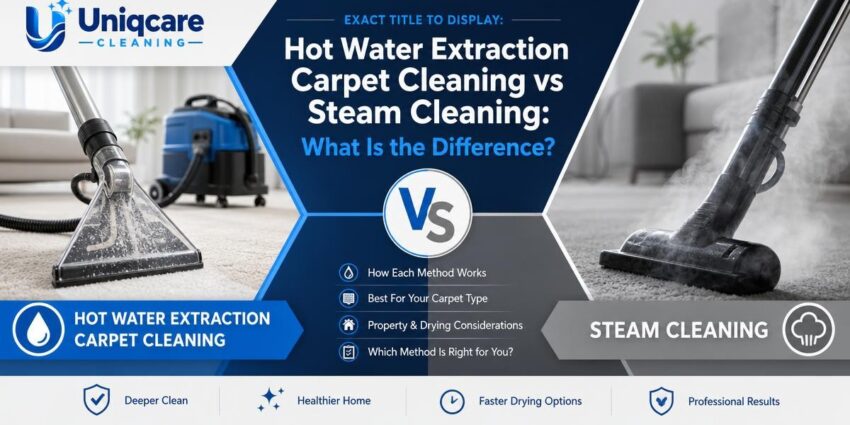
Hot water extraction carpet cleaning and steam cleaning are often described as two different services, but the terms are not always used consistently. Some providers use “steam cleaning” as a general name for a hot water-based carpet cleaning process, while others use it to describe a method that produces vapour. Understanding the terminology can help homeowners, tenants, offices and commercial premises ask better questions before booking a professional carpet cleaning service.
Why the terms cause confusion
The phrase “steam cleaning” is familiar to most customers, so it is sometimes used as a simple label for deep carpet cleaning. In technical discussions, however, steam cleaning may refer to cleaning with heated vapour, while hot water extraction involves applying a cleaning solution or heated water to the carpet and removing the loosened soil with a vacuum system.
That difference matters because the equipment, moisture level, cleaning process and suitability for a particular carpet may vary. A customer comparing quotations should not rely on the method name alone. Ask what is applied to the carpet, how the soil is removed, how much moisture is involved and whether the technician will assess the carpet before starting.
What is hot water extraction carpet cleaning?
Hot water extraction carpet cleaning uses a combination of water, cleaning solution and vacuum extraction. The cleaning head distributes the solution across the carpet fibres, helping to loosen embedded soil. A separate vacuum action then recovers the used liquid, dissolved soil and suspended particles from the carpet.
The process may be carried out with equipment designed for residential rooms, offices, wall-to-wall carpets or area rugs. The exact procedure depends on the carpet construction, level of soiling, staining and the equipment available to the cleaning provider. Professional carpet cleaning should also include appropriate preparation, such as inspecting the material and identifying areas that may need special treatment.
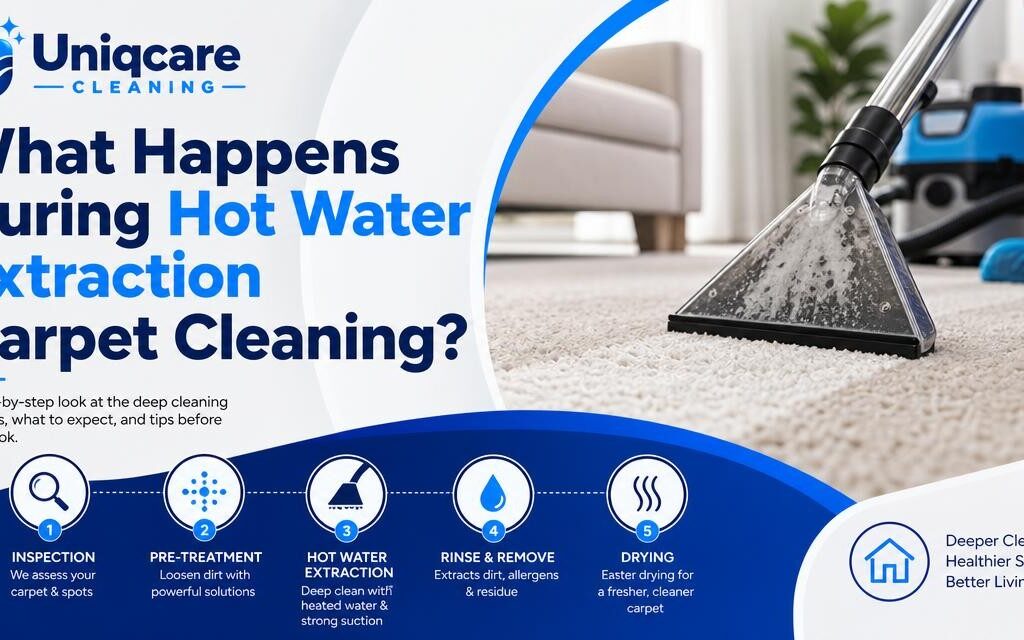
Typical stages of the process
- Inspection: The carpet is checked for its material, construction, condition, visible stains and areas of heavy traffic.
- Preparation: Loose debris is removed and the space is prepared for cleaning where practical.
- Pre-treatment: A suitable product may be applied to help loosen particular types of soil or staining.
- Agitation or working: The cleaning solution may be worked into the carpet according to the material and condition.
- Hot water extraction: Water and loosened soil are removed through the machine’s extraction system.
- Drying and inspection: The carpet is checked after cleaning, while the remaining moisture is allowed to evaporate under suitable conditions.
Hot water extraction is often selected when a carpet needs a deeper clean than routine vacuuming can provide. It can be suitable for many residential and commercial carpets, but no method should be treated as automatically appropriate for every fibre, backing or installation.
What does steam cleaning mean?
“Steam cleaning” can mean different things depending on the provider. In some carpet-cleaning advertisements, it is simply a familiar term for a hot water extraction service. In other situations, it refers to equipment that heats water to produce steam or vapour, with less liquid being applied to the surface.
Customers should therefore ask for a clear description rather than assuming that steam cleaning always means dry vapour or that it always uses the same amount of water. A provider may also use the term in connection with curtain or upholstery cleaning, where the material, construction and moisture tolerance can differ from a fitted carpet.
Steam, hot water and extraction are not identical terms
Heat describes the temperature used during a process. Extraction describes the removal of liquid and loosened soil. Steam describes water in vapour form. These words refer to different parts of a cleaning approach, so a service can involve heated water without producing visible steam, or it can use vapour without operating like a conventional extraction machine.
This is why the most useful comparison is not simply “steam versus hot water.” The better question is: what method will be used for this carpet, and how will moisture and soil be managed?
Hot water extraction vs steam cleaning: key differences
| Factor | Hot water extraction | Steam cleaning |
|---|---|---|
| Basic approach | Applies water and cleaning solution, then removes liquid and loosened soil through extraction. | May refer to vapour-based cleaning or may be used as a general name for hot water cleaning. |
| Moisture | Usually involves liquid moisture, with the recovery of as much used solution as the equipment and carpet allow. | Moisture levels vary considerably by equipment and by what the provider means by “steam.” |
| Soil removal | Combines cleaning action with vacuum extraction to lift dissolved and suspended soil. | May loosen or treat surface soil; removal depends on the equipment and process used. |
| Main question to ask | How is the water recovered, and what drying conditions are recommended? | Does “steam” mean vapour cleaning or hot water extraction in this quotation? |
| Suitability | Depends on fibre, backing, installation, staining and the carpet’s condition. | Depends on temperature tolerance, moisture tolerance and the specific equipment used. |
Which method is better for a carpet?
There is no single method that is best for every carpet. The right approach depends on the carpet’s fibre, backing, age, installation, colour stability, level of soiling and previous treatment. A fitted office carpet with heavy foot traffic may require a different plan from a delicate area rug in a home.
The carpet’s current condition should also be considered. A routine clean, a long-neglected carpet, a spill, an odour concern, water damage and adhesive residue are different situations. For example, flooded carpet cleaning requires attention to water extraction and restoration conditions rather than a standard maintenance clean. Carpet glue removal is also a separate task from ordinary carpet washing.
Factors a professional cleaner should review
- Carpet material: Natural and synthetic fibres can react differently to moisture, heat and cleaning products.
- Backing and installation: The backing, underlay and method of installation affect how moisture should be managed.
- Colour stability: Testing can help identify the risk of colour transfer or change.
- Stain type: Food, oil, beverages, ink, pet-related marks and age-related discolouration may require different treatment.
- Traffic level: Entrances, corridors and office walkways may have soil that is more deeply worked into the pile.
- Furniture and access: The cleaner should clarify which areas need to be moved or made accessible.
- Drying conditions: Ventilation, room use and the amount of moisture applied affect the post-cleaning process.
Is steam cleaning better for delicate carpets?
Not automatically. A lower-moisture or vapour-based process may sound gentler, but suitability depends on the temperature, equipment, cleaning products and technician’s handling. Some delicate carpets can be affected by excessive heat, agitation or moisture, while other carpets may need enough cleaning action and extraction to remove embedded soil.
Before cleaning a valuable, older or unusual rug, provide as much information as possible about its material, age, construction and previous treatment. A careful provider should be willing to discuss testing and limitations. Cleaning results can vary, and some stains or fibre changes may not be completely reversible.
What about drying time?
Drying time is one of the most important points to clarify when comparing methods. Hot water extraction uses liquid, so the carpet must dry after the cleaning process. The actual drying period can vary with the amount of moisture applied, extraction performance, carpet construction, room ventilation, weather and indoor conditions.
Steam or vapour-based cleaning may use less liquid in some situations, but the name alone does not confirm how quickly a carpet will dry. Ask the provider what to expect, when the carpet can be walked on and whether furniture should remain away from the cleaned area. Do not assume that every carpet will be dry within a particular number of hours.
How customers can support the drying process
- Keep unnecessary foot traffic off the carpet until the provider says it is suitable to use.
- Maintain reasonable ventilation where possible.
- Follow instructions about furniture, floor protection and room access.
- Tell the cleaner about areas that have previously suffered from dampness or flooding.
- Ask what to do if the carpet remains visibly damp longer than expected.
Which method is suitable for homes, offices and commercial spaces?
Property use affects the cleaning plan. Homes may have rugs, fitted carpets, stairs, furniture and isolated stains. Offices may have wall-to-wall carpet, high-traffic walkways and limited access outside working hours. Commercial premises may need the provider to consider larger areas, customer access and the condition of several carpet types.
For these reasons, professional carpet cleaning should begin with questions about the property rather than a fixed method chosen only by name. Describe the carpeted areas, the main concern, the preferred schedule and any restrictions. The provider can then explain whether hot water extraction, a steam-related process or another approach is appropriate for the material.
Questions to ask before booking professional carpet cleaning
A clear quotation should tell you more than the service label. These questions can help you compare providers and avoid misunderstandings:
- When you say “steam cleaning,” do you mean vapour cleaning or hot water extraction?
- What equipment and cleaning products will be used on this carpet?
- Will the carpet be inspected and tested before the full service?
- How will the used water, solution and loosened soil be removed?
- What drying conditions and access instructions should I expect?
- Are there stains, odours or material issues that may not respond fully?
- Does the quotation include stain treatment, or is that assessed separately?
- What should be moved before the cleaning team arrives?
These questions are particularly useful for tenants, offices and commercial premises where access, furniture and operating hours may affect the work. They also help you distinguish a genuine method comparison from two different names being used for the same process.
How Uniqcare Cleaning approaches carpet-cleaning enquiries
Uniqcare Cleaning provides professional deep-cleaning services for residential and commercial clients, including carpet cleaning for homes, offices, wall-to-wall carpets and area rugs. Its listed carpet-cleaning methods include hot water extraction and steam cleaning, making it useful to explain the carpet’s material, condition and cleaning objective when requesting information.
The company serves Kuala Lumpur, Selangor, Putrajaya and Cyberjaya. It also lists related services such as sofa and upholstery cleaning, curtain cleaning, mattress cleaning, floor cleaning, flooded carpet cleaning and carpet glue removal. These are different cleaning situations, so the required method should be discussed according to the item and its condition rather than assumed from the word “steam.”
The practical answer: clarify the process, not just the label
Hot water extraction carpet cleaning is a water-and-extraction process designed to loosen and recover soil. Steam cleaning may describe a vapour-based method, but it is also commonly used as a broad marketing term for hot water carpet cleaning. The terminology can therefore overlap.
When choosing a professional carpet cleaning service, focus on the carpet assessment, equipment, moisture management, stain expectations and drying instructions. A method that is appropriate for one carpet may not be suitable for another. Clear questions before booking will give you a more useful comparison than choosing based on the service name alone.
Frequently asked questions
Is hot water extraction the same as steam cleaning?
Not always. Hot water extraction uses liquid cleaning solution or water and vacuum extraction. “Steam cleaning” may refer to vapour cleaning, but many providers also use it as a general term for hot water extraction. Ask the provider to define the process.
Does hot water extraction use steam?
It may use heated water, but heated water and steam are not the same thing. The equipment may clean with hot water and recover it through extraction without operating as a vapour-only system.
Which method removes more dirt?
Results depend on the carpet, soil, stain, equipment, preparation and technician’s process. The method name alone does not guarantee a particular result. Some stains or discolouration may remain because of the material or the type and age of the mark.
Is steam cleaning safer for every carpet?
No. Carpet fibres, backing, dyes and construction vary. Heat, moisture, agitation and cleaning products should be considered before work begins, especially for delicate, older or valuable rugs.
How long does a carpet take to dry after cleaning?
Drying time varies with moisture level, carpet construction, ventilation, room conditions and equipment. A professional should provide practical instructions, but a fixed drying time should not be assumed for every carpet.
What should I tell a carpet cleaner before booking?
Describe the carpet type if known, the size of the area, visible stains, odours, previous water damage, furniture and access restrictions. Also ask whether “steam cleaning” means vapour cleaning or hot water extraction in the quotation.