

Mattress cleaning is an often-overlooked part of guest-room maintenance. Sheets and protectors can be changed between stays, but the mattress itself also needs regular assessment and care. For hotels, serviced apartments, guesthouses, homestays and other accommodation providers, a practical mattress cleaning plan can help coordinate room turnover, respond to visible problems and keep furniture in better working condition.
Why mattress cleaning deserves a place in the maintenance plan
A guest-room mattress is used repeatedly, often by different people and under changing conditions. Over time, the surface may collect dust, body oils, perspiration, hair, crumbs and accidental spills. These issues are not always obvious when the bed is covered with clean linen. Regular inspection gives property owners a clearer view of the mattress condition instead of waiting until a stain, odour or moisture problem becomes difficult to manage.
Mattress cleaning should be treated as part of the room’s broader soft-furnishing care. It sits alongside cleaning for carpets, curtains, sofas, upholstered chairs and other fabrics. A well-planned schedule also makes it easier to record which rooms need attention, which mattresses require a closer assessment and whether a particular issue is related to a recent incident or normal long-term use.
What property owners should assess before booking cleaning
Before arranging a mattress cleaning service, inspect each mattress and note its condition. The purpose is not to diagnose a health issue or promise a particular result. It is to give the cleaning team useful information about the material, the problem and the access conditions in the room.
Surface condition
Look for visible marks, discolouration, food or drink spills, makeup transfer and areas that appear more worn than the rest of the mattress. Record whether a mark is recent or has been present for some time. Older stains may respond differently from fresh spills, and the final result can depend on the material, the stain type and how the mattress has previously been treated.
Odour and moisture concerns
Note any unusual odour, damp area or sign that liquid has reached deeper into the mattress. Do not cover a moisture problem with fragrance or return the room to service without understanding the condition. The cleaning approach may need to be discussed in advance, especially if the mattress has been exposed to a significant spill or prolonged dampness.
Mattress construction and covering
Check the care label, outer fabric, seams, piping and any removable cover. Different mattresses can have different construction and cleaning requirements. Property owners should also identify whether the mattress has a pillow-top layer, memory foam component or other material that may require careful handling. If the label or manufacturer guidance is available, share it when requesting an assessment.
Room access and surrounding furniture
Consider whether the mattress can be cleaned in place, whether the bed frame allows adequate access and whether other furniture needs to be moved. Record the room layout and any access restrictions. A clear description helps the service provider understand the working conditions before an appointment is arranged.
| Assessment area | What to record | Why it matters |
|---|---|---|
| Visible marks | Location, size, colour and approximate age | Helps set realistic expectations for stain treatment |
| Odour | Where it is noticed and whether it follows a spill | Provides context for selecting an appropriate cleaning approach |
| Moisture | Any dampness, water exposure or previous incident | Supports planning before the mattress is cleaned |
| Material | Cover type, label information and mattress construction | Reduces the risk of using an unsuitable method |
| Access | Room size, bed position and furniture restrictions | Helps coordinate the appointment and room preparation |
How to build a practical mattress cleaning schedule
There is no single schedule that suits every property. Usage, occupancy, room type, mattress age and incident history all affect the right timing. Instead of applying the same date to every room, property owners can combine routine inspections with condition-based cleaning.
Use three levels of attention
- Routine checks: Inspect mattresses during planned room maintenance and whenever linen is removed for a deeper room review. Look for visible changes, odours, moisture and signs of wear.
- Planned cleaning: Group rooms that need attention and arrange mattress cleaning during a quieter occupancy period or a scheduled maintenance window.
- Incident response: Arrange an assessment after a spill, water exposure, strong odour or other event that may have affected the mattress. Do not wait for the next routine cycle if the condition is clearly unsuitable for normal room use.
This approach gives managers more flexibility than relying only on a fixed calendar. A recently purchased mattress in a lightly used room may need a different plan from one in a high-turnover room. The important point is to document the decision and review it after each cleaning or significant incident.
Coordinate cleaning with occupancy
Room turnover is a central planning consideration. Mattress cleaning generally requires the bed to be unavailable while work is carried out and while the mattress is assessed for readiness before fresh linen is fitted. Property owners should therefore schedule appointments when the room can be taken out of inventory without creating pressure on the next arrival.
When several rooms require service, prepare a list in advance and discuss the preferred sequence with the cleaning provider. Grouping rooms may simplify coordination, but the exact arrangement depends on access, room availability and the condition of each mattress.
Preparing a guest room for deep mattress cleaning
Good preparation reduces interruptions and gives the cleaning team a clearer working area. Remove all linen, blankets, mattress protectors and personal items from the bed before the appointment. Store clean replacement linen separately so it does not come into contact with the work area.
- Confirm that the room is vacant for the agreed service window.
- Remove decorative bedding and loose items from the bed and nearby surfaces.
- Clear access around the bed where possible.
- Identify stains, odours, spills or damp areas for the cleaner.
- Keep the care label or manufacturer instructions available.
- Tell the provider about any previous cleaning products or treatments used.
- Plan a check before the room is returned to normal operation.
Property owners should also clarify what happens after the cleaning work. Ask how the mattress will be assessed before linen is replaced and whether the room needs additional time before the next guest. The appropriate arrangements can vary according to the mattress material, cleaning method, room conditions and the amount of moisture involved.
What deep mattress cleaning may address
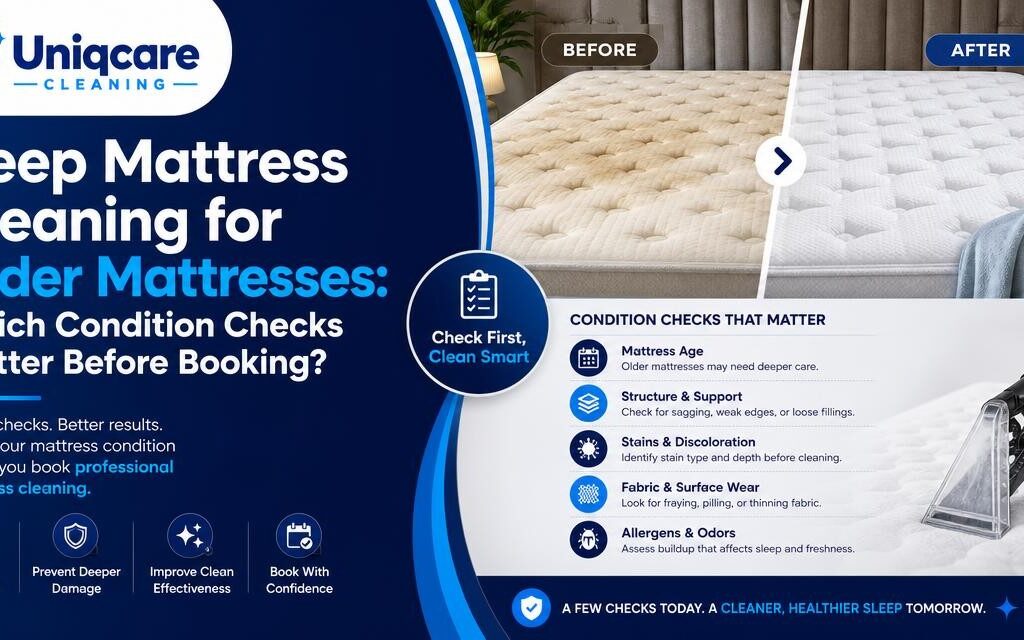
Deep mattress cleaning is intended to give more attention to the mattress than ordinary surface tidying. Depending on the material and condition, professional cleaning may address accumulated surface soil, selected stains and unwanted odours. It may also help property owners deal with mattresses that have not received attention for an extended period.
Results are not identical in every case. Stain age, fabric type, previous treatment, moisture exposure and the source of the mark can all affect the outcome. A professional assessment is useful because it allows the provider to explain what may be treatable and what expectations are realistic before work begins.
Cleaning is not the same as replacement
Mattress cleaning can improve the condition of a mattress, but it does not repair every physical defect. Sagging, damaged springs, torn covers, broken seams and severe wear may require a separate maintenance decision. If the mattress has reached the end of its useful condition, cleaning alone may not be the right long-term response.
For this reason, include a basic condition review in the property’s asset records. Note the mattress age if known, visible damage, repeated complaints about comfort and the date of the last cleaning. This information helps owners decide whether to clean, repair, rotate when appropriate or replace the item.
Common planning mistakes to avoid
Waiting until a guest complaint
A complaint can be a useful signal, but it should not be the only trigger for mattress cleaning. By then, the underlying condition may have been present through several room turnovers. Routine inspections create an opportunity to identify issues earlier and plan work with less disruption.
Using strong products without checking the material
Applying an untested product can create discolouration, residue or damage to the cover. Avoid assuming that a product suitable for a carpet or sofa is automatically suitable for a mattress. Share the material information with the cleaning provider and follow the relevant care guidance.
Booking the service without allowing room downtime
A mattress should not be placed straight back into service simply because the cleaning appointment has finished. The property should allow time for the agreed post-cleaning checks and any necessary drying or ventilation arrangements. The exact requirements depend on the service method and the mattress condition.
Ignoring protectors and bedding procedures
Mattress protectors and linen are important parts of the room-care routine, but they should not be used to hide a mattress problem. Wash or replace them according to the property’s housekeeping procedures and inspect the mattress underneath at suitable intervals.
Working with a professional mattress cleaning provider
When requesting a quotation or assessment, provide the number of mattresses, room type, mattress materials if known, visible concerns and preferred access dates. Ask the provider to explain the proposed cleaning approach, preparation requirements and any factors that may affect the result. Clear information at the start can reduce avoidable changes to the schedule.
Uniqcare Cleaning lists professional mattress cleaning among its deep-cleaning services for residential and commercial clients. Property owners can discuss the condition of guest-room mattresses and the practical requirements of the site before arranging service. The company serves Kuala Lumpur, Selangor, Putrajaya and Cyberjaya. Its listed contact number is 019-309 7102, with operating hours stated as Monday to Saturday, 8:30 to 17:00.
Questions to include in the service discussion
- Can the mattress be assessed before the cleaning method is confirmed?
- What information about the material or care label is needed?
- How should stains, spills or odours be described?
- What room preparation is required?
- How should the property plan access and room availability?
- What post-cleaning checks should the housekeeping team complete?
A simple record-keeping system for guest-room mattresses
A basic room-by-room record can make ongoing care easier. It does not need to be complicated. List each room, mattress type if known, inspection date, observed condition, cleaning date and any follow-up action. Add notes about stains, moisture incidents or physical damage so that recurring problems are not treated as isolated events.
Review the record when planning room maintenance and before busy occupancy periods. A pattern may show that certain rooms need more frequent checks, while other mattresses may be approaching replacement rather than another cleaning appointment. This turns mattress care into a manageable maintenance process instead of an emergency task.
Final checklist for property owners
- Inspect mattresses as part of planned guest-room maintenance.
- Record visible marks, odours, moisture concerns and physical damage.
- Check the mattress material and care instructions before treatment.
- Schedule cleaning around occupancy and room turnover.
- Allow access and post-cleaning time when planning the appointment.
- Use realistic expectations for stain and odour treatment.
- Keep a service record for every room.
- Review whether cleaning or replacement is the more appropriate decision.
Frequently asked questions about mattress cleaning for guest rooms
How often should guest-room mattresses be cleaned?
There is no universal interval. The suitable timing depends on occupancy, room use, mattress condition and incident history. Use routine inspections together with planned and incident-based cleaning.
Should mattress cleaning be scheduled between every guest?
Not necessarily. Between-stay housekeeping normally focuses on linen, protectors and room surfaces. Mattress cleaning can be planned according to condition and property policy, with prompt assessment after spills or moisture exposure.
Can deep mattress cleaning remove every stain?
No. Results depend on the stain type, age, mattress material and previous treatment. A professional assessment can help set practical expectations before cleaning.
What should be removed before a mattress cleaning appointment?
Remove sheets, blankets, protectors and loose personal items. Clear nearby access where possible and identify any areas of concern for the cleaning provider.
Can a mattress be used immediately after cleaning?
The answer depends on the cleaning method, material and condition. Ask the provider about post-cleaning checks and any time needed before replacing linen and returning the room to service.
Does mattress cleaning replace the need for mattress protectors?
No. Protectors and regular housekeeping are separate parts of guest-room care. They can help support routine maintenance, but the mattress should still be inspected and cleaned when its condition requires it.
When should a property owner consider replacing a mattress instead?
Consider replacement when the mattress has severe physical damage, persistent wear or condition problems that cleaning cannot address. Cleaning improves some surface conditions but does not repair structural defects.