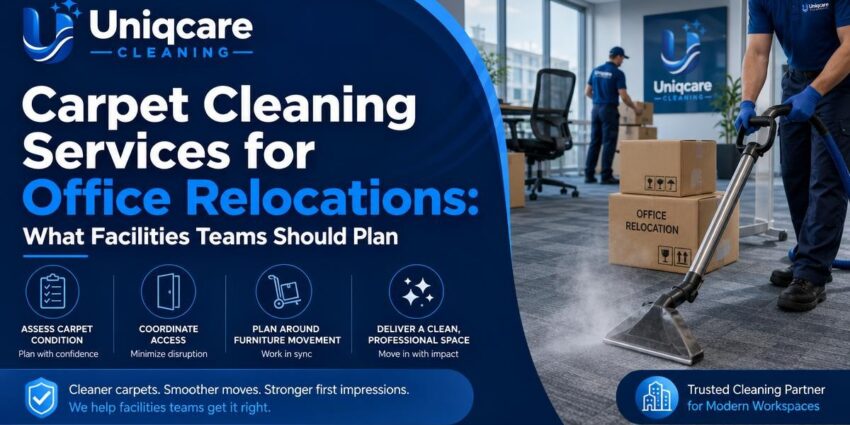
Office relocations create a useful opportunity to review the condition of the workplace before furniture, equipment and staff move into a new space. Planning carpet cleaning services at the right stage can help facilities teams address visible stains, accumulated soil and worn areas without disrupting the relocation schedule. The key is to treat carpet cleaning as part of the move plan, not as a last-minute task after every item has been installed.
Why carpet cleaning belongs in the relocation plan
During an office move, carpets are exposed to more activity than usual. Desks are dragged or repositioned, movers walk repeatedly through the same corridors, and boxes may be placed temporarily on carpeted areas. This traffic can transfer dust and dirt into the fibres, while furniture that has covered sections of carpet may reveal differences in colour or condition.
Cleaning before the new layout is occupied can also make access easier. Once workstations, cabinets and meeting-room furniture are in position, technicians may only be able to reach the exposed sections of carpet. A relocation therefore gives facilities teams a chance to decide whether the carpet should be cleaned before furniture arrives, after selected items have been removed, or in stages across different zones.
Start with a carpet condition assessment
Before requesting a quotation or booking office carpet cleaning, inspect the space systematically. A walk-through should cover reception areas, corridors, workstations, pantry entrances, meeting rooms, lift lobbies and any other routes used frequently by staff or visitors. Note areas that look darker, feel flattened or show visible marks.
The assessment should distinguish between routine soil and issues that may require a different plan. For example, an office may have general dirt across a large open-plan area but also have isolated beverage stains, adhesive residue or water-affected sections. Carpet type, backing, age and previous treatment can influence the cleaning approach, so photographs and clear notes are useful when discussing the work with a cleaning provider.
Questions to include in the inspection
- Which rooms and circulation routes are carpeted?
- Are the carpets wall-to-wall, modular tiles or loose rugs?
- Where are the most heavily used or visibly soiled areas?
- Are there stains from drinks, food, ink, tracked-in dirt or other known sources?
- Has any section been affected by a leak, flooding or prolonged dampness?
- Will carpeted areas be exposed during furniture removal?
- Are there access restrictions, lift booking requirements or building rules?
Do not assume that every mark can be treated in the same way. Stain results may depend on the material, the age of the stain and what has already been applied to it. A professional assessment helps the facilities team set realistic expectations before work begins.
Choose the right cleaning stage
There is no single schedule that suits every relocation. The best timing depends on whether the office is being vacated, newly occupied, renovated or moved in stages. Facilities teams should map the cleaning sequence against furniture removal, floor works, painting, electrical work and final handover.
| Relocation stage | Potential carpet cleaning role | Planning point |
|---|---|---|
| Before furniture removal | Clean accessible open areas and record the condition beneath furniture where possible | Some carpet may remain covered, limiting the area that can be reached |
| After furniture removal | Clean the full exposed carpet and address marks revealed by desks or cabinets | Coordinate with movers so equipment and loose items are cleared first |
| Before furniture enters the new office | Prepare an empty workspace for the incoming layout | Allow time for the carpet to be ready before installation begins |
| Between relocation phases | Clean completed zones while other departments remain in operation | Separate work areas and control traffic through cleaned sections |
| After the move | Handle traffic marks or spills created during installation and unpacking | Use this as a follow-up clean rather than the only planned carpet service |
Cleaning an empty office
Cleaning after furniture has been removed often gives the provider better access to the carpet. It can reveal marks that were hidden beneath chair mats, storage units or desks. This option is especially useful when the old office must be returned in a presentable condition or when the new tenant wants to assess the space before moving in.
However, the move-out schedule may be tight. Facilities teams should confirm when the last furniture will leave, whether contractors will still need to enter the area and when the building expects the space to be handed over. A cleaning appointment is easier to manage when these details are agreed in advance.
Cleaning before furniture installation
For a new office, carpet cleaning before furniture delivery can reduce the risk of cleaning around obstacles. The facilities team can mark the zones to be cleaned, confirm that the space is accessible and arrange the work before desks, chairs and cabinets are installed.
This sequence requires coordination with the fit-out and moving teams. If painting, drilling or electrical work continues after the carpet has been cleaned, dust and debris may undo part of the result. Cleaning should normally be placed after activities that create substantial dust and before the final furniture setup, subject to the building’s schedule and the cleaning provider’s advice.
Coordinate access with the building and moving teams
Office carpet cleaning is not only a cleaning decision. It is also an access and logistics issue. Facilities managers should confirm how the cleaning team will enter the building, where equipment may be brought in, and whether loading bays, service lifts or visitor registration are controlled by building management.
Share practical information before the appointment. This may include the floor number, suite layout, parking or loading instructions, security procedures, available water or power arrangements where relevant, and the name of the person who will provide access. If the work involves multiple floors or separate suites, a simple floor-by-floor schedule can reduce confusion.
Access details to confirm
- Permitted working hours and restrictions on weekend or after-hours access.
- Service-lift booking procedures and loading-bay availability.
- Security registration for cleaning personnel.
- Areas that must remain accessible for tenants, movers or building staff.
- Locations of washrooms, utility points or other facilities the provider may need to use.
- Who will unlock rooms and approve the start and completion of the work.
These details are particularly important when the office remains partly occupied. A clear access plan helps separate cleaning activity from employee movement and reduces the chance of equipment blocking corridors or doorways during a busy relocation.
Plan furniture movement carefully
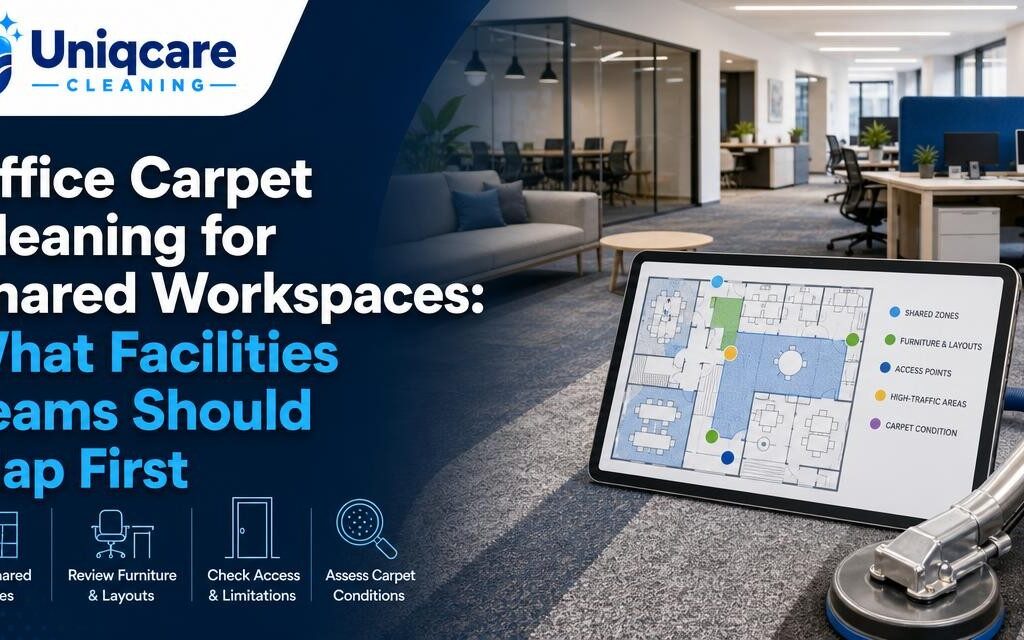
Carpet cleaning works best when the provider knows exactly which furniture will be removed, which items will stay and which areas must be cleaned around. Do not leave the cleaning team to discover the layout on arrival. Supply a marked floor plan or walk through the space with the site contact before work starts.
Facilities teams should also clarify responsibility for moving items. A carpet cleaning company may clean accessible areas, but that does not automatically mean every desk, cabinet, appliance or electronic device will be moved. Heavy, fragile or connected equipment may require the relocation contractor or office staff to handle it. Separating these responsibilities prevents delays and avoids moving items without proper authorisation.
A practical zoning approach
- Zone the office: Divide the premises into rooms, corridors, open-plan sections and priority areas.
- Identify clearance requirements: Mark areas that need desks, chairs, boxes or cabinets removed before cleaning.
- Set a traffic route: Decide how movers and staff will travel without crossing freshly cleaned sections unnecessarily.
- Assign a site contact: Choose one person to approve access, answer questions and record issues.
- Release areas in sequence: If the office is occupied, complete and protect one zone before opening another.
This approach is useful for large offices as well as smaller suites. It gives the cleaning provider a clear scope and helps the facilities team communicate with movers, building management and employees.
Discuss the carpet type and problem areas
Before the service, provide as much information as possible about the carpet. The provider may need to know whether it is a wall-to-wall installation, carpet tile system or area rug, as well as whether there are delicate sections, loose edges or areas with unusual wear. If the carpet has been treated previously, mention any known products or concerns.
Point out stains and explain what caused them when that information is available. A recent spill, old mark and discolouration caused by wear may need different expectations. Similarly, adhesive left from carpet installation or removed flooring is not simply the same as ordinary dirt. Carpet glue removal is a separate type of work and may involve the underlying floor surface rather than routine carpet cleaning.
When carpet damage needs separate attention
Cleaning can improve the appearance of soil and some stains, but it cannot reverse every form of physical damage. Facilities teams should record fraying, loose seams, permanent fading, crushed pile and damaged backing during the inspection. This makes it easier to distinguish cleaning needs from repair or replacement decisions.
If a section has been affected by flooding or significant water intrusion, raise it before scheduling a standard cleaning visit. Water-affected carpet may require water extraction, drying and restoration planning rather than a routine office clean. Early communication helps the provider understand the condition and advise on the appropriate service scope.
Build realistic expectations into the brief
A good cleaning brief describes the desired outcome without promising an identical result for every area. Facilities teams can ask for general soil removal, attention to identified stains and a consistent presentation across the accessible carpet. They should also understand that results can vary according to fibre, backing, stain type, age, wear and previous cleaning treatments.
Ask the provider to explain the proposed method in practical terms. Uniqcare Cleaning lists carpet cleaning for homes, offices, wall-to-wall carpets and area rugs, with methods including hot water extraction and steam cleaning. The suitable approach for a particular office should be discussed based on the carpet’s condition and the site requirements.
It is also sensible to ask how the team will protect surrounding surfaces and manage equipment in shared building areas. This is not about demanding a standardised promise; it is about ensuring that the method fits the building, the carpet and the relocation timetable.
Schedule the work around the move
Facilities teams should allow room in the schedule for access, preparation and inspection rather than booking carpet cleaning between two tightly timed activities. The relocation plan should identify when the last furniture leaves, when cleaning can begin, when the area must be released and when the next contractor or employee group enters.
Keep a contingency in mind. Furniture removal can run late, access can be delayed and additional stains may be discovered after the office is emptied. A plan with no flexibility can push cleaning into the same period as installation or handover, creating unnecessary conflict.
Information to include when requesting carpet cleaning services
- Office address, floor and suite details.
- Approximate carpeted areas and the number of rooms involved.
- Carpet type, if known, including carpet tiles or loose rugs.
- Photos of high-traffic areas and significant stains.
- Whether the office will be empty, partly occupied or under relocation.
- Furniture removal and installation dates.
- Building access rules and preferred working hours.
- Any flooding, dampness, adhesive or unusual condition that needs separate discussion.
Inspect the work before the office is reset
Before furniture is returned or the new layout is finalised, inspect the cleaned areas with the provider or site contact. Compare the result with the agreed scope rather than judging only one small patch. Check corridors, room entrances, meeting rooms and other high-use zones, and record any areas that were inaccessible because furniture remained in place.
The inspection should also confirm that the cleaning scope matches the relocation plan. If boxes, cables or equipment were placed back before the check, it may be difficult to identify whether an area was missed or simply covered. A short sign-off record with photographs, notes and outstanding items can help maintain a clear handover between the facilities team and the relocation contractor.
Working with a commercial cleaning provider
Uniqcare Cleaning provides professional deep-cleaning services for residential and commercial clients and lists carpet cleaning among its services. The company states that it has provided carpet cleaning services since 2013 and serves Kuala Lumpur, Selangor, Putrajaya and Cyberjaya. Its carpet service covers offices as well as homes, wall-to-wall carpets and area rugs.
For an office relocation, the most useful conversation is a site-specific one. Explain the move sequence, access conditions, carpet concerns and furniture plan rather than asking only for a general office cleaning appointment. Facilities teams can then make a more informed decision about the scope, timing and preparation needed for the work.
A simple relocation checklist
- Inspect and photograph the carpet before furniture removal.
- List high-traffic zones, visible stains and areas with unusual wear.
- Confirm whether any water damage, dampness or carpet adhesive requires separate attention.
- Decide which furniture must be removed before cleaning.
- Confirm building access, working hours, loading arrangements and site contacts.
- Place cleaning after dust-producing work where practical.
- Protect cleaned zones from unnecessary foot traffic and moving activity.
- Inspect the carpet before furniture is returned or the office is handed over.
- Record inaccessible areas, follow-up needs and any changes to the agreed scope.
With this preparation, carpet cleaning services become part of a controlled relocation process rather than an uncertain final task. The facilities team can give the provider better information, reduce access problems and make more sensible decisions about what the carpet needs before the office is fully occupied.
Frequently asked questions
When should an office schedule carpet cleaning during a relocation?
Many offices benefit from cleaning after furniture has been removed and before the new layout is installed. The exact timing depends on building access, other contractors, the relocation sequence and whether the office remains occupied.
Should furniture be removed before office carpet cleaning?
Removing furniture usually gives the cleaning team access to more of the carpet, but the responsibility for moving desks, cabinets or equipment should be agreed in advance. Heavy, fragile or connected items may need to be handled by the relocation team.
Can carpet cleaning remove every office stain?
No. Results can depend on the carpet material, the type and age of the stain, wear and previous treatments. A provider should assess significant stains and explain realistic expectations before work begins.
What information should facilities teams provide to a cleaning company?
Share the carpeted area, floor plan, access rules, relocation dates, furniture status, known stains and any flooding, dampness or adhesive concerns. Photos can help the provider understand the scope before the visit.
Can carpet cleaning be completed while an office is occupied?
It may be possible to clean in zones while staff remain elsewhere, subject to access and site conditions. The facilities team should plan traffic routes and protect completed areas from unnecessary movement.
Is carpet glue removal part of routine carpet cleaning?
No. Carpet glue removal addresses adhesive on flooring and is a separate service requirement. Mention it during the initial assessment so the provider can distinguish it from ordinary carpet soil or staining.
Does water-affected carpet need a different plan?
Yes. Flooded or significantly damp carpet may require water extraction, drying and restoration planning rather than standard office carpet cleaning. Raise the issue promptly when requesting an assessment.