
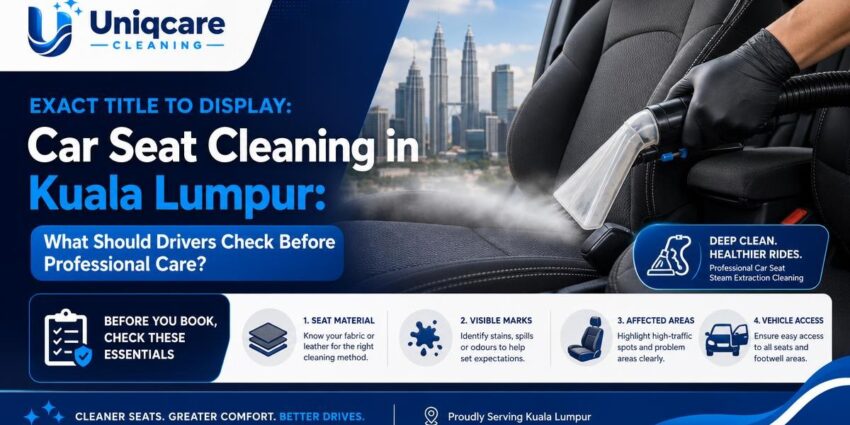
Before arranging professional car seat cleaning in Kuala Lumpur, take a few minutes to check the seat material, visible marks, affected areas and access conditions around your vehicle. These details help the cleaning provider understand the job, prepare an appropriate approach and advise whether the requested treatment is suitable for the interior.
Why preparation matters before car seat cleaning
Car interiors are not all made from the same materials. A fabric seat, leather seat, synthetic upholstery and a seat with mixed surfaces may require different handling. The condition of the seat also matters. A recent drink spill is different from a set-in mark, while general dirt across the entire cabin is different from contamination concentrated in one seating area.
Professional cleaning can often address accumulated dirt and visible marks, but the final result may depend on the material, age, previous treatments and type of stain. Sharing accurate information before the appointment helps avoid unsuitable expectations and gives the cleaner a clearer starting point.
1. Identify the car seat material
The first thing to check is what your seats are made from. If you are unsure, look at the vehicle handbook, purchase documents or the manufacturer’s interior specifications. You can also take clear photographs and send them when requesting a quotation or assessment.
| Seat or interior material | What to check | Useful information to share |
|---|---|---|
| Fabric or textile | Whether the surface is woven, patterned, padded or heavily soiled | Areas with spills, darkening, odour or visible residue |
| Leather | Whether the surface is smooth, textured, cracked or worn | Scuffs, fading, sticky areas, dryness or peeling |
| Synthetic leather | Whether the covering resembles vinyl or coated upholstery | Flaking, surface damage, stains and seams that need attention |
| Mixed upholstery | Whether fabric, leather or plastic sections are combined | Which parts need cleaning and which parts should be avoided |
Do not assume that a product or process suitable for fabric is also suitable for leather or synthetic leather. If the upholstery has already been repaired, recoloured or treated with a protective product, mention this before work begins. Previous treatments can affect how the surface responds to moisture and cleaning agents.
2. Photograph and describe visible marks
Good photographs can make the initial discussion more productive. Take one wider image showing the seat in the vehicle and closer images of the marks. Use natural light where possible, and include the surrounding upholstery so the cleaner can see whether the issue is isolated or spread across a larger section.
Information to record about each mark
- What caused it, if known, such as food, drink, mud, cosmetics, ink or an oil-based substance.
- When it appeared and whether it has been cleaned previously.
- Whether a household cleaner, stain remover or disinfectant has already been applied.
- Whether the mark has changed colour, spread or left a ring after earlier cleaning.
- Whether there is an accompanying smell, dampness or sticky residue.
Stain removal is not always a matter of applying more product. Some marks may have penetrated the fibres, reacted with a previous chemical or altered the original colour. A professional cleaner can assess the condition, but it is better to describe the history honestly rather than promise a particular outcome before inspection.
3. Check which parts of the vehicle need attention
Drivers often begin by asking about one stained seat, then notice that dirt is also present on the headrest, seat belt area, door trim or floor carpet. Before booking, decide whether you want a targeted treatment or a broader interior cleaning request. This makes the scope of the work clearer.
Areas worth inspecting
- Front and rear seat cushions.
- Seat backs and side bolsters, where friction can create visible darkening.
- Headrests and armrests.
- Door-side upholstery and fabric door panels.
- Floor carpet and removable mats.
- Seat belt webbing, if there are visible marks or odours.
- Areas under child seats or protective covers.
- Boot or cargo-area upholstery where applicable.
Make a simple list of the priority areas. For example, you might request cleaning for the driver’s fabric seat, both rear cushions and the carpet beneath a child seat. A clear list helps the provider understand whether the request concerns car seat cleaning only or several upholstery and carpet surfaces inside the vehicle.
4. Consider the type of professional cleaning requested
When people search for car seat steam extraction cleaning, they may be referring to a process that combines a suitable cleaning solution with moisture and extraction equipment. The exact method should be selected according to the upholstery material and condition, rather than chosen solely because the word “steam” sounds thorough.
Ask the provider what method is appropriate for your seats and whether the process is intended for fabric, leather, synthetic leather or mixed materials. You can also ask how moisture will be controlled, how heavily soiled areas will be treated and what care is recommended after cleaning. These questions are especially relevant when the vehicle will need to be driven soon after the appointment.
Questions to ask before confirming
- Is the requested cleaning method suitable for my seat material?
- Should I send photographs before the appointment?
- Will the assessment cover only the visible mark or the surrounding upholstery as well?
- What should be removed from the vehicle before the cleaner arrives?
- What access, parking and working space are required?
- Are there materials or damaged surfaces that may need special handling?
A responsible discussion should include limitations. Cleaning may improve the appearance of many surfaces, but it may not restore worn colour, peeling coatings, permanent dye transfer or damaged foam. Results can vary according to the stain, material and previous condition of the seat.
5. Check the vehicle’s condition before the appointment
Remove personal belongings, rubbish, loose documents and items from the seat pockets. If the cleaning request includes the floor or boot area, clear those sections as well. This gives the cleaner access to the upholstery and reduces the risk of items being moved or getting in the way during the work.
Inspect the seats for loose stitching, tears, exposed foam, cracked surfaces or detached trim. Photograph existing damage before cleaning and point it out in advance. Cleaning cannot be treated as a repair for damaged upholstery, and identifying fragile sections helps the provider decide how they should be handled.
6. Confirm vehicle access in Kuala Lumpur
Access can be a practical issue in Kuala Lumpur, particularly for vehicles parked in condominiums, office buildings, shopping areas or multi-storey car parks. When requesting service, provide the location type and any restrictions that may affect the work.
| Access detail | Why it matters | What to confirm |
|---|---|---|
| Parking location | The vehicle may be in a driveway, basement, roadside space or managed car park | Whether the cleaner can work at that location |
| Building rules | Some properties control service access or require registration | Whether management approval or visitor registration is needed |
| Working space | Doors and boot access may be needed around the vehicle | Whether the parking bay provides enough room to open the relevant doors |
| Power or water arrangements | The cleaning equipment may have specific operating requirements | What the provider brings and what, if anything, must be available on site |
| Vehicle condition | A heavily occupied or blocked interior can slow assessment and access | Which items should be removed before arrival |
Do not assume that a service can be carried out in every parking environment. Explain the site conditions when you enquire, including basement access, security procedures, loading restrictions and whether the vehicle can be moved to a more suitable position. The provider can then confirm the practical arrangements before scheduling.
7. Think about timing and use after cleaning
Ask how you should plan the vehicle’s use after cleaning. The answer may depend on the upholstery, the amount of moisture used, ventilation and the areas treated. If the car is needed for work, school runs or travel, raise this before booking rather than waiting until the cleaner arrives.
Keep the interior available for inspection at the agreed time. If possible, avoid adding new spills or placing damp items on the seats immediately after service. Follow the provider’s aftercare instructions, particularly for leather, synthetic surfaces and fabric upholstery.
What information should you send when requesting a quote?
A short, complete message is usually more useful than a vague request for a price. Include the vehicle type, number of seats, upholstery material if known, affected areas, stain history and service location in Kuala Lumpur. Add photographs that show both the overall seat and the specific marks.
You can use this checklist:
- Vehicle make and model, if relevant to access or seat layout.
- Number of seats or interior areas requiring attention.
- Fabric, leather, synthetic leather or mixed upholstery.
- Photographs of the seats and visible marks.
- Known cause and age of spills or stains.
- Previous cleaning or treatment.
- Exact Kuala Lumpur location and parking conditions.
- Preferred timing and any need to use the vehicle soon afterwards.
For a local provider such as Uniqcare Cleaning, this information can help start a more accurate conversation about car seat cleaning. The company provides deep-cleaning services for residential and commercial customers and lists Kuala Lumpur among its service regions. Its wider upholstery offering includes fabric and leather sofas and selected chairs, so it is still useful to state clearly that the request concerns vehicle seats.
Common mistakes to avoid before professional car seat cleaning
Using several household products on the same mark
Layering different products can leave residue, spread a stain or make the material harder to assess. If you have already tried a product, record its name if known and tell the cleaner what happened.
Describing every seat as the same material
A vehicle may have fabric centres, coated side sections, plastic trim and different materials on the door panels. Identify the areas separately so the cleaning approach can be considered surface by surface.
Ignoring old damage
Peeling, cracks, loose stitching and faded colour may be permanent condition issues rather than removable dirt. Photograph these areas and mention them before service.
Booking without checking access
A narrow parking bay, restricted basement or managed building may affect how the work is arranged. Confirm the location and access details early to avoid an unsuitable appointment.
Final checklist for drivers in Kuala Lumpur
Before requesting professional care, check the following:
- Identify the upholstery material and any mixed surfaces.
- Photograph the complete seat and close-ups of visible marks.
- Record what caused the stain and whether previous products were used.
- List every area you want assessed, including mats, headrests and rear seats.
- Ask whether steam extraction or another method is suitable for the material.
- Remove personal belongings and note existing damage.
- Explain the parking location, building rules and available working space.
- Ask about aftercare and vehicle use following the cleaning.
Good preparation does not guarantee that every mark will disappear, but it gives the cleaner better information and helps set realistic expectations. With the material, condition, affected areas and access details clearly explained, drivers can make a more informed request for car seat cleaning in Kuala Lumpur.
Frequently asked questions about car seat cleaning
Is car seat cleaning suitable for both fabric and leather seats?
It can be, but the method should be selected according to the material and condition. Tell the provider whether the seats are fabric, leather, synthetic leather or a mixture before the appointment.
Should I send photographs before requesting car seat cleaning?
Yes. Wide and close-up photographs can show the seat material, size of the affected area and condition of the marks. They also help the provider understand the request before discussing the practical arrangements.
Can professional cleaning remove every stain from a car seat?
No result should be assumed in advance. The outcome may depend on the stain type, age, material, previous treatment and whether the original colour or upholstery has already been damaged.
What does car seat steam extraction cleaning mean?
The phrase generally refers to a moisture-based cleaning process using cleaning solution and extraction equipment. Ask the provider whether this method is suitable for your specific upholstery rather than assuming it is appropriate for every seat.
What should I remove from the vehicle before the cleaner arrives?
Remove personal belongings, rubbish, loose documents and items from seat pockets. Clear the boot, mats or other areas too if they are included in the cleaning request.
Can car seat cleaning be carried out in a Kuala Lumpur condominium car park?
It depends on the property’s rules, parking conditions, working space and equipment requirements. Share the building and parking details in advance and check whether management approval is needed.
What should I do if my seats are cracked or peeling?
Tell the provider and photograph the damage before cleaning. Cleaning may improve surface cleanliness, but it is not a replacement for upholstery repair and damaged coatings may require special handling.