
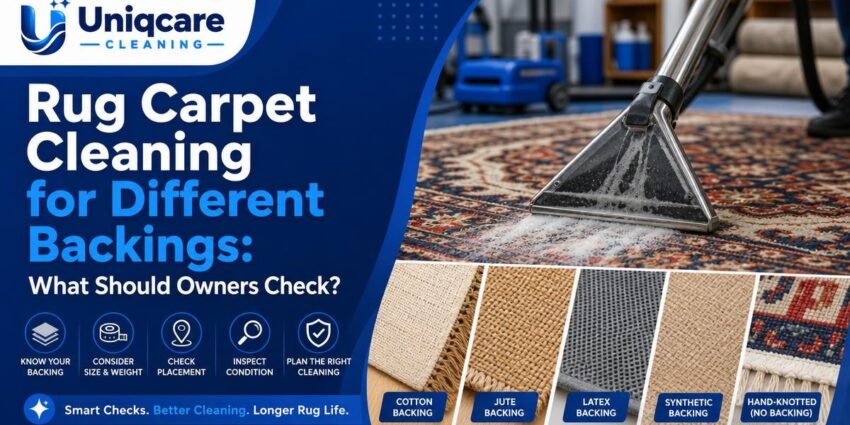
Rug carpet cleaning should begin with an assessment, not a standard treatment applied to every area rug. The rug’s backing, construction, size, placement and visible condition can all affect how a professional cleaning plan is prepared. Checking these details first helps owners explain the rug accurately and understand why one rug may require a different approach from another.
Why the backing matters during rug carpet cleaning
An area rug is more than its visible pile or pattern. Many rugs have a backing that supports the fibres, helps the rug hold its shape or separates the face from the floor. That backing may be woven, coated, layered, stitched or made from a different material than the upper surface.
When moisture, pressure or agitation is involved, the backing becomes part of the cleaning assessment. A rug that appears similar to another rug on the surface may have a different response because its underside is constructed differently. Owners do not need to identify every material themselves, but they should show the underside to the cleaning provider and mention any known care instructions.
What to inspect underneath the rug
- Whether the backing is firmly attached or already lifting at the edges.
- Signs of cracking, flaking, brittleness or powdering on a coated underside.
- Loose stitching, frayed borders or sections that have started to separate.
- Rubber, latex or other non-fabric areas that may need special consideration.
- Old repairs, patches or adhesive that could be affected by handling.
- Whether the underside has staining, dampness or an unusual odour.
These observations do not determine the final cleaning method by themselves. They give the professional a clearer starting point and may indicate that the rug needs gentler handling, additional protection or a more limited treatment.
Different rug constructions need different planning
Construction affects how a rug can be moved, vacuumed, treated and dried. A low-pile rug, a thick pile rug and a loosely woven decorative rug may each present different handling considerations. The condition of the fibres and backing is also important, especially when the rug has been exposed to heavy foot traffic, furniture weight, moisture or previous cleaning.
For this reason, rug carpet cleaning should not be planned from a photograph of the top surface alone. A clear description of the rug’s material, age if known, previous care and current problems can help the provider decide what needs to be checked in person.
| Rug detail | What the owner should check | Why it matters for planning |
|---|---|---|
| Top surface | Pile height, fibre feel, colour changes and visible wear | Helps identify areas that may need careful handling or testing |
| Backing | Coating, stitching, loose sections, cracking or flaking | Shows whether the underside may be sensitive to moisture or movement |
| Edges and corners | Fraying, curling, separated borders or damaged binding | Damaged edges may need protection during moving and cleaning |
| Size and weight | Dimensions, thickness and whether it can be moved safely | Influences access, handling and the practical cleaning setup |
| Visible condition | Spills, spots, soil, dampness, odour or colour transfer | Helps set realistic expectations before treatment begins |
Size and placement affect the cleaning assessment
The size of an area rug changes how it can be handled. A small rug may be easy to inspect from all sides, while a large rug under a dining table, sofa or bed may be difficult to examine without moving furniture. Large or heavy rugs also require more planning for access and positioning.
Tell the provider where the rug is located and whether furniture currently sits on it. Mention narrow corridors, stairs, lifts or other access points when arranging an assessment. This does not replace an inspection, but it helps the provider understand the working conditions before the appointment.
Placement questions to answer
- Is the rug in a living room, bedroom, office or another frequently used space?
- Is it placed over timber, tile, vinyl, laminate, marble or another floor surface?
- Is furniture standing on it, and can that furniture be moved before cleaning?
- Does the rug sit close to a doorway, balcony, wet area or regularly exposed entrance?
- Has the rug remained in the same position for a long period?
Placement can also explain why some areas look different. The section under furniture may have less visible wear than the exposed border, while entrance areas may show more soil from regular traffic. A professional assessment can distinguish between soiling, wear, colour change and physical damage more carefully than a quick visual assumption.
Visible condition: what owners should report
Before arranging rug carpet cleaning, inspect the entire rug in good light. Look at the centre, borders, corners and underside rather than focusing only on the most obvious mark. Take note of when the problem appeared, what caused it if known and whether anyone has already applied a cleaning product.
Stains and discolouration do not all behave in the same way. The result of cleaning can depend on the fibre, backing, age of the mark and substance involved. Professional cleaning may improve the appearance, but owners should avoid assuming that every stain or odour can be completely removed.
- The type of spill or soiling, if known.
- How long the mark has been present.
- Whether water, detergent, bleach or a household stain remover was used.
- Whether the rug has been cleaned before and how it responded.
- Any previous flooding, prolonged dampness or storage in a humid area.
- Any concern about colour bleeding, fibre damage or a deteriorating backing.
Photographs can help with an initial conversation, especially when they show the full rug, close-ups of the affected areas and the underside. However, photographs may not reveal texture, looseness, hidden damage or how firmly the backing is attached. A final plan should be based on the information available to the cleaning provider.

Is rug steam cleaning suitable for every area rug?
Rug steam cleaning is often used as a general term for moisture-based professional cleaning, but it should not be treated as an automatic choice for every rug. The suitability of a particular method depends on the rug’s construction, backing, condition and the type of soil or stain present.
Ask how the provider plans to assess the rug before treatment. A careful discussion should cover the materials involved, the amount of moisture expected, the condition of the backing and any areas that may need testing. The aim is not simply to choose the strongest process; it is to choose a process that matches the rug being cleaned.
Questions to ask about the proposed method
- Will the top and underside be inspected before cleaning?
- Does the backing show signs that require extra care?
- Will a small or less visible area be checked for colour response where appropriate?
- How will loose edges, frayed sections or damaged areas be protected?
- What should be expected regarding moisture, handling and the condition of the rug after cleaning?
These questions help owners make an informed decision without assuming that a named method guarantees a particular result. They also give the cleaning provider an opportunity to explain any limitations before work starts.
When a rug may need extra caution
Some warning signs deserve attention before any cleaning appointment. A brittle or flaking backing, loose pile, major edge damage, persistent dampness or a strong unexplained odour may indicate that the rug has a condition issue as well as a cleaning issue. Cleaning may improve removable soil, but it may not correct physical deterioration or damage caused by moisture.
Do not hide previous attempts to clean the rug. Even if a household product did not produce the desired result, that information can help the professional understand what has already been applied. If a rug has been affected by flooding, explain when the incident occurred and how long it remained wet. A flooded carpet or rug may require a different discussion from ordinary maintenance cleaning.
How to prepare an area rug for professional cleaning
Preparation does not mean applying more products before the professional arrives. In many cases, the most useful preparation is to clear access and gather information about the rug. Remove small objects from the surface, identify furniture that may need to be moved and make the underside available for inspection.
- Vacuum loose surface debris if the rug is suitable for normal vacuuming and its condition allows it.
- Do not scrub aggressively at stains or continue adding different cleaning products.
- Blot a fresh liquid spill carefully rather than spreading it across the rug.
- Photograph visible damage, stains and the underside before treatment.
- Locate any manufacturer care label, purchase information or previous cleaning record.
- Tell the provider about pets, children, furniture placement and recent moisture exposure where relevant.
Preparation is especially useful for offices and commercial spaces, where rugs may be larger, more frequently used or positioned in busy access areas. Owners or facility managers should plan how the space will be accessed during the cleaning appointment and communicate any practical restrictions in advance.
What to expect from a professional assessment
A professional assessment should connect the rug’s construction with its visible condition and intended use. The provider may ask about the rug’s history, inspect the face and backing, consider the surrounding floor and discuss the cleaning process. This conversation is also the right time to raise concerns about staining, odour, previous damage or possible colour changes.
Uniqcare Cleaning provides professional deep-cleaning services for residential and commercial clients, including carpet cleaning for homes, offices, wall-to-wall carpets and area rugs. The company lists deep-cleaning methods including hot water extraction and steam cleaning. Since the appropriate plan depends on the rug’s condition and construction, owners should provide accurate details and request an assessment of the specific rug rather than assuming that every item will be treated identically.
Making a sensible decision about rug carpet cleaning
The best starting point is a complete description: what the rug is made of if known, how the backing looks, where it is placed, how large it is and what problem needs attention. This information helps separate routine soil from signs of wear, moisture damage or backing deterioration.
Rug carpet cleaning can be a practical way to address accumulated soil and visible marks, but the outcome depends on the rug itself. A clear assessment, realistic expectations and honest communication about previous treatment give owners a better basis for deciding whether and how the rug should be cleaned.
Frequently asked questions
Why does a rug backing matter during cleaning?
The backing forms part of the rug’s construction and may respond differently to moisture, movement or agitation. Its condition should be checked before a cleaning method is selected.
Can every area rug receive rug steam cleaning?
Not necessarily. Suitability depends on the rug’s fibres, backing, construction and condition. Ask for an assessment before agreeing to a moisture-based method.
What should I photograph before arranging rug carpet cleaning?
Take photographs of the full rug, close-ups of stains or damaged areas, the edges and corners, and the complete underside. These images provide useful initial information.
Should I remove furniture from the rug first?
Clear small items and discuss larger furniture with the cleaning provider. The rug’s size, placement and access conditions may affect how furniture should be handled.
Can professional cleaning remove every stain?
No result should be assumed in advance. Outcomes can depend on the substance, age of the stain, fibre, backing, previous treatments and overall condition of the rug.
What if the rug has a damaged or flaking backing?
Report the damage before cleaning. A deteriorating backing may require extra caution, and cleaning may not repair physical deterioration.
What information should I give a cleaning provider?
Share the rug’s size, location, known materials, backing condition, visible problems, previous cleaning history and any exposure to spills, dampness or flooding.