
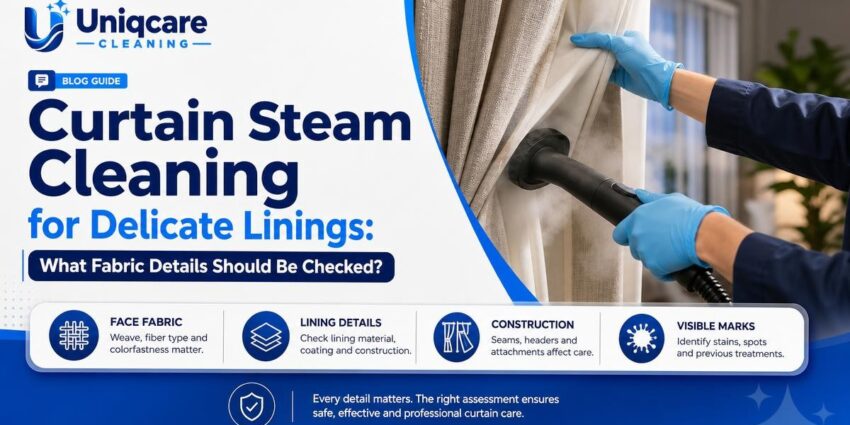
Curtain steam cleaning is not a one-method-fits-all process, especially when a curtain has a delicate lining, decorative trim or signs of age. Before cleaning begins, the face fabric, backing, seams, hanging construction and visible marks should be checked so the cleaning approach matches the curtain rather than relying on appearance alone.
Why curtain details matter before steam cleaning
A curtain is usually made from more than the fabric visible from across the room. It may include a face fabric, lining, interlining, header tape, pleats, hems, hooks, weights and decorative features. These parts can respond differently to moisture, heat, movement and cleaning products.
For that reason, the phrase curtain steam cleaning describes a cleaning method, not an automatic recommendation for every curtain. A suitable approach depends on the material and construction. A lightweight sheer, a lined bedroom drape and a heavily decorated curtain should not be assessed in exactly the same way.
The main fabric details to check
1. The face fabric
The face fabric is the outward-facing layer that determines much of the curtain’s appearance. It may be smooth, textured, loosely woven, tightly woven, sheer, heavily coloured or patterned. The surface should be checked for fading, pulled threads, abrasion, water marks and areas that have become brittle or weakened.
Texture is also relevant. A raised surface, pile, embroidery or delicate weave may need more controlled handling than a plain, stable fabric. The aim is to identify how much physical movement the surface can tolerate and whether cleaning could change the way the fabric reflects light or hangs.
2. The lining and interlining
A lining is attached behind the face fabric and may serve practical or decorative purposes. Some curtains also contain an interlining between the face fabric and lining. These layers can have different responses to moisture and heat, so they should be considered separately rather than treated as one uniform material.
Check whether the lining is loose, puckered, detached at the seams or already showing signs of shrinkage. A lining that has pulled away from the main fabric may need a more cautious assessment. Cleaning cannot correct construction problems, and an existing weakness may become more visible after handling.
3. The curtain’s construction
The header style affects how the curtain is supported and how it should be handled. Pencil pleats, pinch pleats, eyelets, tabs, rod pockets and other heading styles may include tapes, stiffeners or hardware. Examine the top edge, pleat folds, hooks and attachment points for looseness or distortion.
Also inspect the hems and side seams. Long curtains can collect dust near the floor, while repeated opening and closing may wear the leading edges. If the fabric is already fraying, stretched or separating from the header, that condition should be recorded before any cleaning method is selected.
4. Trims, embroidery and accessories
Tassels, piping, fringe, appliqué, embroidery, decorative cords and curtain weights can require separate consideration. They may be made from a different material than the main curtain and may not respond in the same way to moisture or agitation.
Metal rings, hooks, eyelets and other hardware should also be checked. A professional assessment should identify anything that could snag the fabric, transfer colour, rust, loosen or interfere with the cleaning process. Decorative details are not minor extras; they are part of the curtain’s cleaning risk.
What should be checked on delicate linings?
Delicate linings deserve attention because they can be less visible than the face fabric but still affect the curtain’s final appearance. Look for thin or translucent areas, yellowing, seam stress, previous water marks and differences in tension between the lining and outer layer.
It is also useful to check whether the lining is firmly attached throughout the curtain. If it hangs differently from the face fabric, the two layers may not react identically during cleaning. A professional cleaner can use this information when deciding whether steam extraction is appropriate, whether the process needs modification or whether another care recommendation should be discussed.
Fabric labels and available care information
Care labels, invoices, manufacturer instructions and fabric information can help clarify how the curtain was intended to be maintained. The label should be read before cleaning, but it should not replace a physical inspection. A curtain may have changed condition through sunlight, humidity, age or previous cleaning.
If there is no label, tell the cleaner what is known about the curtain. Information about its age, previous cleaning, storage, exposure to sunlight and any repairs can help create a more accurate assessment.
Visible marks need to be identified before cleaning
Not all marks have the same cause, and a visible spot may be part of a wider condition. Inspect the curtain in good light for dust, oily contact marks, food or drink spills, water marks, discolouration, mould-like spotting, pet-related marks and areas affected by smoke or strong odours. The purpose of this inspection is to set realistic expectations and choose suitable preparation.
A stain may have already altered the dye or weakened the fibres. In that situation, cleaning may improve the appearance without returning the curtain to its original condition. Do not assume that a stronger treatment is automatically safer or more effective. The fabric, lining and mark must be considered together.
Look for colour transfer and fading
Patterned curtains and dark fabrics should be checked for colour stability, especially where there are contrasting colours or previous signs of bleeding. Sun-facing sections may also be lighter or more fragile than areas protected by folds. Differences between exposed and covered sections can reveal pre-existing fading that should be noted before cleaning.
Check for water marks and tide lines
Old water marks can indicate that the fabric has previously reacted unevenly to moisture. Tide lines, rings or patchy shading may be more noticeable after the curtain is cleaned if the underlying construction is not considered. This is one reason a small, inconspicuous check may form part of a professional assessment before the main work.

Comparison: which details influence the cleaning decision?
| Detail to assess | What to look for | Why it matters |
|---|---|---|
| Face fabric | Weave, texture, fading, pulled threads and surface wear | Shows how the visible layer may respond to moisture and handling |
| Lining or interlining | Looseness, puckering, thinning, stains and uneven tension | Different layers may react differently during cleaning |
| Header and seams | Pleats, tapes, hooks, hems and fraying | Weak construction can affect how the curtain should be handled |
| Trims and hardware | Fringe, embroidery, cords, rings and eyelets | Separate materials may snag, transfer colour or require protection |
| Visible marks | Spills, oils, water marks, fading and odour sources | Helps set realistic expectations and plan suitable preparation |
| Care information | Labels, manufacturer guidance and previous cleaning history | Provides useful context before selecting a cleaning approach |
How professional curtain cleaning differs from a quick surface clean
A quick surface clean may remove loose dust from an accessible area, but it does not necessarily reveal what is happening inside the pleats, behind the lining or along the header. Professional curtain cleaning begins with a closer look at the curtain’s condition and construction.
Uniqcare Cleaning lists curtain cleaning using steam extraction and describes on-site service for curtains, sheers and drapes. The appropriate process still depends on the individual item. Sharing fabric details and concerns in advance helps the cleaning team assess the curtain more accurately before work begins.
Questions to ask before booking
- Will the face fabric and lining be inspected separately?
- Can the cleaner check the seams, pleats, hems and header tape?
- How will delicate trims, embroidery and hardware be protected?
- Will visible marks and pre-existing fading be discussed before cleaning?
- Is the service suitable for curtains that remain installed, or does the item need another arrangement?
- What information should be provided about previous cleaning or repairs?
These questions are useful because they focus the discussion on the curtain’s actual condition rather than on the word “steam” alone. A careful assessment is particularly valuable when the curtain is expensive, older, lined, heavily decorated or difficult to replace.
When on-site assessment may be useful
On-site curtain cleaning can be practical when the curtains are installed across large windows or form part of a fixed room arrangement. It also allows the cleaner to see the hanging position, the amount of floor contact, the surrounding furniture and any areas exposed to sunlight or moisture.
However, on-site service does not remove the need for preparation. Clear the area around the curtains where possible, identify any fragile furniture nearby and point out marks, repairs or sections that should receive particular attention. For offices and commercial spaces, note whether the curtains are part of a meeting room, reception area or other setting where access may need to be planned.
What customers should avoid before curtain steam cleaning
Homeowners and office managers should avoid applying several different spot treatments immediately before a professional visit. Unrecorded products can alter the appearance of a mark or affect how the fabric responds to further cleaning. Rubbing can also spread a spot or damage a delicate surface.
Do not remove hooks, weights or trims unless you know they are designed to be removed and can be reattached correctly. Keep the curtain in its existing condition and explain what has happened. A clear account of spills, dampness, previous attempts and repairs is more helpful than trying to conceal the problem.
A practical pre-cleaning checklist
- Locate the care label or gather any available fabric information.
- Inspect both the face fabric and the lining from top to bottom.
- Check pleats, seams, hems, header tape, hooks and attachment points.
- Note decorative trims, embroidery, cords, fringe and metal hardware.
- Mark the location of visible spots, water marks, fading or odours.
- Tell the cleaner about previous cleaning, repairs, sunlight exposure and attempted stain treatments.
- Ask which cleaning approach is suitable for the complete curtain construction.
- Discuss expectations before work begins, particularly for old stains, fading or weakened fabric.
Choosing a careful approach to curtain cleaning
The safest cleaning decision starts with information. Face fabric, lining, construction and visible marks all contribute to the assessment, and no single detail should be considered in isolation. A curtain that looks simple from the front may contain several layers and attachments that change the way it should be handled.
If you are considering professional curtain cleaning for a home, office or commercial space, describe the curtain accurately and request an assessment before the process begins. Uniqcare Cleaning provides professional deep-cleaning services for residential and commercial clients, including curtain cleaning, and lists service regions covering Kuala Lumpur, Selangor, Putrajaya and Cyberjaya. The result of any cleaning work can depend on the material, condition and type of mark, so a clear pre-cleaning discussion is an important part of responsible care.
Frequently asked questions
Is curtain steam cleaning suitable for every curtain?
No. Suitability depends on the face fabric, lining, construction, trims, condition and care information. A professional assessment should come before selecting the cleaning approach.
Why should the lining be checked separately?
The lining may be made from a different material and may have different levels of strength, tension or existing wear. It can respond differently from the visible outer fabric during cleaning.
Should visible stains be pointed out before curtain cleaning?
Yes. Tell the cleaner about spills, oily marks, water marks, fading, odours and previous treatment. This helps set realistic expectations and supports better preparation.
Can decorative curtain trims be cleaned with the main fabric?
They may need separate consideration because fringe, embroidery, cords and hardware can differ from the main fabric. The cleaner should inspect and protect these details as part of the assessment.
What information should I provide when booking professional curtain cleaning?
Describe the curtain type, lining, approximate condition, visible marks, previous cleaning, repairs, sunlight exposure and whether the curtain is installed. Photos or fabric information may also help with the initial discussion.
Does on-site curtain cleaning remove the need for an inspection?
No. On-site service allows the curtain and its surroundings to be viewed in place, but the face fabric, lining, seams, hardware and visible marks still need to be checked before cleaning.