
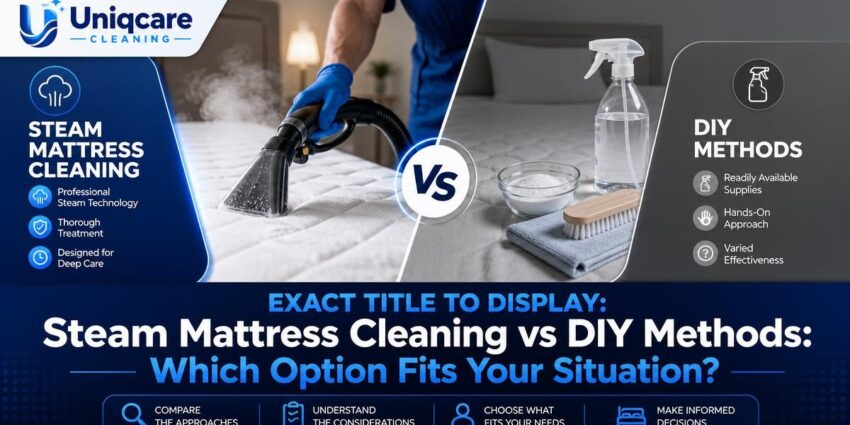
Steam mattress cleaning can be a practical option when a mattress needs more than routine vacuuming, but it is not the only approach. DIY cleaning may suit light, localised messes, while professional mattress cleaning can be worth considering when the mattress is heavily soiled, difficult to handle or requires a more systematic treatment. The right choice depends on the mattress material, the condition of the surface, the equipment available and how confidently the work can be completed without leaving excess moisture behind.
What is the difference between steam mattress cleaning and DIY cleaning?
Steam mattress cleaning generally refers to using a steam or extraction-based cleaning process to treat the mattress surface and remove loosened soil with suitable equipment. Professional treatment may involve an assessment of the fabric and condition before cleaning. The exact process can vary according to the service provider, mattress construction and type of soiling.
DIY mattress cleaning covers a wider range of home methods. These may include vacuuming, carefully treating a small spot, airing the room and following the mattress manufacturer’s care instructions. Some people also use rented or household cleaning equipment. However, using a machine at home does not automatically make the process equivalent to professional treatment. Results depend on technique, product choice, moisture control and the condition of the mattress.
| Consideration | DIY mattress cleaning | Professional steam treatment |
|---|---|---|
| Best suited to | Routine upkeep and small, recent areas of concern | More extensive cleaning needs or mattresses that are difficult to manage at home |
| Equipment | Household vacuum, suitable cloths and carefully selected products | Professional cleaning equipment and an organised treatment process |
| Control | You control the timing, products and method | The cleaner assesses the material and carries out the service |
| Moisture risk | Depends heavily on how much product or water is applied | Still requires appropriate moisture control and post-cleaning ventilation |
| Convenience | Available immediately but requires your own time and effort | Less hands-on work for the customer, subject to appointment availability |
| Outcome | May improve surface cleanliness, depending on the issue | May provide a more thorough treatment, although results vary by material and condition |
When DIY mattress cleaning may be enough
DIY cleaning can be a reasonable starting point when the mattress is generally in good condition and the problem is limited. For example, a small area may need attention after a recent spill, or the surface may simply need routine maintenance. In these situations, a full machine treatment may be unnecessary if the care label permits the chosen method.
Common situations for a home approach
- The issue is limited to a small, clearly identified area.
- The mattress has no strong or widespread odour.
- You can follow the manufacturer’s instructions confidently.
- You have enough ventilation and space to let the mattress dry properly.
- You are dealing with regular surface dust rather than deep or extensive soiling.
A cautious DIY routine usually starts with removing bedding and inspecting the mattress. Vacuuming the surface and edges can help collect loose dust and debris. If a spot requires treatment, use a small amount of a product that is appropriate for the fabric, test it on an inconspicuous area first and avoid saturating the mattress. Blotting is generally preferable to aggressive rubbing, which can spread a mark or affect the surface fabric.
It is also useful to keep expectations realistic. A home method may make a local area look cleaner without addressing every part of the mattress. A visible mark may have penetrated beyond the surface, changed the colour of the material or reacted with an earlier product. In those cases, repeated DIY attempts may not improve the appearance and could add unnecessary moisture or product residue.
When steam mattress cleaning may be more suitable
Professional steam mattress cleaning may be more suitable when the cleaning task is larger, more complicated or difficult to perform safely and evenly at home. A mattress can be awkward to move, turn and clean in a confined room. Applying a product across a large area also makes consistency more difficult, especially when the user has limited experience with upholstery or fabric cleaning.
Signs that professional mattress cleaning deserves consideration
- The mattress has widespread surface soiling rather than one small spot.
- There are several areas requiring treatment.
- Previous DIY products have left residue or an uneven appearance.
- You do not have suitable equipment for controlled cleaning.
- The mattress is large, heavy or difficult to handle.
- You want the work assessed and completed as part of a planned cleaning service.
- You are preparing a guest room, rental property, office accommodation or other frequently used space.
Professional mattress cleaning does not mean that every stain, odour or allergen will be removed. The final result can depend on the mattress fabric, filling, age, previous treatment and type of soiling. A responsible cleaner should be able to discuss the condition and explain what can reasonably be attempted rather than promise an identical result for every mattress.
Moisture and drying are central to the decision
The most important practical issue in any wet or steam-based mattress treatment is moisture management. A mattress is thicker than many household fabrics, so moisture may not be evenly distributed or immediately obvious. If too much liquid is used, the mattress can take longer to dry and may be inconvenient to use during that period.
This is one reason DIY cleaning requires more planning than simply spraying a product and leaving it. Consider the room’s ventilation, the weather, available airflow and whether the mattress can be positioned to expose the treated areas. Do not cover or remake the bed while the surface remains damp. Follow the product instructions and the mattress manufacturer’s care guidance, and ask a professional about expected aftercare if you arrange a service.
Questions to ask before choosing a wet-cleaning method
- Does the care label permit the intended cleaning method?
- Can the room be ventilated adequately after treatment?
- Will the mattress remain usable while it dries?
- Do you know how much moisture the equipment applies and extracts?
- Could the fabric, cover or filling be affected by heat, water or cleaning chemicals?
If the answer to several of these questions is unclear, professional advice may reduce guesswork. It does not remove the need for drying, but it can help you make a more informed choice about the method and the condition of the mattress.
Comparing cost, effort and convenience
DIY cleaning can appear less expensive because there is no service appointment. However, the total effort may include buying products, renting equipment, preparing the room, protecting surrounding surfaces and dealing with drying. If a machine is rented, the cleaning result may also depend on whether its attachments and settings are appropriate for a mattress.
Professional mattress cleaning shifts more of the physical work to a service provider. You still need to prepare the room, remove bedding and make arrangements for the mattress to dry, but you do not have to manage every stage of the cleaning process. The value of the service is therefore not only the equipment; it also includes convenience and the opportunity to have the mattress condition considered before treatment.
| Your situation | Option to consider | Reason |
|---|---|---|
| Small recent spot and good overall condition | Careful DIY cleaning | A limited treatment may be sufficient if the care instructions allow it. |
| Large surface area or repeated soiling | Professional mattress cleaning | A planned service may be easier than treating the mattress in sections yourself. |
| No suitable equipment or limited time | Professional service | You avoid purchasing or renting equipment and carrying out the work. |
| Unclear material or care requirements | Ask for professional guidance first | Material compatibility should be considered before applying heat, moisture or products. |
| Mattress needs routine surface care only | Regular DIY maintenance | Vacuuming and careful upkeep may be appropriate between deeper treatments. |
How to prepare for DIY mattress cleaning
Preparation helps prevent a rushed cleaning attempt. Read the care label, remove all bedding and inspect the mattress in good light. Check whether the problem is on the surface or appears to have spread into seams and deeper areas. If you are treating a spot, identify the material and test the selected product in a hidden area before applying it more broadly.
Use only the amount of product required by its instructions. Avoid combining different cleaning products, and do not assume that a stronger concentration will produce a better result. Keep the mattress as dry as the method allows, provide ventilation and allow adequate drying before replacing bedding. If the mark changes, spreads or reacts unexpectedly, stop rather than repeatedly applying more product.
How to prepare for professional mattress cleaning
Before arranging professional mattress cleaning, describe the issue accurately. Mention whether the mattress has been treated previously, what products have been used and whether there are particular areas of concern. It is also helpful to provide information about the mattress material if it is available.
Clear access to the room and remove sheets, protectors and personal items. Ask what preparation is required, which cleaning method is proposed and what aftercare is recommended. You can also ask how the cleaner will approach delicate materials or explain limitations relating to stains, odours and the mattress’s age. These questions help establish realistic expectations before work begins.
Choosing a mattress cleaning provider
If you decide that a professional service fits your situation, look for clear communication rather than broad promises. The provider should be willing to discuss the mattress condition, the proposed process and any factors that may affect the result. Be cautious of claims that guarantee complete removal of every stain, smell, allergen or contaminant, because mattress materials and types of soiling vary.
Uniqcare Cleaning lists professional mattress cleaning among its deep-cleaning services for residential and commercial clients. The company serves Kuala Lumpur, Selangor, Putrajaya and Cyberjaya. Customers can discuss the mattress condition and cleaning requirements with the business before arranging service, including any preparation or drying considerations that apply to the specific mattress.
A practical decision guide
There is no universal winner between DIY cleaning and steam mattress cleaning. The better choice is the one that matches the scale of the task and your ability to control the process. For routine upkeep, careful vacuuming and prompt attention to a small area may be appropriate. For widespread soiling, awkward mattresses or situations where you lack suitable equipment, professional mattress cleaning may be more convenient.
- Inspect the mattress: identify the material, affected areas and overall condition.
- Check the care instructions: confirm whether moisture, heat or a particular product is permitted.
- Assess the scale: distinguish between a small spot and a mattress that needs broader treatment.
- Plan for drying: make sure the room and schedule allow the mattress to dry before use.
- Set expectations: understand that results can vary and are not guaranteed for every stain or odour.
- Choose help when necessary: contact a professional if the task is too large, uncertain or inconvenient to manage yourself.
Frequently asked questions
Is steam mattress cleaning better than DIY cleaning?
Neither option is automatically better. DIY cleaning may suit routine care or a small area, while professional steam treatment may be more suitable for broader cleaning needs, limited equipment or difficult-to-handle mattresses.
Can steam mattress cleaning remove every stain?
No. Results depend on the stain type, age, fabric, filling and previous treatments. A professional should explain realistic limitations instead of guaranteeing complete stain removal.
Can I use a household steam cleaner on my mattress?
Check the mattress care instructions and the steam cleaner’s guidance first. Heat and moisture may not suit every material, and excessive moisture can create additional drying challenges.
How should I prepare a mattress for cleaning?
Remove bedding and personal items, inspect the mattress, check its care label and provide clear access. For professional cleaning, explain any previous products or treatments used.
How long will a professionally cleaned mattress take to dry?
Drying depends on the cleaning method, mattress construction, ventilation and room conditions. Ask the service provider for specific aftercare guidance and do not cover the mattress while it remains damp.
Does professional mattress cleaning guarantee odour or allergen removal?
No. Cleaning may address some sources of soil or odour, but outcomes vary by material and condition. No medical or complete allergen-removal guarantee should be assumed.