
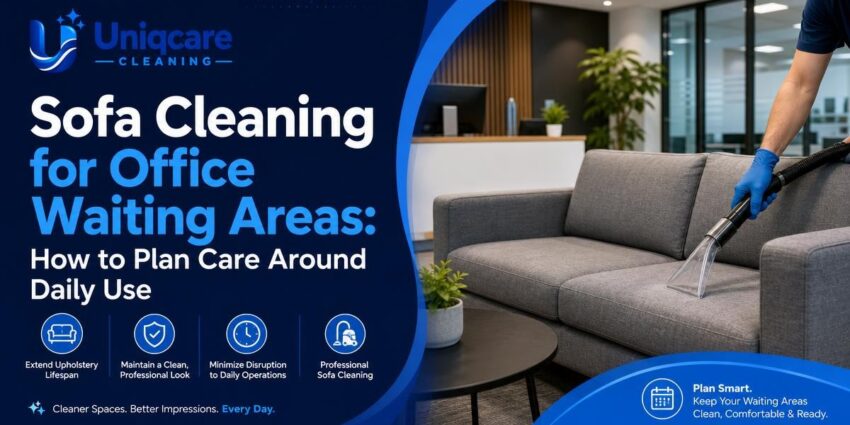
Sofa cleaning in an office waiting area requires more planning than cleaning furniture in a quiet room. Reception sofas may be used by visitors, clients, contractors and staff throughout the day, so the cleaning plan needs to account for traffic, upholstery material, visible wear, access and the time the area can be taken out of service.
Why office waiting-area sofas need a planned cleaning routine
A reception sofa is part of the first impression visitors receive when they enter an office. It also sits in a high-contact area where people may place bags, paperwork or personal belongings while they wait. Dust, loose debris, drink marks and body oils can gradually build up even when the furniture looks reasonably clean from a distance.
Waiting areas also operate differently from private rooms. A sofa that is rarely used may be cleaned when convenient, while a reception sofa may need to remain available during working hours. Planning the work around daily use helps reduce disruption and gives the cleaning team a clearer picture of what needs attention.
Common conditions to monitor
- Darkening or flattening on the most frequently used seat cushions.
- Marks on armrests, front edges, backrests and nearby contact points.
- Food or drink spills that were treated quickly but left a visible ring or residue.
- Dust and debris collected between cushions and along seams.
- Musty or unusual odours that may require inspection of the upholstery and surrounding area.
- Fading, cracking, loose threads or other signs that the material needs a gentler approach.
These signs do not all mean the same thing. A surface mark may respond differently from a stain that has penetrated the fabric, and a worn area may need care rather than aggressive treatment. The condition of the sofa should be considered before selecting a cleaning method.
Start with a practical assessment of the waiting area
Before arranging professional sofa cleaning, inspect the furniture and the room as a whole. Count the sofas and chairs, note which seats receive the most use, and identify whether the furniture is fixed in place or can be moved. Check the route from the entrance to the furniture, including lifts, corridors, doors and any access restrictions.
It is also useful to record the upholstery type if it is known. Uniqcare Cleaning describes its sofa and upholstery service as covering fabric and leather sofas, along with selected chairs and office furniture. The appropriate process still depends on the specific material, its condition and any care instructions supplied by the manufacturer.
| What to assess | Why it matters | Information to prepare |
|---|---|---|
| Usage level | High-use seats may need closer inspection and more regular attention. | Busy periods, visitor volume and seats used most often. |
| Upholstery material | Fabric, leather and mixed materials may require different handling. | Material type, care label and any previous treatment. |
| Visible condition | Marks, wear and loose components can affect the cleaning approach. | Stains, odours, fading, tears and damaged seams. |
| Room access | Equipment and staff need a workable route into the reception area. | Parking, loading access, lifts, security procedures and building rules. |
| Business schedule | The area may need to be partially or fully cleared during the work. | Quiet periods, meeting schedules and expected visitor traffic. |
Match cleaning frequency to actual use
There is no single cleaning interval that suits every office. A small reception with occasional visitors will have a different pattern from a busy commercial premises where people are seated throughout the day. Instead of choosing a schedule based only on the calendar, consider how quickly the upholstery accumulates visible soil and how important the furniture is to the visitor experience.
A useful approach is to combine routine observation with scheduled professional cleaning. Staff can check the sofa during normal housekeeping, while a deeper service can be arranged when the upholstery shows accumulated soil, persistent marks or odour. The timing can then be reviewed after each service.
A simple planning framework
- Identify the busiest seats. Do not assume every cushion receives equal use. Corner seats, seats nearest the reception desk and positions facing the entrance may be used more often.
- Record recurring problems. Note drink spills, pen marks, dust around seams or repeated contact marks. This helps distinguish one-off incidents from ongoing wear.
- Review the furniture condition. Cleaning may improve soil and staining, but it cannot correct every issue associated with age, fabric damage or permanent discolouration.
- Choose a workable service window. Consider when visitors are least likely to need the area and whether the building has access rules for contractors.
- Reassess after cleaning. Ask which seats still show faster soiling and whether the layout or daily care routine should change.
For offices with several seating zones, it may be more practical to divide the work into sections rather than remove all waiting-area furniture from use at once. The final arrangement should be agreed with the cleaning provider after the number, size and location of the items are reviewed.
Schedule sofa cleaning with minimal disruption
The best appointment time is not necessarily the end of the day. It depends on the building’s access arrangements, the office’s visitor pattern and the requirements of the upholstery. A weekend or quieter weekday period may be suitable for some offices, while another business may prefer to work in sections during a lower-traffic period.
Questions to settle before the appointment
- Will visitors still need to use the reception area during the work?
- Can the sofas be temporarily moved or must they remain in their normal positions?
- Who will provide access to the building and any restricted areas?
- Is there a nearby power supply or another site requirement that should be discussed?
- Does the building require contractor registration, protective measures or advance notice?
- Which parts of the furniture should be included: seats, backs, arms, loose cushions or matching chairs?
- Are there sensitive materials, previous treatments or known damage that the cleaner should inspect first?
Good preparation prevents avoidable delays. Reception staff can redirect visitors temporarily, remove loose items from the furniture and inform the cleaning team about any recent spill or spot-treatment attempt. If the office has a reception desk, security checkpoint or shared lobby, the relevant building manager should also be informed.
Prepare the sofas before a professional service
Preparation does not mean applying several household products to every mark. In fact, untested products can leave residue, alter colour or make later treatment more difficult. A better preparation step is to remove personal belongings, paperwork and loose objects, then provide clear information about what happened to any stain.
Where possible, share the care label or manufacturer guidance with the cleaning provider. Mention whether the sofa is fabric or leather, whether it has been treated before, and whether a spill contains coffee, ink, food, oil or another substance. The age of a stain and the previous products used may affect the expected result.
What office staff should avoid
- Do not scrub a mark forcefully, especially if the fabric is delicate or already worn.
- Do not combine different cleaning chemicals on the same area.
- Do not assume that a household disinfectant is suitable for every upholstery material.
- Do not cover a damp or recently treated area with plastic or tightly stacked items.
- Do not promise visitors that every stain or odour will disappear before the material has been assessed.
Professional sofa cleaning is best approached as a material-sensitive service rather than a one-method-fits-all process. A provider can inspect the upholstery, discuss the visible condition and explain what may or may not be achievable before work begins.

Plan around upholstery condition, not appearance alone
Two sofas may look similar but need different care. One may have durable fabric with surface soil, while another may have delicate upholstery, faded sections or cushioning that has been compressed by regular use. Leather may also require different handling from fabric, particularly when the surface shows dryness, cracking or previous product buildup.
Tell the cleaner about areas that should receive special attention, but also point out damage that should not be treated aggressively. Loose stitching, exposed foam, torn backing, unstable legs or peeling surface layers may need repair or separate assessment. Cleaning can address removable soil and some stains, but it is not a substitute for upholstery repair or replacement.
Set realistic expectations about stains and odours
Cleaning results can depend on the type of stain, how long it has been present, the material, the colour and any earlier treatment. Some marks may lighten rather than disappear completely. Odours can also have different causes, including surface contamination, liquid that has reached deeper layers or conditions around the furniture.
Ask for the sofa to be assessed before treatment and discuss any priority areas. This creates a more useful service brief than simply requesting that the furniture be made “like new,” which may not be realistic for older or heavily worn upholstery.
Manage the waiting area during and after cleaning
Reception planning should continue after the cleaning work is finished. Follow the provider’s instructions about when the furniture can be used again and how the area should be left during any drying or settling period. The exact timing may vary with the material, cleaning method, ventilation and site conditions, so it should not be assumed in advance.
If only part of the waiting area has been cleaned, use clear signs or temporarily redirect visitors to the available seating. Avoid placing files, bags or decorative items back on the sofa immediately. Staff should also check that cushions and furniture have been returned to their intended positions before the reception area resumes normal use.
Practical post-cleaning checks
- Confirm that the treated sections match the agreed scope of work.
- Look for areas that may need additional attention or further assessment.
- Keep foot traffic away from restricted sections until the provider gives clearance.
- Restore loose cushions and furniture only as advised.
- Record any remaining marks so they can be monitored rather than repeatedly treated without guidance.
Maintain office sofas between professional visits
Daily care does not replace deep cleaning, but it can slow the buildup of loose soil and help staff notice problems earlier. The routine should be simple enough to follow without interrupting reception work.
- Vacuum or remove loose debris from accessible surfaces according to the office’s housekeeping plan.
- Check seams, gaps and the spaces beneath removable cushions.
- Respond promptly to fresh spills by following the upholstery guidance instead of rubbing aggressively.
- Keep food and uncovered drinks away from seating where practical.
- Rotate or redistribute loose cushions only when the furniture design and manufacturer guidance allow it.
- Report unusual odours, persistent marks or signs of damage before they become larger maintenance issues.
- Keep the sofa slightly separated from activities that create dust, moisture or heavy contact where the room layout permits.
It is also worth reviewing the arrangement of the waiting area. If visitors consistently use one sofa while another remains empty, changing the layout may distribute wear more evenly. A small sign or reception practice that directs guests to available seating can also help, provided it does not make the waiting area feel restrictive.
Choosing a professional sofa cleaning provider
When comparing providers, look beyond a general promise to clean upholstery. Explain that the furniture is in an active office waiting area and ask how the provider handles material assessment, access, furniture protection, the agreed scope and use of the space after service.
Uniqcare Cleaning provides professional deep-cleaning services for residential and commercial clients, including sofa and upholstery cleaning. Its service information describes on-site cleaning for selected sofa and curtain work, and lists service regions including Kuala Lumpur, Selangor, Putrajaya and Cyberjaya. Businesses should still confirm the current appointment details, access requirements and suitability of the service for their particular furniture before scheduling.
Useful information to provide when requesting an assessment
- The number and approximate size of sofas or chairs.
- Photographs of the upholstery and any visible stains, if requested.
- The material type and available care instructions.
- The office location, floor level, access route and building restrictions.
- The preferred service window and any periods when visitors must not be disrupted.
- Details of previous cleaning, spot treatment, spills or repairs.
A clear brief helps the provider decide whether the job is suitable for the site and helps the office prepare the room properly. It also keeps expectations grounded in the actual condition of the furniture.
A practical office sofa cleaning checklist
Use the following checklist when planning the next service:
- Inspect every sofa, chair and loose cushion in the waiting area.
- Identify the most frequently used seats and the most visible contact points.
- Confirm the upholstery material and locate care instructions if available.
- Photograph or describe stains, odours, wear and damage for discussion.
- Choose a service window that limits visitor disruption.
- Confirm access, security and building requirements in advance.
- Remove personal items and avoid unapproved chemical treatment before the appointment.
- Agree on the scope, inspection process and realistic expectations with the provider.
- Keep the area available for post-service instructions and restricted use if necessary.
- Review the maintenance routine after cleaning and adjust it to actual usage.
Frequently asked questions about office sofa cleaning
How often should an office waiting-area sofa be professionally cleaned?
The appropriate frequency depends on visitor traffic, visible soiling, upholstery material and the condition of the furniture. Inspect the sofa regularly and arrange professional cleaning when routine care no longer manages accumulated soil or recurring marks.
Can sofa cleaning be carried out while the office is open?
It may be possible to work in sections, but this depends on access, equipment, visitor movement and the furniture’s requirements. Discuss the office schedule with the provider so the work can be planned around quieter periods or a temporary closure of part of the waiting area.
Should every sofa be cleaned at the same time?
Not necessarily. Cleaning all furniture together may be convenient, but a phased plan can reduce disruption where the waiting area must remain available. The decision should reflect the number of items, their condition and the office’s operating needs.
Will professional sofa cleaning remove every stain?
No cleaning provider can guarantee the same result for every stain. The outcome may depend on the stain type, age, material, colour, previous treatments and general wear. Ask for an assessment before treatment and set expectations based on the actual upholstery.
What should staff do if a drink spills on the sofa?
Remove loose liquid carefully, avoid forceful rubbing and follow the upholstery care guidance. Record what was spilled and what action was taken, then seek advice if the mark remains or the material is sensitive.
Does sofa cleaning also cover office chairs?
It may, depending on the provider’s scope and the type of chair. Uniqcare Cleaning describes its sofa and upholstery service as including selected chairs and office furniture, so provide the item details and confirm suitability before booking.
What information should a business give before requesting a quote or appointment?
Provide the furniture count, approximate sizes, upholstery material, visible condition, office location, access details and preferred timing. Mention previous treatments, persistent odours, stains or damage so the provider can assess the work more accurately.