
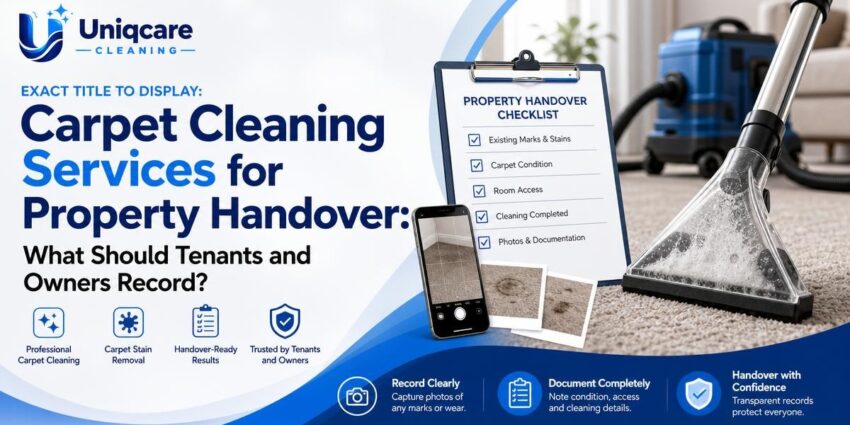
Property handover can become difficult when a carpet mark is noticed only after furniture has been removed or when neither party can remember its earlier condition. A clear record helps tenants, owners and property managers separate existing wear from newly noticed damage. This checklist explains what to document before arranging carpet cleaning services, during the work and immediately after the carpet has been inspected.
Why carpet records matter during a handover
Carpet is easy to overlook during an inspection because furniture, rugs and personal belongings may cover parts of the floor. Once a room is empty, discolouration, flattened areas, pulled fibres, worn paths or old stains can become more visible. Without photographs and written notes, it may be difficult to establish whether a condition was present at the start of an occupancy, developed during the tenancy or resulted from a later incident.
A handover record is not a promise that every mark will disappear after cleaning. Carpet fibres, backing, dye and previous treatment history can affect the result. The purpose of the record is to describe the condition accurately and create a shared reference for the tenant and owner.
What to record before moving items
The best time to document the carpet is before cleaning begins and, where possible, before large furniture is moved. Take wide photographs showing the whole room as well as closer images of individual marks. Include a simple room label and the date so the photographs can be matched to your written notes.
Record the room and carpet details
- Room name or location, such as living room, bedroom, office or corridor.
- Whether the carpet is wall-to-wall, an area rug or a fitted section.
- Visible colour, pattern and general condition.
- Areas hidden by furniture, shelving or stored items.
- Any sections that cannot be inspected because access is blocked.
For a commercial property, use a consistent room numbering system. A simple floor plan or room list can help when several offices, meeting rooms or corridors contain carpet. For a home, room names are usually enough, but be specific if a room has more than one carpeted area.
Describe marks without guessing their cause
Notes should describe what can actually be seen. For example, “dark brown mark beside the sofa, approximately the size of a hand” is more useful than “coffee stain” unless the cause is known. Other useful descriptions include “lighter patch near the window,” “flattened pile along the doorway” or “frayed edge beside the skirting board.”
Record the position of each mark using a fixed reference point, such as the entrance, window or wall. This makes it easier to identify the same area after cleaning. If a mark appears to have spread, has a strong odour or is connected to dampness, note that separately rather than assuming a particular cause.
Handover carpet checklist
The following table can be used as a basic inspection sheet. Add extra rows for rooms or carpet areas that need closer attention.
| Item to record | What to check | Useful evidence |
|---|---|---|
| Room or area | Identify the exact carpeted location. | Room label, floor plan or inspection note |
| Overall condition | Note general wear, flattened pile, fading or visible damage. | Wide photographs taken in good light |
| Stains and marks | Record colour, size, position and appearance without guessing the cause. | Close-up photograph with a room reference |
| Edges and seams | Check loose edges, lifted seams, fraying or exposed backing. | Close-up photograph and written description |
| Covered areas | List sections that could not be inspected before items were moved. | Photograph showing the obstruction |
| Access | Record parking, lift, stairs, keys, security rules and available working space. | Written instructions and contact details |
| Cleaning request | State which rooms need general cleaning or targeted carpet stain removal. | Agreed work list or quotation request |
| After-cleaning condition | Compare the same areas after the work and note remaining marks. | Matching before-and-after photographs |
What tenants should document
Tenants should keep any move-in inspection photographs, inventories or messages that describe the carpet when the property was first occupied. These earlier records may show existing marks, worn pathways or areas that were already faded. If no move-in record exists, create a current record as soon as possible and explain that it reflects the condition observed at the time of inspection.
Before booking a cleaning appointment, tenants should identify any incidents that may affect the cleaning approach. Examples include a drink spill, pet accident, water exposure, furniture indentation or a previous attempt to treat a mark. The information does not need to be technical. A straightforward description of what happened, when it was noticed and what product was used can help the cleaning provider assess the carpet more appropriately.
Tenant documentation to keep
- Move-in and pre-handover photographs.
- Inspection reports, inventories and written condition notes.
- Messages about reported spills, leaks or carpet concerns.
- Invoices or receipts for professional cleaning services.
- The areas included in the cleaning request.
- Photographs taken after cleaning and before keys are returned.
Tenants should avoid aggressively scrubbing an uncertain stain immediately before inspection. Rubbing can spread a mark, affect the pile or alter the appearance of the surrounding fibres. If a spot treatment has already been attempted, record the product and method rather than applying several additional products without checking whether they are suitable for the carpet.
What owners and property managers should document
Owners and property managers should compare the handover condition with the earliest reliable record available. The comparison should consider normal use, the age and type of carpet, visible wear in traffic areas and any maintenance history. A newly noticed mark is not automatically evidence of new damage, particularly when the corresponding area was previously covered or poorly photographed.
During the inspection, separate cleaning concerns from repair concerns. Surface soil or a removable spill may be suitable for carpet cleaning services, while pulled fibres, damaged seams, delamination, burns or permanent colour change may require a different assessment. A cleaning appointment should not be described as a repair unless the provider has specifically assessed and agreed to that work.
Owner documentation to keep
- The original inventory or condition report.
- Date-stamped photographs from the beginning and end of occupancy.
- Notes showing which areas were accessible during each inspection.
- Any reports of leaks, flooding, spills or furniture damage.
- The agreed cleaning scope and any areas excluded from the work.
- Post-cleaning observations, including marks that remain visible.
Access details can affect the cleaning appointment
Good access planning is part of a useful handover record. Tell the cleaning provider whether the property is in a high-rise building, whether a lift or loading bay is available and whether security registration is required. Record parking instructions, entry arrangements, key collection, working hours and any building rules that may affect equipment access.
Also note whether the carpeted rooms will be empty. Furniture can restrict inspection and cleaning, and moving items may not be included unless it has been discussed in advance. If some furniture must remain in place, identify it before the appointment so expectations about covered areas are clear.
Access questions to settle in advance
- Who will provide access on the scheduled day?
- Are keys, access cards or security registration required?
- Is there a suitable parking or loading area?
- Can equipment reach each carpeted room?
- Will rooms be empty, partly furnished or fully occupied?
- Are there building restrictions on working hours or water use?
- Who will inspect the carpet after the cleaning work?
How to request carpet cleaning services for handover
When contacting a provider, give enough information for the request to be understood clearly. State the property type, number of carpeted rooms, approximate carpet area if known and whether the carpet is wall-to-wall or a rug. Include photographs of representative marks and explain whether the aim is general deep cleaning, targeted carpet stain removal or an assessment after water exposure.
Uniqcare Cleaning provides professional deep-cleaning services for residential and commercial clients, including carpet cleaning for homes, offices, wall-to-wall carpets and area rugs. The company describes methods including hot water extraction and steam cleaning. It serves Kuala Lumpur, Selangor, Putrajaya and Cyberjaya. The appropriate method and likely result can depend on the carpet material, condition, stain type and previous treatment, so those details should be discussed before work begins.
Information to include in the enquiry
- Property type and location.
- Number of rooms or carpeted areas.
- Carpet type, if known.
- Photographs of general condition and specific marks.
- Details of spills, odours, dampness or previous treatments.
- Access arrangements and preferred inspection timing.
- Whether the work is for a tenant handover, owner inspection or commercial premises handover.
What to check before cleaning starts
Before work begins, review the agreed scope with the person arranging the service. Confirm the rooms included, the areas that require targeted attention and any sections that cannot be accessed. This is also the right time to mention delicate fibres, loose edges, old repairs, fading or concerns about moisture.
Ask how the provider intends to approach visible marks and whether some stains may remain because of the carpet’s condition or the nature of the substance. A careful discussion is more useful than assuming that every mark can be removed. The written record should distinguish between cleaning requested and outcomes that have not yet been assessed.
What to record after the carpet has been cleaned
Inspect the same locations used in the before-cleaning photographs. Take matching images from a similar angle and record the inspection date. Note whether the mark appears reduced, unchanged or more visible after the carpet has dried and the room has been viewed under normal lighting.
Do not rely only on a general statement such as “carpet cleaned.” A better record identifies the rooms serviced, the areas inspected, any access limitations and any visible condition that remains. If a section was hidden by furniture or could not be evaluated properly, record that limitation rather than treating the result as a full inspection.
Post-cleaning sign-off points
- List every room or carpeted area included.
- Compare the documented marks with the final appearance.
- Record remaining stains, fading, wear or physical damage.
- Note areas that were inaccessible or covered.
- Save the service invoice or receipt.
- Keep before-and-after photographs with the handover documents.
- Have the tenant, owner or property manager acknowledge the inspection record where appropriate.
When cleaning is not the only issue
Some carpet conditions need more than routine cleaning. Torn or loose carpet, damaged seams, exposed backing, burns, severe flattening or adhesive residue may require a separate assessment. If carpet has been affected by flooding or significant water exposure, record when it happened, which areas were affected and whether the carpet remained damp. Uniqcare Cleaning also lists flooded carpet cleaning and restoration among its services, but the condition of the carpet and extent of exposure should be discussed directly.
Old carpet or carpet that has undergone previous treatments may respond differently from a newer installation. Colour change, permanent staining and fibre damage may remain even after professional cleaning. A transparent handover record should state what was observed rather than presenting cleaning as a guaranteed replacement for repair or replacement.
A simple handover workflow
A consistent sequence reduces missed details and makes the inspection easier to follow:
- Review the original inventory, photographs and previous maintenance messages.
- Inspect each carpeted room before moving or removing items where possible.
- Photograph the overall room and each notable mark.
- Write a neutral description of the carpet condition.
- Confirm access arrangements and the cleaning scope.
- Share relevant information about spills, dampness and previous treatment.
- Arrange suitable carpet cleaning services if cleaning is required.
- Photograph and record the carpet again after the work.
- Keep the final record with the other handover documents.
This process gives both sides a clearer timeline. It also helps a cleaning provider understand which areas matter most, whether the request is for general cleaning or targeted carpet stain removal and whether a separate inspection may be needed.
Frequently asked questions
Should carpet condition be recorded before furniture is removed?
Yes, record the visible condition before moving items and inspect newly exposed areas afterward. Photograph any sections that remain hidden so the inspection limits are clear.
Can carpet cleaning services remove every handover stain?
No. Results can depend on the fibre, backing, stain type, age of the mark and previous treatment. Some discolouration or physical damage may remain after cleaning.
What should a tenant tell the cleaning provider?
Share the carpet type if known, room locations, photographs, the suspected timing of spills, any water exposure and products or methods previously used.
Is a stain the same as carpet damage?
Not necessarily. A stain may be a cleaning concern, while burns, tears, loose seams, worn fibres or exposed backing are physical conditions that may need a separate assessment.
Should owners take photographs after cleaning?
Yes. Matching before-and-after photographs and written notes show which areas were inspected, what changed and what remained visible.
What access information should be included in the booking?
Include parking, lift or stair access, keys, security requirements, building rules, room availability and the person responsible for opening and checking the property.
Can carpet cleaning be arranged for offices and commercial premises?
Yes. Uniqcare Cleaning provides professional deep-cleaning services for residential and commercial clients. The enquiry should include the number of rooms, access restrictions, working hours and areas requiring attention.