
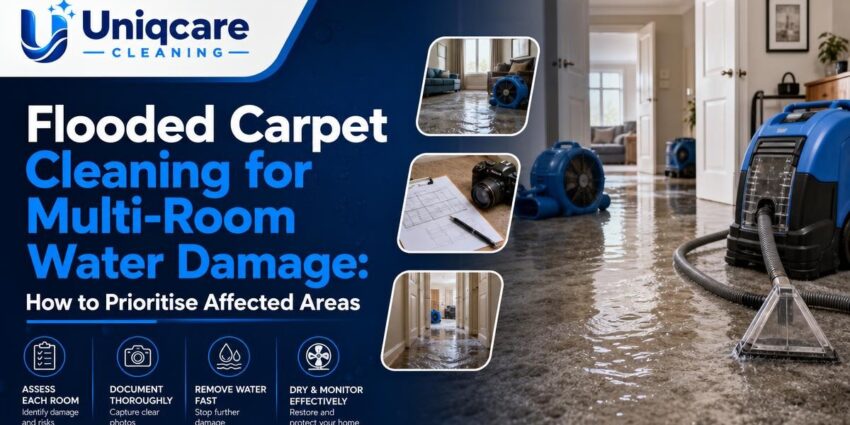
When carpet flooding affects more than one room, the first challenge is not simply removing visible water. Property owners must decide which areas need attention first, move furniture without spreading damage, record the condition of the property and organise drying in a practical order. A clear plan for flooded carpet cleaning can help reduce confusion and give each affected room the right level of attention.
Why multi-room carpet flooding needs a clear plan
Water rarely affects every room in exactly the same way. One area may have standing water, while another may only feel damp around the edges. Water can also travel beneath rugs, furniture and carpet layers, making a room look less affected than it really is. If several rooms are handled randomly, the most heavily affected areas may remain wet while time is spent on rooms that only need surface cleaning.
A simple priority system helps you separate immediate safety concerns from cleaning and restoration tasks. It also creates a written record that can be useful when discussing the work with a professional cleaner, building manager, landlord or insurer. The aim is not to make a technical assessment beyond your ability. It is to organise the situation so that important information is not missed.
Start with safety and the source of the water
Before entering affected rooms, confirm that the water source has stopped or been controlled. A burst pipe, overflowing appliance or drainage problem may continue to add moisture while cleaning is under way. If water is near electrical sockets, cables, appliances or electrical equipment, avoid contact and seek appropriate professional assistance before attempting to move items.
The source of the water also matters when deciding how cautiously to proceed. Water from a clean supply leak is different from water that may have come from a drain, toilet, external flooding or another contaminated source. Do not assume that a carpet is safe to handle simply because the water looks clear. When the source is uncertain, keep people and pets away from the affected area until it has been assessed.
- Stop or isolate the source of the water where it is safe to do so.
- Keep children and pets away from wet carpet and affected furniture.
- Do not use electrical equipment in wet areas unless it is suitable and safe for that condition.
- Wear suitable protective equipment when handling dirty or contaminated water.
- Contact a qualified professional when the cause, safety risk or extent of damage is unclear.
How to rank affected rooms
After the immediate safety check, walk through every affected room and create a basic inventory. The best first target is usually the area with the greatest combination of water volume, moisture duration, sensitive contents and risk of water spreading to other spaces. A room with a small visible wet patch may still deserve urgent attention if moisture has moved underneath wall-to-wall carpet or into a connected hallway.
| Priority | Typical condition | First action |
|---|---|---|
| 1 | Standing water, active spread or heavily saturated carpet | Address the water source and arrange water extraction or professional assessment. |
| 2 | Wet carpet near furniture, walls, electrical items or doorways | Move safe-to-handle items, protect access routes and document the affected area. |
| 3 | Damp rooms with no visible standing water | Check carpet edges, underlay, rugs and furniture bases; begin suitable drying steps. |
| 4 | Rooms with light marks or isolated dampness | Record the condition and schedule cleaning after more urgent areas are stabilised. |
This order is a guide rather than a fixed rule. A room with less water may move up the list if it contains important documents, electrical equipment, mattresses or upholstered furniture. Similarly, a room that looks severely damaged may need to remain closed until the water source and safety concerns have been dealt with.
Make a room-by-room assessment
Record the type and extent of moisture
For each room, note whether the carpet is wet, damp, stained, muddy or carrying an odour. Mark where the water is visible and whether it has reached skirting boards, walls, rugs or nearby furniture. Check transitions between rooms, since water may have travelled through doorways or beneath furniture without forming a large surface pool.
Do not rely only on how the carpet feels underfoot. Carpet can retain moisture below the visible fibres, particularly around edges, beneath heavy furniture and in areas where the underlay has absorbed water. A professional assessment may be needed to determine whether extraction, cleaning, drying or more extensive action is appropriate for the materials involved.
Identify contents that need attention
Make a separate list of items in each room. Include sofas, chairs, cabinets, rugs, mattresses, curtains, boxes and electronic equipment. Note which items are directly wet, which are standing on wet carpet and which can be moved without creating a safety problem.
Use photographs or video where possible, taking wide images of the room as well as close images of wet carpet, staining and affected belongings. Add the date and room name to your notes. This documentation can help you compare the condition later and communicate the scope of the work clearly.
Move furniture without spreading the damage
Furniture movement is often necessary, but rushing can create additional problems. Heavy items may trap moisture against the carpet and prevent air from reaching the affected area. However, dragging them across wet carpet can spread dirty water, damage carpet fibres or scratch the floor beneath.
Move only items that can be handled safely. If possible, lift rather than drag, and place items on a dry, protected surface away from unaffected rooms. Keep track of where each item came from so that the room can be documented accurately. If a piece of furniture is too heavy, unstable or electrically connected, leave it in place and seek appropriate assistance.
- Remove small, movable items first so they do not block access.
- Lift furniture where practical instead of dragging it through wet areas.
- Separate wet items from dry items to reduce transfer of moisture.
- Do not stack damp textiles in closed bags or unventilated spaces.
- Photograph furniture legs, bases and nearby carpet before moving heavy items.
Prioritise extraction before detailed cleaning
In a multi-room incident, detailed stain treatment should not come before removing excess water. The first objective is to reduce the amount of moisture held by the carpet and surrounding materials. Professional flooded carpet cleaning may involve industrial water extraction, followed by carpet cleaning, restoration and drying steps suited to the condition of the carpet.
Extraction is particularly important in rooms with standing water or saturated carpet. Household towels may absorb a small amount from the surface, but they are unlikely to address moisture held deeper in the carpet system. Avoid repeatedly scrubbing wet carpet, as aggressive rubbing can work soil further into the fibres and may affect the carpet’s appearance.
The appropriate approach depends on the carpet material, the underlay, the type of water and how long the area has remained wet. A professional cleaner should be given accurate information about when the flooding occurred, where the water came from and which rooms are affected.

Organise drying by room and material
Drying should be treated as a coordinated process rather than a single final step. Start with the rooms that hold the most moisture and those that connect to other affected spaces. Keep internal doors and pathways organised so that people do not repeatedly walk through wet carpet and transfer moisture to dry areas.
Ventilation, air movement and moisture control may all form part of a drying plan, but equipment must be used safely and appropriately for the conditions. Do not place electrical devices in areas where water creates a hazard. Curtains, mattresses, sofas and rugs may require separate handling because their materials and construction differ from wall-to-wall carpet.
| Area or item | What to check | Planning consideration |
|---|---|---|
| Wall-to-wall carpet | Edges, seams, underlay and furniture contact points | May need extraction and careful drying across the whole affected section. |
| Area rugs | Backing, colour transfer and trapped moisture | Separate from the floor and assess according to the rug material. |
| Sofa or upholstery | Cushions, seams, frame and contact with wet flooring | May require upholstery cleaning in addition to carpet work. |
| Mattress | Outer fabric, sides and internal moisture | Keep separate from wet rooms and arrange suitable assessment. |
| Curtains | Lower edges, lining and contact with damp walls or floors | Handle separately; cleaning requirements vary by fabric and construction. |
Documenting damage for household or business premises
Good documentation is useful whether the property is a home, rented unit, office or commercial space. Create a room list with the date, approximate time of discovery, likely source of water and visible condition. For each room, record the carpet type if known, the area affected and any items that were moved or removed.
Keep copies of messages, invoices and professional assessments related to the incident. If you rent the property, notify the landlord or property manager according to your tenancy arrangements. For offices and commercial premises, also record access restrictions, affected work areas and any equipment that must be isolated. Documentation cannot reverse damage, but it makes decisions easier to explain and follow up.
When to arrange professional flooded carpet cleaning
Professional help is worth considering when several rooms are wet, water has reached the underlay, standing water is present, the source is uncertain or the carpet has developed a strong damp odour. It is also sensible when large furniture cannot be moved safely or when the property needs coordinated extraction and drying rather than ordinary carpet cleaning.
Uniqcare Cleaning provides flooded carpet cleaning and water-damage restoration for homes and businesses in Kuala Lumpur, Selangor, Putrajaya, Cyberjaya and the Klang Valley. The listed service includes industrial water extraction, carpet cleaning and restoration, drying and optional sanitisation. The condition of each carpet and the type of water involved should be discussed before work begins, since results depend on the material and extent of damage.
A practical checklist for the first assessment
- Confirm that the water source has stopped or is being controlled.
- Check for electrical, structural or contamination hazards before entering.
- Walk through every affected room and rank areas by urgency.
- Photograph wet carpet, furniture, walls, rugs and other affected contents.
- Move only safe, manageable items away from saturated carpet.
- Separate wet textiles and contents from dry items.
- Arrange extraction for rooms with standing water or heavy saturation.
- Plan drying around the most affected rooms and materials.
- Keep notes about dates, rooms, actions taken and conversations with professionals.
- Reassess the carpet after extraction and drying before deciding on further cleaning.
Common mistakes to avoid after carpet flooding
One common mistake is treating every room identically. Different carpet types, underlays, furniture loads and water sources may require different decisions. Another is focusing on visible stains while overlooking moisture beneath the carpet or around room edges. A surface that looks cleaner is not necessarily dry.
It is also unhelpful to delay documentation until after furniture and rugs have been moved. Once the room has changed, it may be harder to show the original condition. Finally, avoid making definite assumptions about whether a carpet can be saved or must be replaced before it has been properly assessed. Cleaning and restoration outcomes can vary with the material, contamination and length of time the carpet remained wet.
Frequently asked questions
What should be cleaned first when several rooms have flooded?
Start with rooms containing standing water, heavily saturated carpet, active spread or important safety concerns. Then address damp rooms where moisture may be hidden beneath carpet, furniture or rugs.
Should furniture be removed before flooded carpet cleaning?
Move small and manageable items when it is safe, but do not drag heavy or unstable furniture through wet areas. Photograph items first and seek assistance for anything that creates a lifting, electrical or structural risk.
Can I clean flooded carpet with household towels?
Towels may remove a small amount of surface moisture, but they are unlikely to extract water held deeper in the carpet and underlay. Saturated or multi-room carpet may require professional extraction and drying.
Why document each affected room?
Room-by-room notes and photographs help you track the original condition, identify priorities and explain the scope of work to a landlord, building manager, insurer or cleaning professional.
Does every flooded carpet need to be replaced?
Not necessarily. The outcome depends on the carpet material, water source, duration of moisture, level of contamination and condition of the carpet and underlay. A professional assessment can help determine suitable next steps.
What information should I give a flooded carpet cleaning company?
Explain when the flooding occurred, where the water came from, which rooms are affected, whether standing water remains and whether furniture, rugs, sofas or mattresses were also exposed. Photographs and a room list can make the assessment more efficient.