
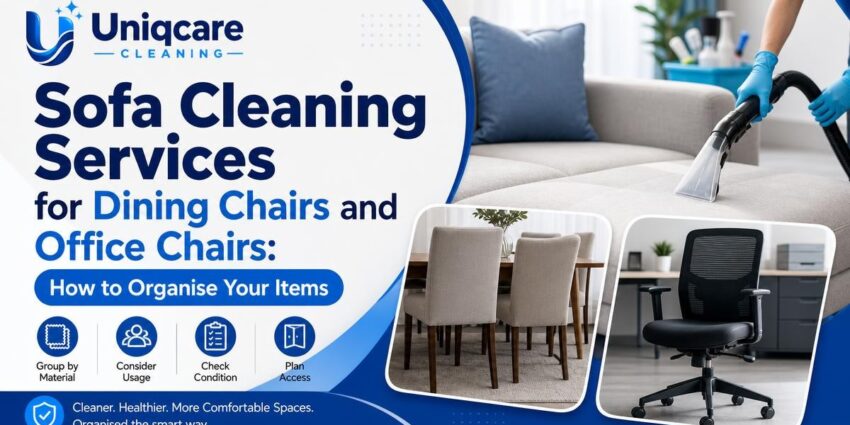
Booking sofa cleaning services for a sofa, dining chairs and office chairs at the same time can be convenient, but the items should not be treated as one identical group. Upholstery differs in material, construction, daily use and condition. A clear item list helps you describe what needs attention, prepare the space and discuss suitable cleaning arrangements with a professional cleaner.
Why organising upholstered furniture matters
Different upholstered items collect different types of soil. A sofa may receive regular contact from several people, while dining chairs are more likely to have food or drink marks around the seat. Office chairs can develop dirt on the seat, backrest, armrests and headrest through frequent use. Grouping everything simply as “chairs and sofa” may leave out details that affect the cleaning assessment.
Organising the furniture before contacting a provider also makes it easier to confirm the scope of work. Instead of giving only a rough description, you can explain how many items there are, what each item is made from, where it is located and whether any item has a particular stain or concern. This creates a more useful starting point for a service discussion without assuming that every mark can be removed.
Start with a complete item inventory
Walk through the home, office or commercial space and record every upholstered item that may need cleaning. Include furniture that is not immediately visible, such as chairs in a meeting room, spare dining chairs, occasional chairs or office seating in a separate department.
What to record for each item
- Furniture type, such as sofa, dining chair, office chair or upholstered bench.
- Number of seats or individual pieces.
- Visible material, such as fabric, leather or another upholstery covering.
- Location and room name.
- General condition, including light soiling, heavy soiling, spills, odour or visible wear.
- Access details, including stairs, lifts, narrow corridors or restricted parking.
- Whether the item can be moved away from walls and other furniture.
Photographs can make the list more useful when asking about a service. Take a wide photograph showing the whole item and closer photographs of noticeable marks. Images do not replace an on-site assessment, but they can help communicate the type and scale of the work more clearly.
Group items by upholstery material
Material is one of the first practical ways to divide the furniture. Fabric sofas, fabric dining chairs and fabric office chairs may appear similar, but their construction and level of soiling can still differ. Leather furniture should be identified separately rather than placed in the same group as fabric upholstery.
| Item group | Details to check | Why it helps |
|---|---|---|
| Fabric sofas and chairs | Fabric type if known, loose cushions, attached cushions, stains and worn areas | Shows that the covering and construction may vary from one piece to another |
| Leather sofas and chairs | Leather covering, scratches, cracking, faded areas and surface marks | Separates leather care needs from fabric upholstery considerations |
| Dining chairs | Seat-only upholstery, padded backs, removable covers and food or drink marks | Helps identify repeated small items and areas needing close inspection |
| Office chairs | Seat, backrest, armrests, headrest, wheels and adjustable parts | Provides a fuller picture of high-contact areas and access requirements |
If you are unsure about the exact upholstery material, describe it plainly and avoid guessing. A close photograph or an explanation of the manufacturer label may be more useful than assigning the wrong material name. The same approach applies to mixed-material furniture, such as a chair with a leather seat and fabric back.
Separate fabric, leather and mixed-material items
Do not assume that a cleaning approach suitable for a fabric sofa is automatically suitable for a leather office chair. These materials have different surfaces and may respond differently to moisture, agitation and cleaning products. When arranging upholstery cleaning, identify leather items and mixed-material pieces separately.
Also note furniture with decorative trims, wood, metal, painted sections or electrical components. An office chair may include height controls, wheels and other parts that need to remain protected. A dining chair may have a wooden frame or a decorative finish close to the upholstered section. These details are useful when discussing preparation and access.
Group furniture according to usage
Usage gives useful context that material alone cannot provide. Two chairs made from the same fabric may have very different cleaning needs if one is used occasionally and the other is used throughout every working day.
Residential sofas and dining chairs
For a home, group seating by room and routine. A living-room sofa may have general dust and body-contact soiling, while dining chairs may have marks concentrated on the seat and front edge. If children, pets or frequent entertaining have affected a piece, mention that context without assuming a particular cleaning result.
Office chairs and workplace seating
For an office, list chairs by room, department or work area. This is particularly helpful when arranging office chair cleaning for several employees or meeting rooms. Identify chairs with headrests, armrests or mesh sections, as well as chairs that are used more frequently than others.
Workplace planning should also consider business operations. A cleaner may need access to one room at a time, or the furniture may need to be grouped in an area that does not obstruct staff. Confirm the preferred sequence with the service provider rather than assuming that all chairs can be handled simultaneously.
Classify items by condition and cleaning priority
Once the furniture has been grouped by material and use, create a priority list based on condition. This prevents the most affected pieces from being hidden among items that only need routine attention.
Suggested priority categories
- Urgent attention: Items affected by a recent spill, flooding-related dampness or a heavily soiled area that needs to be discussed promptly.
- High priority: Furniture with visible stains, persistent odour, extensive surface soiling or frequent daily use.
- Routine cleaning: Items with general dirt and dust but no specific incident requiring special explanation.
- Inspection first: Older, delicate, worn or damaged upholstery where the condition should be assessed before cleaning.
Describe marks by appearance and location. For example, you might note a dark mark on the front edge of a dining chair, a drink spill on a sofa cushion or heavy soiling on an office chair armrest. Avoid promising that a stain will disappear completely. The outcome may depend on the material, the age of the mark, previous treatment and the overall condition of the upholstery.
Consider removable parts and furniture construction
Some sofas have loose seat cushions, back cushions or removable covers, while others are fully attached. Dining chairs may have upholstered seats only, padded backs or fixed upholstery. Office chairs often combine several sections, including the seat, back, armrests and headrest.
Record which parts can be removed and which cannot. This helps create a more accurate item list and highlights areas that may be difficult to reach. It also reduces the risk of assuming that a cover can be cleaned separately when it is actually fixed to the furniture.
Useful construction notes to include
- Loose cushions or attached cushions.
- Removable or fixed covers.
- Buttons, piping, pleats or deep seams.
- Mesh, leather or fabric sections on the same office chair.
- Wooden, metal or painted frames close to the upholstery.
- Visible tears, weakened seams, cracking or other pre-existing damage.
Plan access before the appointment
Access can affect how furniture is prepared and handled. Before arranging sofa and upholstery cleaning, check the route from the entrance to each room. Look for narrow doorways, tight corners, stairs, lifts, low-clearance areas and furniture that cannot easily be moved.
For offices and commercial premises, check whether there are building access rules, reception procedures or restricted working hours. For homes, clear small objects from around the furniture and create enough working space where possible. Large furniture does not always need to be removed, but the exact arrangement should be discussed with the provider.
| Access point | Preparation question |
|---|---|
| Entrance and parking | Is there a clear route from the entrance or loading area to the furniture? |
| Doors and corridors | Can the equipment and people move through without obstruction? |
| Stairs and lifts | Does the building require advance permission or special access arrangements? |
| Work area | Can nearby objects be moved to create a practical cleaning space? |
| Office operations | Should rooms or groups of chairs be handled in a particular order? |
Prepare a clear service brief
A short service brief helps keep the conversation focused. Include the property type, general location, furniture count, material groups, condition categories and access notes. If the work is for an office or commercial premise, include the preferred working days and any operational restrictions you already know.
A useful brief might state that a home has one fabric sofa, six fabric dining chairs and two leather office-style chairs, with a drink mark on one dining seat and restricted access through a lift. An office brief could list the number of fabric task chairs, meeting-room chairs and upholstered visitor chairs, followed by the rooms where they are located. The more clearly the items are grouped, the easier it is to discuss the scope.
Questions to ask a professional cleaner
- Can the listed fabric and leather items be assessed as separate groups?
- Should any delicate, damaged or heavily worn item be inspected first?
- What information is needed about stains, spills or previous cleaning?
- How should loose cushions, removable covers and office chair components be presented?
- What preparation is required around the furniture?
- How should the items be scheduled if the property must remain partly operational?
Organising multiple items for Uniqcare Cleaning
Uniqcare Cleaning provides professional deep-cleaning services for residential and commercial clients, including sofa and upholstery cleaning for fabric and leather sofas and selected chairs and office furniture. The website describes on-site or mobile cleaning for selected services, including sofa and curtain cleaning; confirm the arrangements for your specific items when making an enquiry.
Customers in Kuala Lumpur, Selangor, Putrajaya and Cyberjaya can prepare an item list before contacting the company. Share the furniture types, material groups, condition details and access information so the cleaning request is clear from the beginning. The company can then discuss the appropriate scope for the listed upholstery rather than relying on a broad description.
A simple checklist before booking
- Count every sofa, dining chair and office chair that may need attention.
- Separate fabric, leather and mixed-material items.
- Note whether cushions and covers are loose or fixed.
- Record stains, spills, odours, heavy soiling and visible wear.
- Group furniture by room, use and priority.
- Photograph the whole item and any specific affected areas.
- Check doors, corridors, lifts, stairs and working space.
- Prepare questions about the service scope and item suitability.
- Confirm the appointment details and any access requirements.
This preparation does not replace professional assessment, but it makes the request more accurate and easier to manage. It also helps distinguish routine upholstery cleaning from items that need extra discussion because of their material, construction or condition.
Frequently asked questions
Can sofa cleaning services include dining chairs?
They may include selected upholstered chairs, depending on the material, construction and service scope. List the dining chairs separately so the provider can confirm whether they are suitable for the requested cleaning.
Can I arrange office chair cleaning together with sofa cleaning?
You can ask about cleaning several upholstered items in one request. Provide the number of office chairs, their materials, the rooms where they are located and any access or scheduling restrictions.
Should fabric and leather furniture be grouped together?
They can be included in the same enquiry, but they should be identified as separate material groups. Fabric and leather have different care considerations, so avoid describing them as one identical type of upholstery.
What information should I provide about stains?
Describe the location, appearance and approximate history of each mark, along with any previous treatment you know about. Cleaning results can depend on the material, stain type, age and condition of the furniture.
Do I need to remove all furniture before the cleaner arrives?
Not necessarily. Preparation depends on the item, room layout and agreed service arrangements. Clear small objects and explain any access limitations so the provider can advise what is needed for your furniture.
Does Uniqcare Cleaning serve homes and offices?
Yes. Uniqcare Cleaning provides professional deep-cleaning services for residential and commercial clients and lists Kuala Lumpur, Selangor, Putrajaya and Cyberjaya among its service regions. Confirm the details for your specific upholstery items when enquiring.