
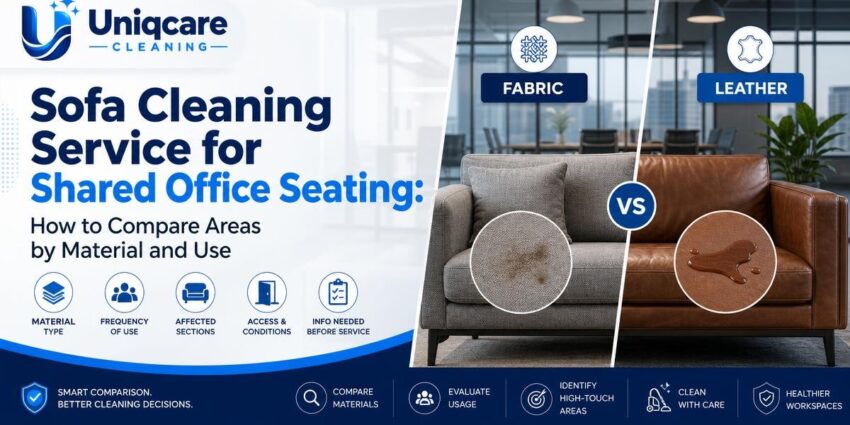
Choosing a sofa cleaning service for a shared office is not simply a matter of counting seats. Office sofas, reception furniture, breakout seating and upholstered chairs can have different materials, levels of use, stains and access requirements. Comparing these details before booking helps an office manager describe the work accurately and arrange suitable professional upholstery care.
Furniture in a private home may be used by the same people every day, but shared office seating serves many users. A reception sofa may experience constant short visits, while a meeting-room chair may be used only during scheduled sessions. A breakout-area sofa can also be exposed to food, drinks, bags, outdoor clothing and repeated contact with the same cushions and armrests.
These differences affect what should be included in a cleaning request. Cleaning the visible seat cushions alone may not address marks on the arms, back cushions, sides or front panels. Conversely, furniture that is lightly used may not need the same scope as seating in a busy waiting area. A useful comparison starts with the furniture itself and then considers how the space is used.
First compare the upholstery material
The material is one of the most important details to provide when arranging a sofa cleaning service. Fabric and leather should not be treated as interchangeable surfaces. Their texture, construction and response to moisture may differ, so the cleaning approach should be considered in relation to the upholstery type and its condition.
| Seating material or style | Areas to inspect | Useful information to provide |
|---|---|---|
| Fabric sofa | Seat cushions, arms, seams, back cushions and lower front panels | Fabric type if known, visible marks, odours and any previous cleaning |
| Leather sofa | Seat surfaces, creases, armrests, seams and contact points | Leather type if known, dryness, scuffing, colour changes and surface damage |
| Fabric office chair | Seat, backrest, armrests, headrest and adjustable sections | Number of chairs, fabric condition and whether chairs can be moved |
| Mixed-material seating | Fabric panels, synthetic or leather sections, frame edges and joins | Which sections are upholstered and which are hard or coated surfaces |
Fabric sofas and upholstered chairs
Fabric can hold dust, crumbs and marks within the weave, especially around seams and frequently touched edges. The appearance of a stain may also vary depending on whether it came from a drink, food, footwear, a pen or general use. A professional assessment can help determine what treatment is appropriate for the fabric and the condition of the furniture.
Office managers should avoid assuming that a darker fabric needs less care. Dark upholstery can conceal surface soil while still showing flattened fibres, water marks or greasy contact areas. Light fabric can make visible marks easier to identify, but the correct service scope should still be based on the entire item rather than colour alone.
Leather and leather-like seating
Leather seating requires a different discussion from fabric seating. Creases, armrests and areas where users sit repeatedly may show surface wear or soiling. If the material is synthetic, coated or a combination of materials, it is useful to mention this when requesting a quotation or appointment.
Cleaning can improve the condition of soiled surfaces, but it should not be described as a guaranteed way to reverse every scratch, colour change, crack or other form of material damage. Photographs and clear information about the seating can help a cleaning provider decide what should be inspected before work begins.
Compare seating by frequency and type of use
The same sofa may need a different cleaning plan depending on where it sits. A reception sofa is exposed to visitors, deliveries and short stays throughout the day. A staff lounge may receive longer use and more food or drink contact. A meeting-room sofa may be used less often but could still develop marks if refreshments are served there.
Rather than describing every item as “dirty,” record how the seating is used. This gives a sofa cleaning service more practical context and helps the office compare areas fairly.
- Reception and waiting areas: prioritise seat cushions, armrests, front edges and other high-contact sections.
- Breakout areas: check for food, drink and general-use marks on seats, arms and nearby upholstered panels.
- Meeting rooms: inspect the seating used during long meetings and any areas where refreshments are placed or handled.
- Staff lounges: look at cushions, corners and contact points that may receive repeated daily use.
- Quiet rooms or executive areas: compare visible condition with actual frequency of use before including them in the same scope.
Compare the affected sections, not just the number of seats
A request for “three sofas” may describe a small task or a larger one. One sofa may have marks only on the seat cushions, while another may need attention across the arms, back, sides and lower panels. Counting furniture without describing the affected sections can make comparisons between providers less useful.
Common areas to include in an inspection
- Seat cushions and the gaps between removable cushions
- Armrests and front edges where hands make frequent contact
- Back cushions and fixed back sections
- Side panels and the lower front of the sofa
- Seams, piping and corners where soil can collect
- Upholstered sections on office chairs, including backs and armrests
If only one section needs attention, identify it clearly. If the goal is a general refresh of shared seating, say that the full item should be assessed. This distinction is particularly useful when comparing a sofa cleaning service with a separate office chair cleaning requirement.
How office chair cleaning fits into the same assessment
Office chairs are often overlooked because they are smaller than sofas. However, chairs can have several upholstered sections, including the seat, backrest, armrests and headrest. Their wheels, height mechanisms and narrow spaces can also affect how they are moved or positioned during cleaning.
Make a separate list for office chair cleaning instead of combining all furniture into one vague total. Record the number of chairs, the upholstery material, the sections affected and whether the chairs are located in open workstations, private offices or meeting rooms. This makes it easier to compare the work required for chairs with the work required for sofas.
| Comparison point | Shared sofa seating | Office chairs |
|---|---|---|
| Typical inspection | Cushions, arms, backs, sides, seams and lower panels | Seat, backrest, arms, headrest and adjustment areas |
| Usage pattern | May serve several users in reception or common areas | Often assigned to one workstation or used in meeting rooms |
| Planning detail | Dimensions, removable cushions and surrounding access | Quantity, workstation layout and whether chairs can be moved |
| Useful request information | Material, affected sections, marks and access conditions | Material, chair quantity, affected parts and workspace access |
Assess access before arranging a sofa cleaning service
Access can influence how an appointment is planned. Note the room, floor level, lift availability, corridor width, door clearance and whether the seating can be repositioned. Also consider whether the furniture is fixed in place or surrounded by desks, screens, cabinets and other equipment.
Shared offices may need cleaning to take place around working hours, meetings or visitor traffic. It is helpful to explain the preferred access window without assuming a particular completion time or drying period. The cleaning provider can then advise on practical arrangements based on the furniture and site conditions.
Information to check at the site
- Where the seating is located and how far it is from the entrance
- Whether a lift or stairs are required
- Whether sofas or chairs can be moved away from walls and desks
- Whether nearby electronics, documents or personal items need protection
- Whether reception or customer-facing areas must remain accessible
- Whether several rooms should be handled in one visit or assessed separately
Prepare a clear comparison brief for providers
A short, consistent brief helps an office manager compare responses more accurately. Use the same information for each provider rather than asking for a general price based only on the number of items. If possible, include photographs showing the complete furniture item and close-ups of affected areas.
- List each seating type, such as reception sofa, breakout sofa, meeting chair or office chair.
- Record the upholstery material or state that it is unknown.
- Note the number of items and the approximate size of larger sofas.
- Mark the affected sections and describe visible marks or odours without promising a particular result.
- Explain the frequency and type of use in each area.
- Describe access, room layout and any restrictions on moving furniture.
- Ask what preparation is required before the appointment and what aftercare information will be provided.
Uniqcare Cleaning provides professional deep-cleaning services for residential and commercial clients, including sofa and upholstery cleaning for fabric and leather sofas and selected chairs and office furniture. The company describes on-site or mobile cleaning for selected services, so office managers should confirm the practical arrangements for the particular seating and site before booking.
How to compare the scope of service
When reviewing options, look beyond the broad label “sofa cleaning.” Compare whether the proposed scope matches the material, furniture size, affected sections and access conditions. A useful response should make clear what has been considered and whether the provider needs more information before confirming the work.
- Material suitability: does the provider understand whether the seating is fabric, leather, synthetic or mixed material?
- Item coverage: are cushions, arms, backs, sides and other requested sections included?
- Furniture quantity: are sofas, lounge chairs and office chairs listed separately?
- Site access: has the provider been told about floors, lifts, doors and room layout?
- Condition limits: are stain, odour, colour and material limitations explained realistically?
- Scheduling: can the office coordinate the visit with staff, visitors and room availability?
No cleaning provider can responsibly guarantee the same result for every fabric, stain or condition. Material type, age, previous treatment and the nature of a mark can all affect the outcome. A clear comparison therefore focuses on suitability, scope and communication rather than an unsupported promise of complete removal.
Plan a practical seating maintenance routine
Professional cleaning is only one part of keeping shared seating presentable. Office teams can reduce avoidable build-up by removing food packaging, dealing with spills according to the material guidance and reporting new marks promptly. Regular vacuuming or surface care should follow the furniture manufacturer’s instructions.
Keep a simple seating record with the room, material, date of professional cleaning and any recurring problems. This can help identify whether a particular reception sofa, breakout area or group of office chairs needs more frequent attention than quieter furniture. The schedule should reflect actual use and condition rather than applying one identical interval to every item.
A simple decision guide for office managers
Use the following sequence when comparing seating areas:
- Identify the material. Separate fabric, leather and mixed-material furniture.
- Map usage. Note which areas receive visitors, staff, meetings or food and drink.
- Mark affected sections. Distinguish isolated marks from a full-item cleaning requirement.
- Check access. Confirm room layout, movement restrictions and building access.
- Separate furniture types. List sofas, lounge chairs and office chairs independently.
- Request a realistic scope. Share photographs and ask what should be assessed before work begins.
Uniqcare Cleaning serves Kuala Lumpur, Selangor, Putrajaya and Cyberjaya. Office managers in these areas can provide the seating details above when enquiring about professional sofa and upholstery cleaning, including related office chair cleaning needs.
Frequently asked questions
What should I tell a sofa cleaning service about office seating?
Share the material, number and approximate size of items, affected sections, type of use, visible marks, previous cleaning and site access conditions.
Should reception sofas and staff lounge sofas be compared differently?
Yes. They may have different user volumes and types of soiling. Compare each area by actual use, contact points and affected sections rather than by furniture count alone.
Can office chair cleaning be included with sofa cleaning?
It may be possible to request both, but list office chairs separately with their quantity, upholstery material and affected parts so the scope is clear.
Is fabric upholstery cleaned in the same way as leather?
Not necessarily. Fabric and leather have different surface characteristics. Tell the provider what material is present so the appropriate approach can be considered.
What if I do not know the upholstery material?
Say that the material is unknown and provide clear photographs. A provider may need to inspect the furniture before confirming the cleaning scope.
Can professional cleaning remove every stain or odour?
Results depend on the material, age and type of mark, previous treatments and overall condition. No particular outcome should be assumed for every item.
How can an office prepare before the appointment?
Remove personal items and documents, clear access around the furniture, identify areas requiring attention and inform the provider about building or room restrictions.