
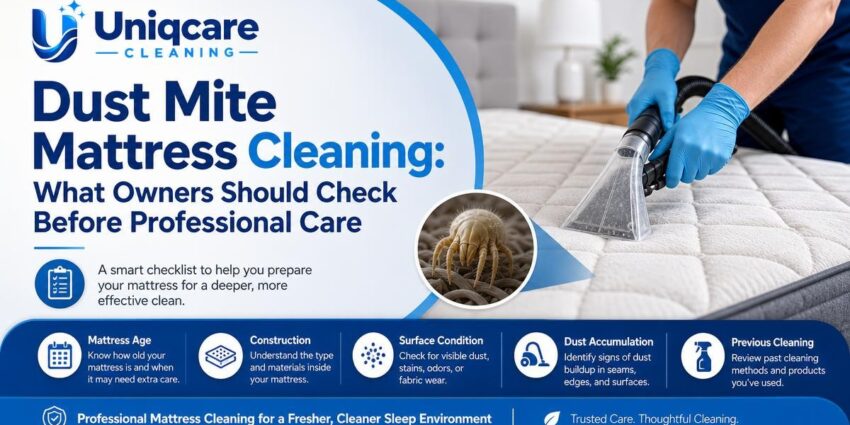
Before requesting dust mite mattress cleaning, owners can gather useful information about the mattress itself. Its age, construction, surface condition, visible dust, stains and previous cleaning attempts can all affect how professional care is planned. A simple inspection does not confirm the presence or absence of dust mites, and mattress cleaning is not a medical treatment. However, it helps a cleaning provider understand what the mattress may need and whether its condition is suitable for further cleaning.
Why inspect a mattress before arranging cleaning?
A mattress is not a flat, hard surface. It may contain different layers, fabric coverings, stitching, padding and internal materials that respond differently to moisture, pressure and cleaning products. Two mattresses that look similar from the outside may therefore require different handling.
An inspection also gives owners an opportunity to describe the real problem accurately. A request for dust mite mattress cleaning may actually involve general dust accumulation, perspiration marks, drink spills, an old stain, an odour or a mattress that has simply not been cleaned for a long time. These concerns may overlap, but they are not identical cleaning tasks.
| What to check | Why it matters | Information to share |
|---|---|---|
| Mattress age | Older materials may be more worn or fragile. | Approximate purchase date and length of use. |
| Construction | Foam, spring and hybrid designs may have different care requirements. | Mattress type, brand information and care label details. |
| Surface condition | Stains, tears and loose fabric can affect the cleaning approach. | Location, size and likely cause of each issue. |
| Dust accumulation | Dust may be concentrated along seams, edges and beneath bedding. | Where dust is most noticeable and how often bedding is changed. |
| Previous cleaning | Earlier treatments may have left moisture, residue or colour changes. | Method used, approximate date and products applied. |
1. Check the mattress age and overall condition
Start with the mattress’s approximate age. If the original receipt, warranty information or purchase record is available, keep it nearby. If not, an estimate is still helpful. Also consider how often the mattress has been used. A mattress in a main bedroom may have a different wear pattern from one in a guest room or rental property.
Age alone does not determine whether professional mattress cleaning is appropriate. Look for sagging, exposed filling, broken stitching, loose threads, damaged edges or fabric that has become thin. These signs do not automatically mean cleaning cannot be considered, but they should be mentioned before an appointment. Cleaning may improve surface cleanliness while not correcting structural wear or loss of support.
Questions owners can ask about an older mattress
- Is the cover still securely attached?
- Are there tears, holes or areas where padding is visible?
- Has the mattress been stored in a damp location?
- Has the mattress changed shape or developed noticeable sagging?
- Is the manufacturer’s care label still present and readable?
This information allows a provider to discuss realistic expectations. A cleaning service addresses suitable surface and fabric concerns; it does not restore a worn internal structure or reverse every sign of age.
2. Identify the mattress construction
Next, find out what type of mattress you have. Common descriptions include foam, spring, pocket spring, latex, hybrid or mattress-in-a-box designs. The construction may be printed on a label, included in the purchase documents or available from the manufacturer.
Do not remove the mattress cover or open the internal layers to investigate. Instead, photograph the label if it is available and tell the cleaning provider what you know. If the type is uncertain, describe the thickness, outer fabric, firmness and any visible features such as tufting or quilting. A professional can then ask for more information before recommending a suitable approach.
Why construction affects the discussion
Different materials can have different limits regarding moisture, agitation and drying. A removable cover may have its own washing instructions, while an integrated cover may need to remain attached. Some mattresses also contain multiple layers that cannot be inspected from the outside.
For this reason, avoid assuming that a method used successfully on a carpet, sofa or another mattress will be suitable for yours. Mattress cleaning should be considered according to the specific material and the manufacturer’s care guidance.
3. Inspect the surface before cleaning
Remove the sheets, protector and other bedding so the complete sleeping surface can be viewed. Inspect the top, sides, seams, handles and corners under good lighting. Look for visible dust, hair, lint, discolouration, water marks, food or drink spills, body-oil marks and other changes in appearance.
Take clear photographs before moving or treating anything. Images can help you remember where a stain was located and give a professional an initial understanding of the condition. They are not a substitute for an assessment, particularly when the mattress has delicate fabric or extensive damage.
Separate stains from general surface soiling
A mattress can appear dull or dusty across a broad area, while a stain is usually more localised. An odour may also have a different source from visible soiling. Describe each concern separately rather than using one general description for every issue.
- Broad dust or lint: note whether it is concentrated along seams, edges or beneath the bed.
- Localised stains: record the position, approximate size and possible source.
- Odour: explain whether it is general, limited to one area or noticeable after the mattress becomes warm.
- Fabric damage: identify tears, loose stitching, fraying or exposed material.
Stain removal and odour treatment may depend on the type of material and how long the issue has been present. No cleaning provider can responsibly promise that every mark or smell will disappear in every case. The condition should be reviewed before expectations are set.
4. Look for dust accumulation in overlooked areas
Owners often focus on the centre of the mattress because it is the most visible area. However, dust can also collect along piping, stitching, corners, the underside of a removable base or the space between the mattress and bed frame. Check these areas when practical, without dragging or bending the mattress unnecessarily.
Also inspect the bed frame, headboard, nearby floor and under-bed area. These observations do not prove where dust originated or confirm the presence of any particular organism. They simply provide context about the overall cleaning environment and may show whether the mattress is part of a wider dust-management concern.
Record the surrounding conditions
Make a short note about how the mattress is used and maintained. Useful details include whether a mattress protector is used, how frequently bedding is changed, whether the room is regularly ventilated and whether the mattress has recently been moved or stored. Keep the description factual rather than trying to diagnose a problem.
If the mattress has been exposed to water, condensation or another damp condition, mention it clearly. Moisture-related concerns can require a different discussion from routine dust and surface cleaning. A provider should know about them before any appointment is confirmed.

5. Review previous cleaning attempts
Previous cleaning is one of the most useful details to provide. Write down what was done, when it happened and which products or equipment were used if you know. Include home vacuuming, spot treatments, steam use, deodorising powders, liquid cleaners and any professional service.
Do not apply several new products before seeking advice. Layering different products can make it harder to identify residue, colour changes or a reaction in the fabric. It may also increase the risk of spreading a stain or leaving the mattress damp. If you have already used something, keep the product name or a photograph of the label for reference.
| Previous action | Details to record | Why the provider should know |
|---|---|---|
| Vacuuming | Areas covered and approximate frequency. | Shows the level of routine surface maintenance. |
| Spot treatment | Product used, stain treated and date. | May help explain colour or texture changes. |
| Steam or wet cleaning | Equipment, date and drying conditions. | Provides context about earlier moisture exposure. |
| Powder or deodoriser | Product type and whether residue remains. | May affect preparation before professional care. |
6. Decide what you want professional mattress cleaning to address
Before contacting a provider, make a short priority list. You may want general deep cleaning, help with visible stains, attention to dust accumulation, or an assessment of an older mattress. A clear request is more useful than simply saying the mattress feels dirty.
Keep the desired outcome realistic. Professional mattress cleaning can address suitable surface-cleaning concerns, but results depend on fabric, construction, age, stain type and previous treatment. It should not be presented as a guarantee of complete allergen removal, a medical intervention or a replacement for advice from a qualified healthcare professional.
A practical request checklist
- State the mattress size and type if known.
- Give its approximate age and explain how often it is used.
- Describe visible stains, dust, odours or fabric damage.
- Explain whether the mattress has been exposed to moisture.
- List any previous cleaning products or services.
- Ask what preparation is required before the appointment.
- Ask how the provider will assess the material and set expectations.
This checklist helps the conversation focus on the mattress rather than on broad promises. It also gives the provider an opportunity to explain whether the requested service is suitable for the item’s condition.
What to ask a professional mattress cleaning provider
When comparing professional mattress cleaning options, ask practical questions about assessment, preparation and limitations. A responsible provider should be willing to discuss the mattress material and the condition you describe rather than treating every item exactly the same way.
- Do you need the mattress type, care label or photographs before confirming the service?
- How should bedding, protectors and nearby furniture be prepared?
- Will visible damage or delicate fabric be assessed before cleaning?
- How will you discuss stains that may not respond completely?
- What drying and post-cleaning instructions will be provided?
- Are there conditions under which cleaning should be postponed or declined?
Uniqcare Cleaning lists professional mattress cleaning among its deep-cleaning services for residential and commercial clients. Customers can provide the mattress details above when asking about suitability and available arrangements. Uniqcare Cleaning serves Kuala Lumpur, Selangor, Putrajaya and Cyberjaya, with service availability and preparation requirements best confirmed before booking.
What owners can do before the appointment
Remove sheets, blankets and mattress protectors unless the provider gives different instructions. Clear access around the bed and keep photographs of the mattress condition for your records. If the mattress is very heavy, avoid lifting or moving it alone. Let the provider know about access restrictions, recent spills, dampness or any concern that may affect handling.
Do not saturate the mattress, scrub aggressively or combine cleaning chemicals while waiting for professional care. These actions can spread marks, damage fabric or make the condition more difficult to assess. Basic preparation should make the mattress accessible and accurately described, not add another treatment without guidance.
When cleaning may not be the only consideration
Cleaning is not always the answer to every mattress problem. If the mattress has severe structural damage, persistent dampness, extensive mould-like growth, a strong unexplained odour or major internal deterioration, ask for an assessment before arranging routine cleaning. In some situations, replacement or another form of specialist advice may need to be considered.
Similarly, if anyone in the household has ongoing health symptoms or concerns about allergies, cleaning decisions should not replace medical advice. A cleaning provider can discuss the condition of the mattress and the service offered, but cannot diagnose a health issue or guarantee a particular health outcome.
Final checklist for dust mite mattress cleaning
A few minutes of preparation can make a professional conversation clearer. Before contacting a mattress cleaning service, confirm that you can answer the following questions:
- How old is the mattress, approximately?
- What is its construction or material, if known?
- Are there stains, odours, dust deposits, tears or damp areas?
- Where are the most noticeable problem areas?
- Has the mattress been vacuumed, spot-treated or professionally cleaned?
- Were any powders, liquids or steam equipment used?
- What result do you want the service to address?
Dust mite mattress cleaning should begin with an accurate description of the item, not an assumption about what is inside it. Checking age, construction, surface condition, dust accumulation and previous cleaning gives both the owner and the professional a better starting point. It also supports more realistic expectations about what cleaning may and may not achieve.
Frequently asked questions
Can owners confirm dust mites by inspecting a mattress?
A visual inspection may show dust, lint, stains or fabric damage, but it does not confirm the presence or absence of dust mites. Owners should describe observable conditions and avoid treating a cleaning inspection as a medical or laboratory assessment.
Is professional mattress cleaning suitable for every mattress?
Suitability depends on the mattress construction, fabric, age and condition. Share the care label, photographs and any known damage with the provider so the item can be discussed before cleaning is arranged.
Should I remove the mattress cover before professional care?
Do not remove an integrated cover. If the cover is designed to be removed, follow its care instructions and ask the provider whether it should remain in place for assessment or cleaning.
Can professional mattress cleaning remove every stain or odour?
No result should be guaranteed in every case. Outcomes can depend on the stain type, age, material, previous treatments and overall mattress condition. Ask for realistic expectations before service begins.
What should I tell a mattress cleaning provider?
Provide the mattress type, approximate age, visible concerns, moisture exposure and details of earlier cleaning attempts. Mention tears, loose fabric, unusual odours and access limitations as well.
Can mattress cleaning guarantee allergen removal?
No. Cleaning may address suitable surface concerns, but it should not be described as guaranteed allergen removal or as a treatment for a health condition. Seek qualified medical advice for health-related concerns.