
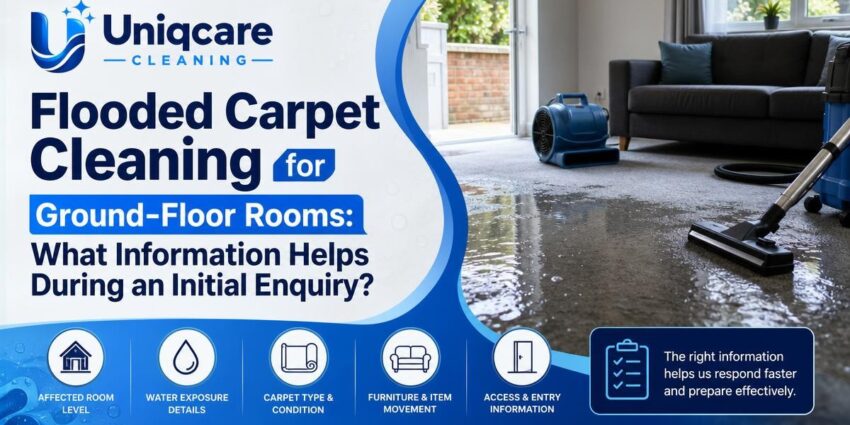
When a ground-floor room experiences carpet flooding, the information given during the first enquiry can help a cleaning provider understand the situation before discussing the next steps. For flooded carpet cleaning, details such as the room level, source of water, time of exposure, carpet condition, furniture and access are all useful. A clear description does not guarantee that a carpet can be salvaged, but it can make the initial conversation more focused and practical.
Why the first enquiry matters after carpet flooding
Floodwater can affect more than the visible carpet surface. Water may reach the underlay, flooring beneath the carpet, skirting boards and nearby furniture. The likely cleaning approach also depends on whether the carpet is still wet, partly dry, visibly soiled or already developing an odour.
Ground-floor rooms can have different access considerations from rooms on upper levels. A provider may need to know whether the affected area opens directly to a driveway, porch, corridor or shared entrance. These details can help the team consider how equipment and hoses, where applicable, may be brought to the room.
The purpose of an initial enquiry is to describe the condition accurately, not to decide in advance that the carpet will definitely be restored.
Information to prepare before contacting a flooded carpet cleaning provider
You do not need a technical report to make an enquiry. A short written description, a few photographs and practical access details are often a useful starting point. Try to gather the following information while avoiding unnecessary contact with contaminated or unsafe water.
- The address or general service area of the property.
- The affected room or rooms and their location on the ground floor.
- When the flooding began and whether the water has stopped entering.
- Where the water came from, if known.
- How much of the carpet is wet and whether water has reached the underlay.
- Whether the carpet has been moved, lifted, vacuumed or treated with a household product.
- Which furniture or belongings remain in the room.
- How the cleaning team can reach the affected area.
- Photographs showing the carpet, room layout and any visible water line or soiling.
1. State that the affected room is on the ground floor
Begin the enquiry by clearly stating that the affected room is on the ground floor. This simple detail provides context about access, the relationship between the carpet and the surrounding floor, and the route that may be available for moving equipment.
Also mention whether the room is in a landed home, apartment, office, shop or another commercial premises. A ground-floor unit in a multi-storey building may still have shared entrances, loading restrictions or building-management requirements. If there is a narrow passage, step, gate or locked access point, include that information early rather than waiting until an appointment is arranged.
2. Explain what caused the carpet flooding
The source of the water is one of the most useful details in an enquiry. Explain whether the carpet was affected by heavy rain entering the property, an overflowing drain, a burst pipe, a leaking appliance or another known event. If the source is uncertain, say so.
It is also helpful to describe whether the water looked clear, muddy, dirty or mixed with other materials. Do not make assumptions about the carpet’s condition based only on the appearance of the water. A professional assessment may still be needed, especially if the water has affected the underlay or flooring underneath.
What if the water source has not been stopped?
Tell the provider if water is still entering the room. Cleaning the carpet before the source is controlled may not address the wider problem. If there is standing water near electrical points, appliances or damaged building materials, prioritise personal safety and follow appropriate property or emergency guidance before entering the area.
3. Give the timeline of the incident
State when you first noticed the water and whether the carpet is still wet. Useful descriptions include “the flooding started this morning”, “the carpet has been damp since yesterday” or “the surface feels dry but the room still smells musty”. These observations are more helpful than simply saying the carpet is damaged.
Mention any changes since the incident. For example, the water level may have fallen, the carpet may have begun to dry, or an odour may have appeared. If fans, towels or a wet vacuum have already been used, include that too. This does not replace an inspection, but it gives a more accurate account of what has happened.
4. Describe the carpet and its current condition
Carpet construction, backing, age and previous condition can all be relevant to how it responds to water exposure. If you know whether the carpet is wall-to-wall, a loose rug or fitted in sections, include that information. You can also mention the colour, pile type and whether there were pre-existing stains or worn areas.
Describe what you can see without trying to diagnose the damage. Useful observations may include soaked fibres, visible mud, discolouration, loose edges, lifted sections, rippling, a damp underlay or an odour. Photographs taken in good light can help communicate the extent of the affected area.
| Detail to report | Examples of useful wording |
|---|---|
| Coverage | “The whole bedroom is affected” or “water reached one corner of the office.” |
| Moisture | “The carpet is still wet” or “the surface feels dry, but the underlay may be damp.” |
| Visible condition | “There is mud along the doorway” or “the carpet has started to ripple.” |
| Odour | “There is a damp smell” or “no unusual odour has been noticed yet.” |
| Previous condition | “There were existing stains before the flooding” or “the carpet was in good condition beforehand.” |
5. Explain what has happened to furniture and belongings
Furniture can prevent access to parts of the carpet and may also have absorbed water. Tell the provider whether beds, cabinets, sofas, desks or other items are still in the room. If furniture has been moved, explain where it was placed and whether its feet or base are wet.
Do not assume that every item can be moved as part of a cleaning visit. Heavy furniture, fragile objects, electronics and personal belongings may need to be handled by the property owner, tenant or a specialist. Removing small loose items before the visit can make the affected carpet easier to inspect, provided it is safe to do so.
Furniture information worth including
- Which items remain on the carpet.
- Whether furniture blocks the room entrance or most of the affected area.
- Whether the item is heavy, fragile, built-in or difficult to dismantle.
- Whether furniture legs, bases or stored contents have been exposed to water.
- Whether there is a safe temporary location for movable items.
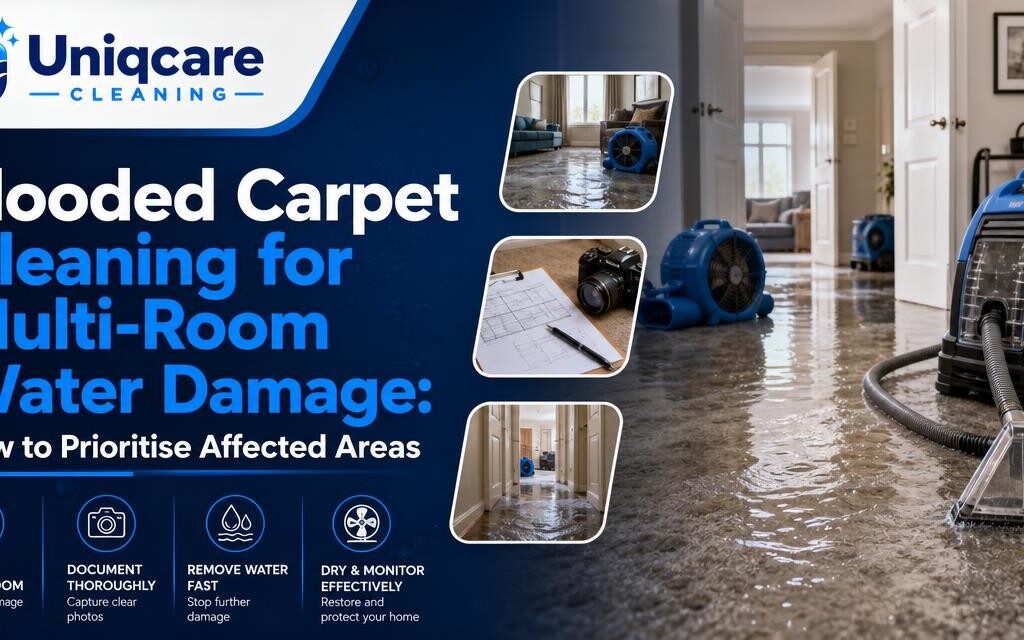
6. Describe access to the ground-floor room
Access details are particularly helpful for a ground-floor flooded carpet cleaning enquiry. Explain whether the property has direct vehicle access, a driveway, a front entrance, a side gate or a shared corridor. Mention steps, narrow doors, security gates and parking limitations if they could affect the movement of equipment.
For offices and commercial premises, provide information about reception procedures, loading areas, lift or building access rules and the best time to enter. Even when the affected room is at ground level, the route from the vehicle to the room may involve several doors or shared spaces.
Photographs can make an initial enquiry clearer, especially when the affected area is difficult to describe over the phone. Take wide photographs showing the room layout and closer images showing the carpet’s condition, water marks, furniture and visible soiling. If possible, include a doorway or familiar object to give a sense of scale.
Photographs are not a substitute for an on-site assessment. They may not show moisture below the surface, damage beneath the carpet or issues hidden by furniture. Their role is to help the provider understand the situation before discussing availability and possible work.
What flooded carpet cleaning may involve
Uniqcare Cleaning lists flooded carpet cleaning and water-damage restoration for homes and businesses. The service description includes industrial water extraction, carpet cleaning and restoration, drying, and optional sanitisation. The appropriate combination depends on the condition of the carpet and the affected area.
A cleaning visit may therefore involve more than treating a visible mark. Water extraction, cleaning, drying and attention to odour or dampness may all be considered. However, the outcome depends on factors such as the water source, exposure time, carpet materials, underlay and extent of damage. Cleaning should not be presented as a guarantee that every carpet can be saved or returned to its previous condition.
Questions to ask during the initial enquiry
An enquiry is also an opportunity to clarify what the service may cover. Ask practical questions rather than requesting a guaranteed result. This helps create realistic expectations before any work begins.
- Can you assess a flooded carpet in a ground-floor room?
- What details or photographs would you like before discussing the job?
- Does the service consider both the carpet and possible dampness in the underlay?
- What should be moved before the team arrives?
- Are there access or parking details that you need to know?
- Will the carpet’s condition be assessed before a cleaning approach is confirmed?
- Are additional services, such as sanitisation, relevant to this situation?
A ready-to-use enquiry checklist
You can copy the following structure into a message to a provider and fill in the details. Keeping the description factual makes it easier to review.
- Property type: home, rental property, office or commercial premises.
- Location: area and general address details.
- Room: name of the room and confirmation that it is on the ground floor.
- Cause: known or suspected source of the water.
- Timing: when the flooding began and whether the source has stopped.
- Condition: wetness, standing water, mud, odour, rippling or visible damage.
- Carpet: fitted carpet or rug, approximate affected area and previous condition.
- Furniture: items remaining in place and anything already moved.
- Access: parking, doors, gates, steps, corridors and building procedures.
- Photos: wide room views and close-ups of affected sections.
How Uniqcare Cleaning can help with the enquiry
Uniqcare Cleaning provides professional deep-cleaning services for residential and commercial clients, including flooded carpet cleaning. The company serves Kuala Lumpur, Selangor, Putrajaya and Cyberjaya. Its listed flooded carpet service is intended for homes and businesses affected by carpet flooding, with the service details covering extraction, cleaning, restoration and drying options.
When contacting Uniqcare Cleaning, include the room level, water source, timeline, carpet condition, furniture and access information described above. The company lists a contact telephone number of 019-309 7102 and operating hours from Monday to Saturday, 8:30 to 17:00. The service description also states 24/7 emergency availability for flooded carpet cleaning; confirm current arrangements when making contact.
Frequently asked questions
What information should I give when requesting flooded carpet cleaning?
Share the property location, affected room, ground-floor access, water source, time of exposure, carpet condition, furniture situation and photographs if available.
Does being on the ground floor make carpet flooding easier to handle?
Ground-floor access may make it easier to describe the route into the room, but it does not determine the carpet’s condition. Underlay, flooring, furniture and the source of water may still be affected.
Can a flooded carpet always be restored?
No. The result depends on the carpet material, water source, exposure time, underlay and extent of damage. An enquiry or photograph cannot guarantee that the carpet will be salvageable.
Should I move furniture before the cleaning visit?
Move small, safe-to-handle items if possible, but do not attempt to move heavy, fragile, built-in or electrically connected items without suitable help. Tell the provider what remains in the room.
What if the carpet looks dry but still smells damp?
Mention the odour during the enquiry. A dry surface does not necessarily explain the condition beneath the carpet, so the provider may need to consider the carpet, underlay and surrounding area.
Does Uniqcare Cleaning serve flooded carpets in ground-floor rooms?
Uniqcare Cleaning lists flooded carpet cleaning for homes and businesses across Kuala Lumpur, Selangor, Putrajaya and Cyberjaya. Confirm the address, access and current service arrangements during the enquiry.