
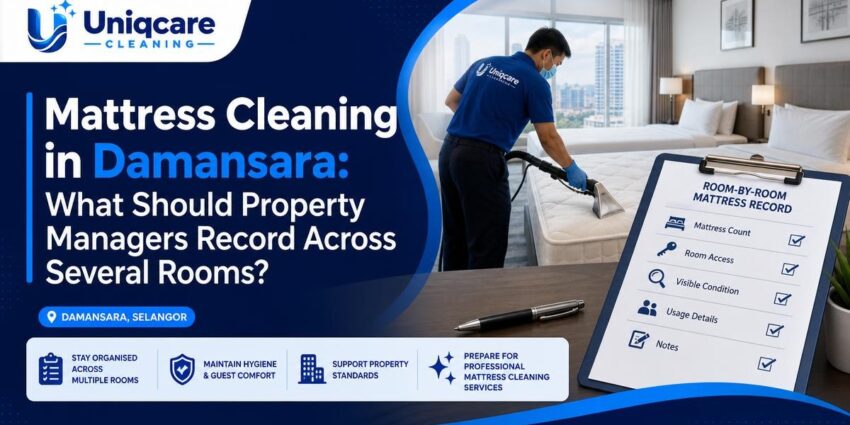
When several bedrooms or sleeping areas need attention, mattress cleaning in Damansara is easier to organise when property managers prepare accurate room-by-room information first. A clear record of mattress counts, access arrangements, visible condition and usage helps a cleaning provider understand the work before discussing professional service for the property.
Why a room-by-room record matters
A request for “mattress cleaning for the whole property” may sound clear, but it can leave important details unanswered. A small residence, serviced apartment, staff accommodation site or commercial property may contain mattresses of different sizes, ages and conditions. Some rooms may be occupied, while others are vacant or awaiting a new resident.
Recording each sleeping area separately creates a practical reference for the property manager and the cleaning team. It can help prevent missed rooms, reduce confusion on the day of service and make it easier to explain which items need attention first. It also gives the provider useful context without assuming that every mattress requires the same approach.
The essential information to record
The best checklist is simple enough to complete consistently but detailed enough to support a useful discussion. Each mattress should have its own entry, even when several items appear identical. A shared spreadsheet, inspection form or property management system can be used as long as the information is easy to review.
| Record category | What to note | Why it helps |
|---|---|---|
| Room identification | Building, floor, unit, room number or another clear reference | Allows each mattress to be located without guesswork |
| Mattress count | Number of mattresses in the room and whether any are stored elsewhere | Supports a more accurate scope of work |
| Size and type | Approximate size, mattress construction and whether it has a removable cover | Provides useful background before service planning |
| Access status | Occupied, vacant, locked, restricted or requiring an appointment | Helps coordinate entry and avoid delays |
| Visible condition | Stains, marks, dampness, odour, dust, tears or general wear | Highlights items that may need closer assessment |
| Usage details | Guest room, rental unit, staff room, child’s room or occasional-use space | Places the condition in the right operational context |
| Preparation notes | Items to remove, bed-frame restrictions, parking information and contact person | Makes the visit easier to coordinate |
1. Count every mattress, not just every room
Start with the total number of mattresses across the property. Then break that number down by building, unit, floor and room. A room with two single mattresses should be recorded as two separate items, even if both are scheduled for the same visit. Spare mattresses in storage rooms, cupboards or maintenance areas should also be listed if they may be included.
Do not rely only on an old inventory. Mattresses may have been moved between rooms, replaced after damage or added to a property after the original record was created. A physical count before contacting mattress cleaning services gives everyone a more reliable starting point.
Use consistent room labels
Choose one naming system and use it throughout the record. For example, “Block A, Level 3, Room 3-08” is more useful than a note such as “third-floor back room.” If the property has multiple units with similar room numbers, include the unit or block reference as well.
- Record the building or block.
- Include the unit, floor and room number where relevant.
- Give stored mattresses a separate location label.
- Use one line for each mattress when condition may differ.
2. Note size, type and identifying features
Property managers do not need to identify technical mattress specifications perfectly. Approximate information is still useful. Record whether the mattress appears to be single, double, queen or another size, and note any visible feature that helps distinguish it from others in the same room.
You can also record whether the mattress is placed on a bed frame, platform, divan or another base. If it is difficult to move, built into a restricted room arrangement or surrounded by furniture, include that detail. These notes do not determine the cleaning method by themselves, but they help a provider understand the setting before discussing the work.
3. Describe access conditions clearly
Access is one of the most important operational details for multi-room mattress cleaning. A property manager should record whether each room is occupied, vacant, locked, under renovation or subject to a resident’s schedule. If access requires a key, access card, security desk procedure or representative, write that down in one central place.
For occupied rooms, avoid recording unnecessary personal information. The useful details are usually the room status, preferred access arrangement and any restrictions on entering the space. If residents or guests must be notified in advance, assign responsibility for that communication before the cleaning date is discussed.
- Loading or parking instructions for the building.
- Lift access and any booking requirement.
- Security desk or management office procedures.
- Restricted floors, rooms or time periods.
- The name and telephone number of the on-site contact person.
- Whether furniture or personal items need to be cleared before inspection.
These details are especially useful in apartments, managed residences and commercial premises where a provider may need to coordinate with building management as well as the property manager.
4. Record visible condition without overdiagnosing
A condition record should describe what can be seen or noticed during a basic inspection. It should not attempt to guarantee the cause of a mark or predict the final result of cleaning. For example, “dark mark near the lower edge” is more useful and more accurate than assuming the mark is a particular substance.
Use neutral descriptions such as light, moderate or heavy staining if your team needs a quick classification. Add the location of the mark, its approximate size and whether there is a noticeable odour or damp area. If a mattress has tears, exposed filling, sagging or other damage, record that separately because material condition may affect what can reasonably be discussed with a cleaning provider.
Useful condition terms
- Light surface marks
- Visible stains on one area or several areas
- Noticeable odour
- Signs of dampness or recent water exposure
- Dust or debris on the surface
- Torn fabric, loose stitching or exposed material
- Heavy wear, sagging or an uncertain underlying condition
Photographs may help with internal records and initial discussions, provided they are taken appropriately and do not include private personal information. A photograph should support the written description rather than replace it. Lighting can change how a stain appears, so avoid presenting an image as a definitive assessment.
5. Add usage and occupancy details
The same visible mark can have a different operational context depending on how a room is used. A guest room that turns over regularly may need a different scheduling discussion from a private bedroom used by one long-term occupant. A staff accommodation room, rental unit or occasional-use room may also have different access and preparation requirements.
Record the room’s general use, not sensitive details about individuals. Useful categories include guest room, rental bedroom, staff accommodation, family bedroom, vacant room, showroom or temporary sleeping area. Also note whether the mattress is currently in use, recently vacated or held in storage.
6. Separate cleaning needs from replacement concerns
A mattress cleaning record should not become a replacement decision unless the property manager is specifically assessing both options. Cleaning may be worth discussing for surface soiling, odours or general maintenance, while severe physical damage, long-term wear or other concerns may require a separate internal review.
Use a simple status field such as “cleaning review,” “condition review” or “replacement discussion.” This avoids making an unsupported promise about what cleaning can achieve. Results can depend on the material, age, condition and type of mark, so the provider should have the opportunity to assess the item and explain the appropriate scope.
| Status | When to use it | Next internal step |
|---|---|---|
| Ready for cleaning discussion | Mattress is accessible and the main concern is routine condition or visible soiling | Include it in the service enquiry |
| Needs condition review | There is heavy wear, damage, dampness or uncertainty about the material | Provide notes and request an assessment |
| Access pending | Room is occupied, locked or awaiting resident coordination | Confirm a suitable access arrangement |
| Replacement discussion | Internal policy requires the item to be considered for replacement as well | Refer to the property owner or authorised decision-maker |
7. Prepare the rooms before a service visit
Once the inventory is complete, identify what must happen before the appointment is confirmed. Bed linen, protectors and personal items may need to be removed according to the provider’s instructions. The mattress should be reachable, and the route from the room to the building entrance should be considered if equipment or additional supplies need to be brought inside.
Do not assume that every mattress can be handled in exactly the same way. Ask about preparation requirements, ventilation, drying expectations and whether the room should remain vacant for a period after cleaning. These questions are particularly helpful when several rooms are scheduled together and occupants need clear instructions.
8. Organise several rooms into a practical schedule
For a multi-room request, group mattresses by building, floor or access window. This gives the property manager a clearer way to discuss the work and may make coordination easier. Rooms that are vacant can be listed together, while occupied rooms can be grouped according to confirmed access times.
Keep a live status for each room: not inspected, information collected, access confirmed, service discussion pending or completed. This prevents one general booking note from hiding missing information. If the property has several units, share only the details needed by the relevant contact person and keep resident information appropriately restricted.
A practical spreadsheet layout
- Assign one row to each mattress.
- Add building, unit, floor and room references.
- Record approximate size and mattress type.
- Choose an access status.
- Describe visible condition using neutral wording.
- Add room usage and preparation notes.
- Attach an internal reference for photographs, if applicable.
- Mark whether the item is ready for a service discussion or needs further review.
Discussing mattress cleaning services in Damansara
After the record is prepared, property managers can contact a professional cleaning company with a more useful summary. Include the total mattress count, the number of rooms, the property type, the location in Damansara and any access limitations. Explain whether the request covers routine maintenance, visible stains, odour concerns or a mixture of conditions.
Uniqcare Cleaning lists professional mattress cleaning among its deep-cleaning services for residential and commercial clients. The company serves Kuala Lumpur and Selangor, which includes the wider service context relevant to Damansara. A clear inventory can help the team understand the request before discussing the available service and any item-specific considerations.
When making an enquiry, ask what information the provider needs, whether an assessment is appropriate for heavily worn mattresses and how rooms should be prepared. Avoid describing every issue as a guaranteed cleaning result. A professional discussion should take account of the fabric, condition and type of staining involved.
Final checklist for property managers
Before sending a request for mattress cleaning, review the following points:
- Total number of mattresses counted.
- Room and property references checked.
- Mattress sizes and identifying features noted.
- Occupied, vacant and restricted rooms separated.
- Access contact and building procedures recorded.
- Visible marks, odours, dampness and physical damage described neutrally.
- Room usage and preparation requirements added.
- Items needing condition or replacement review identified.
- Preferred scheduling groups listed.
- Questions for the cleaning provider prepared in advance.
A detailed record does not need to be complicated. Its purpose is to create a shared understanding of what is present, where it is located and what should be discussed. For property managers handling several sleeping areas in Damansara, that preparation can make mattress cleaning services easier to plan and easier to monitor.
Frequently asked questions
What should I record first when arranging mattress cleaning for several rooms?
Start with the total mattress count and a clear room-by-room location reference. Then add access status, visible condition, mattress size and room usage.
Should each mattress have its own record?
Yes. Individual records are useful when mattresses in the same room have different sizes, marks, ages, access conditions or physical damage.
Do property managers need to identify the exact cause of a stain?
No. Record what is visible, where it appears and whether there is an odour or dampness. Avoid guessing the cause unless it is already documented.
Share whether rooms are occupied or vacant, how entry is arranged, any security or lift procedures and the contact person responsible for access.
Should a damaged mattress be included in a cleaning request?
It can be included for discussion, but clearly note the damage. The provider may need to assess whether cleaning is appropriate, while replacement decisions remain a separate property matter.
Can one schedule cover all mattresses in a Damansara property?
That depends on the number of rooms, access windows, property layout and the condition of the mattresses. Grouping rooms by floor, unit or availability gives the provider a clearer basis for discussing the schedule.
What should occupants do before mattress cleaning?
Follow the cleaning provider’s preparation instructions. These may include removing bedding and personal items, making the mattress accessible and observing any room-use or ventilation guidance after service.