
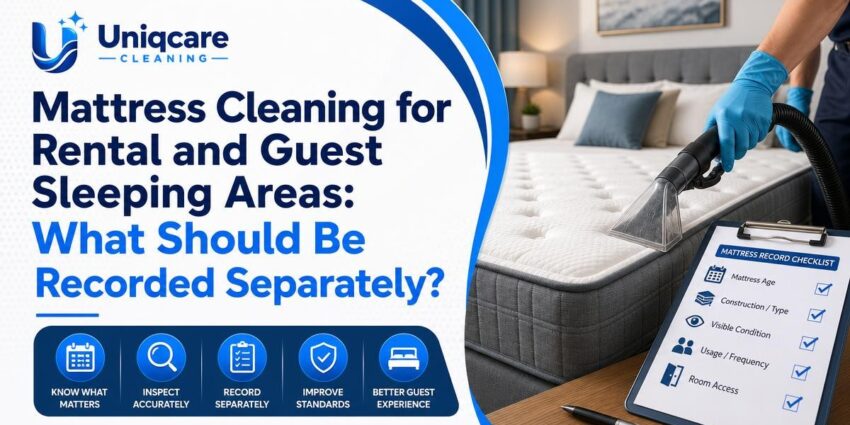
For landlords and accommodation operators, mattress cleaning should begin with accurate records rather than a single general request for every sleeping area. Mattresses may look similar while differing in age, construction, usage, visible marks and access conditions. Recording these details separately helps a cleaning provider understand what is being assessed, identify practical requirements and discuss suitable next steps without treating every mattress as identical.
Why separate records matter for mattress cleaning
A rental unit, guesthouse or serviced accommodation may contain several mattresses purchased at different times. One may be relatively new and lightly used, while another has been in a frequently occupied room for much longer. A mattress in a main bedroom may also differ from one in a children’s room, dormitory-style space or occasional guest room.
Combining all items into one description can hide these differences. For example, a request stating “clean six mattresses” does not explain which mattress has a visible drink mark, which one has a strong odour, which one has a removable cover or which one is located behind a narrow staircase. Separate records make the request clearer and create a more useful reference for inspection, quotation discussions and future maintenance.
The five categories to record for every mattress
Use one line or one form entry for each mattress. The aim is not to create a complicated inventory. It is to capture the information that can affect assessment, handling and the way the work is planned.
| Category | What to record | Why it matters |
|---|---|---|
| Mattress age | Approximate purchase date, installation date or whether the age is unknown | Provides useful background when comparing condition and usage |
| Construction | Known type, such as spring, foam, hybrid or another construction | Different materials may require different handling considerations |
| Visible condition | Marks, discolouration, tears, sagging, dampness, odour or other noticeable issues | Helps separate ordinary cleaning needs from items requiring closer assessment |
| Usage | Primary bedroom, occasional guest room, long-term rental, frequent turnover or other known pattern | Shows how the mattress is used and how often it is exposed to occupants |
| Room access | Floor level, lift or stairs, narrow corridors, bed-frame position and whether the room can be cleared | Helps identify access and preparation requirements before an appointment |
1. Record the mattress age separately
Age is often the first detail that gets lost in a multi-room cleaning request. Record the exact purchase date if it is available. If not, use an approximate year, the date the property was furnished or a simple note such as “age unknown.” Avoid guessing with false precision.
Age does not by itself determine whether a mattress is suitable for cleaning. It is background information that helps place the current condition in context. A newer mattress with a recent incident may need to be described differently from an older mattress with long-term wear. Keeping the age separate also helps a property owner maintain a replacement and maintenance record over time.
Useful age notes
- Approximate purchase year or date
- Whether the mattress was new or previously used when installed
- Whether it has been moved from another property or room
- Date of the last known professional mattress cleaning, if any
- Whether the age is unknown
2. Identify the construction and protective layers
Record the mattress type when it is known. Examples may include spring, foam, hybrid or another construction stated by the manufacturer. If the label is available, note the product information without removing it. If the construction is unknown, write “unknown” rather than assuming it from the mattress appearance.
Also record relevant protective layers. Note whether there is a removable mattress protector, fitted cover, topper or other item on top. These layers should be identified separately because they may need to be removed, cleaned or assessed independently. A topper can also conceal the condition of the mattress underneath, so it is useful to state whether the mattress itself has been viewed.
Details that are worth adding
- Mattress type, if known
- Approximate size and thickness, if relevant to handling
- Presence of a topper or mattress protector
- Whether the cover is removable
- Any care label or manufacturer instruction that is available
Do not assume that a household steam cleaner, detergent or wet-cleaning method is appropriate for every construction. A professional mattress cleaning service can review the recorded details and discuss the practical approach for the material and condition.
3. Describe visible condition without overstating it
Condition notes should be factual and specific. Instead of writing “very dirty,” describe what can actually be seen or noticed: a small mark near the edge, broad discolouration on one side, a torn seam, a damp area, a persistent odour or visible surface wear. Include the location of the issue, such as the centre, corner, side panel or underside.
Photographs can support the written record when the property’s privacy arrangements allow them. Take a wider image showing the mattress in the room and closer images of specific areas. Record when the photographs were taken. Images do not replace an in-person assessment, but they can help distinguish one mattress from another and reduce confusion when several items have similar covers.
Separate different types of condition
- Stains or marks: note the visible colour, approximate size and location. If the cause is known, record it as reported rather than presenting an uncertain cause as fact.
- Odour: state whether it is noticeable, where it is strongest and whether it appeared after a particular incident.
- Dampness: record whether the area is currently damp, was previously affected by moisture or has signs that require closer inspection.
- Physical damage: note tears, broken seams, exposed filling, sagging or damage to the cover.
- General wear: record flattening, discolouration or other changes without treating them as a guaranteed cleaning outcome.
Professional mattress cleaning may improve some surface conditions, but results can depend on the material, the age of the issue and the type of mark. A clear condition record supports a more realistic discussion before work begins.
4. Record how each mattress is used
Usage is more useful when it is recorded by room rather than assumed across the property. A mattress in a long-term rental bedroom may have a different usage history from one in an occasional guest room. A unit with frequent guest turnover may also need a different maintenance record from a private residence used by one household.
Record the room function and the broad usage pattern. There is no need to collect unnecessary personal information about occupants. The useful distinction is how the sleeping area is operated and whether the mattress is regularly occupied, rarely used or changed between guests.
| Sleeping area | Usage description | Additional record |
|---|---|---|
| Main rental bedroom | Regular long-term use | Record known incidents and last cleaning date |
| Guest bedroom | Occasional or seasonal use | Note whether the mattress is stored, covered or rarely occupied |
| Frequent-turnover accommodation | Regular changes of occupants | Record room identification and cleaning history separately |
| Children’s or family room | Use may vary by household | Describe visible issues without making assumptions about their cause |
Usage records are especially helpful when setting a recurring maintenance process. They can show which sleeping areas need inspection first and prevent the cleaning history of one room from being incorrectly applied to another.
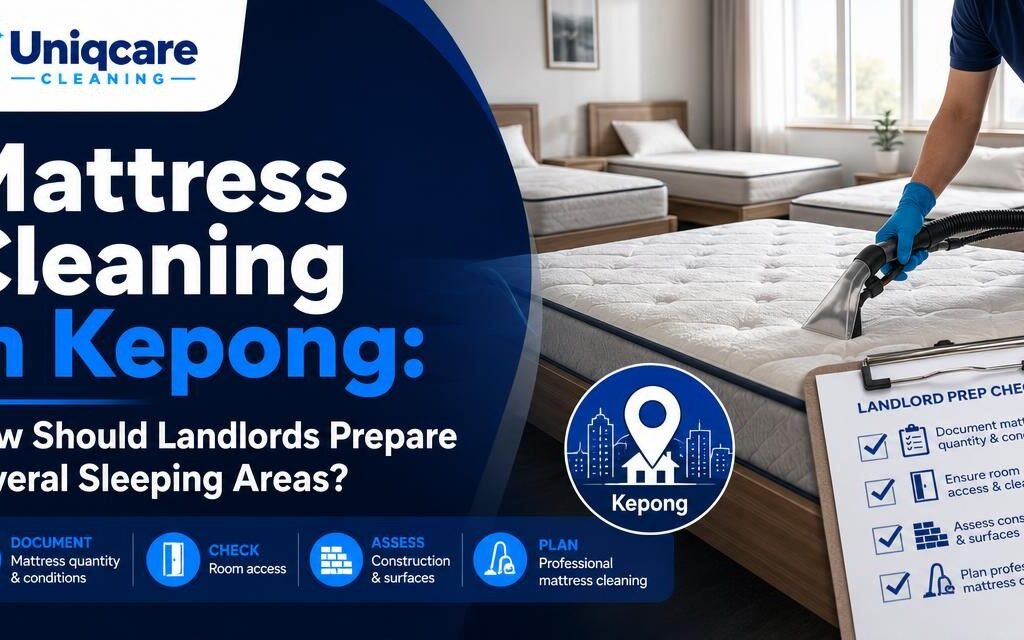
5. Describe room access before requesting an assessment
Room access is easy to overlook because the mattress may appear movable. In practice, the route to the room and the position of the bed can affect preparation. Record whether the property is on a particular floor, whether there is lift access, whether stairs or narrow corridors are involved and whether the bed frame leaves enough working space.
Also state whether the room can be cleared before the appointment. Note bedside furniture, stored items, heavy bed frames or other obstacles that may need to be moved by the property owner or discussed in advance. Do not promise that an item will be moved or that service will be possible until access has been reviewed.
Access checklist
- Property address and room name or number
- Floor level and lift availability
- Stairs, narrow passages or restricted entry points
- Bed frame type and whether the mattress can be reached
- Furniture or belongings that may limit working space
- Parking, building-entry or management requirements, where relevant
- Whether the room will be vacant during the assessment or cleaning visit
What should be photographed or attached?
A consistent photo set makes a multi-mattress request easier to review. Use the same sequence for each item so that records can be compared. Start with the room, then the full mattress, then the label or construction detail if available, followed by close-ups of visible issues.
- Photograph the room entrance or another identifying view.
- Photograph the full mattress and bed position.
- Photograph the mattress label, if accessible.
- Photograph each visible mark, damaged area or relevant condition.
- Record access limitations in writing.
Name the files using the room and mattress identifier rather than generic names such as “bed photo.” For example, a property manager could use “Room 2 mattress front” and “Room 2 mattress side mark.” Keep photographs and notes together with the cleaning date and any later assessment comments.
A simple mattress cleaning record template
The following fields can be copied into a spreadsheet or property maintenance form. One completed row should represent one mattress, not one entire property.
| Field | Example entry |
|---|---|
| Property and room | Guest room 2 |
| Mattress identifier | GR2-M1 |
| Age | Approximate purchase year or unknown |
| Construction | Foam, spring, hybrid or unknown |
| Top layers | Protector, topper, fitted cover or none recorded |
| Usage | Occasional guest use or regular rental use |
| Visible condition | Describe mark, odour, dampness, wear or damage and location |
| Last known cleaning | Date or not recorded |
| Room access | Floor, lift or stairs, working space and obstacles |
| Photos and notes | File names, occupant report or incident date |
How to compare mattresses before contacting a provider
Once each mattress has its own record, compare the entries by condition and access rather than by room count alone. Grouping can help you explain the request clearly, but the original individual records should remain intact.
- Similar construction: identify mattresses that appear to have comparable materials, while still recording each condition separately.
- Similar visible issues: group items with marks or odour concerns, but describe the location and severity for each one.
- Different usage: distinguish frequently occupied sleeping areas from occasional guest rooms.
- Different access: identify rooms where stairs, narrow routes or limited working space may affect planning.
- Uncertain information: mark unknown details clearly instead of filling gaps with assumptions.
This comparison helps a landlord or operator request an assessment that reflects the actual property. It also gives the cleaning provider a clearer starting point for discussing what can be reviewed, what preparation may be needed and whether different mattresses should be considered separately.
Preparing for a professional mattress cleaning service
Before arranging a professional mattress cleaning service, provide the property location, the number of mattresses, the completed details for each item and photographs where appropriate. Mention any known moisture issue, strong odour, physical damage or access restriction at the beginning of the enquiry.
Uniqcare Cleaning lists professional mattress cleaning among its deep-cleaning services for residential and commercial clients. The company serves Kuala Lumpur, Selangor, Putrajaya and Cyberjaya. A clear room-by-room record can help the team understand the request before discussing an assessment. Cleaning suitability and expected results may depend on the mattress material, condition and type of issue, so specific details are useful.
Common record-keeping mistakes to avoid
- Listing several mattresses under one room description when they have different conditions
- Using vague terms such as “bad stain” without a location or description
- Guessing the mattress construction or age
- Failing to mention a topper, protector or removable cover
- Ignoring stairs, lift restrictions or limited space around the bed
- Assuming that a previous cleaning result applies to every mattress
- Describing a suspected stain cause as confirmed fact
- Sending photographs without room identifiers
A separate record for every mattress takes little time and creates a much more reliable basis for assessment, scheduling and future maintenance. It also makes it easier to explain why two mattresses in the same property may require different attention.
FAQ about mattress cleaning records
Should every mattress in a rental property be recorded separately?
Yes. Each mattress should have its own record because age, construction, condition, usage and access may differ even when the mattresses are in the same property.
What if I do not know the mattress age or construction?
Mark the field as unknown and provide any available label, purchase information or photograph. Avoid guessing, since inaccurate details can make the assessment less useful.
Do I need to record the cause of every stain?
No. Record what is visible and where it appears. If an occupant has reported a possible cause, identify it as a report rather than a confirmed fact.
Should toppers and mattress protectors be listed separately?
They should at least be identified in the mattress record. Note whether they are removable and whether the condition of the mattress underneath has been checked.
Why is room access relevant to mattress cleaning?
Stairs, lifts, narrow corridors, bed frames and limited working space can affect preparation and handling. Sharing these details early helps the provider discuss practical requirements before the visit.
Can a cleaning record guarantee a particular result?
No. Cleaning results can depend on the mattress material, age, condition and type of mark or odour. A record supports a clearer assessment, but it does not guarantee complete removal of every issue.