

On-site sofa cleaning can be a practical option when large furniture is difficult to move, the upholstery needs professional attention, or an office needs its seating cleaned in place. Before arranging a sofa cleaning service, it helps to consider access, furniture size, available working space and the material and condition of the sofa. These details allow the cleaning company to understand the job more clearly and help you decide whether an on-site visit suits your home or workplace.
What on-site sofa cleaning means
On-site sofa cleaning means the cleaning is carried out at the property rather than requiring the sofa to be taken elsewhere. This can be useful for full-size sofas, sectional seating, armchairs and selected office furniture that may be awkward to carry through doorways, lifts, corridors or staircases. Uniqcare Cleaning describes on-site deep cleaning for fabric and leather sofas, as well as other upholstery such as selected chairs and office furniture.
The practical question is not simply whether a sofa can be cleaned on-site. It is whether the room, access route and furniture condition allow the work to be carried out appropriately. A short discussion before booking can clarify what type of sofa is involved, where it is located and whether the surrounding area is suitable.
When on-site sofa cleaning may be a sensible choice
Large or difficult-to-move furniture
Many sofas are designed to remain in place. A large three-seater, corner sofa or sectional may be too wide for a narrow doorway or too heavy to move safely without disturbing walls, flooring or other furniture. Even when a sofa can technically be moved, carrying it through a home or office may create unnecessary disruption.
On-site cleaning avoids making removal the central part of the arrangement. The cleaning team can assess the sofa where it is located and consider the accessible surfaces, the position of cushions and the space available around the frame. This is especially relevant when the sofa is built into a room layout or sits on an upper floor.
Furniture that is used every day
A sofa in a family living room, reception area or shared office can collect dust, food marks, body oils and general soil through regular use. Moving that furniture away for cleaning may not be convenient, particularly when it is part of the room’s daily function.
An on-site sofa cleaning appointment allows the furniture to be assessed at its normal location. You can also explain which areas receive the most use, such as seat cushions, armrests, headrests or the front edge of the sofa. This context helps the service provider understand the areas that matter most to you.
Offices and commercial spaces
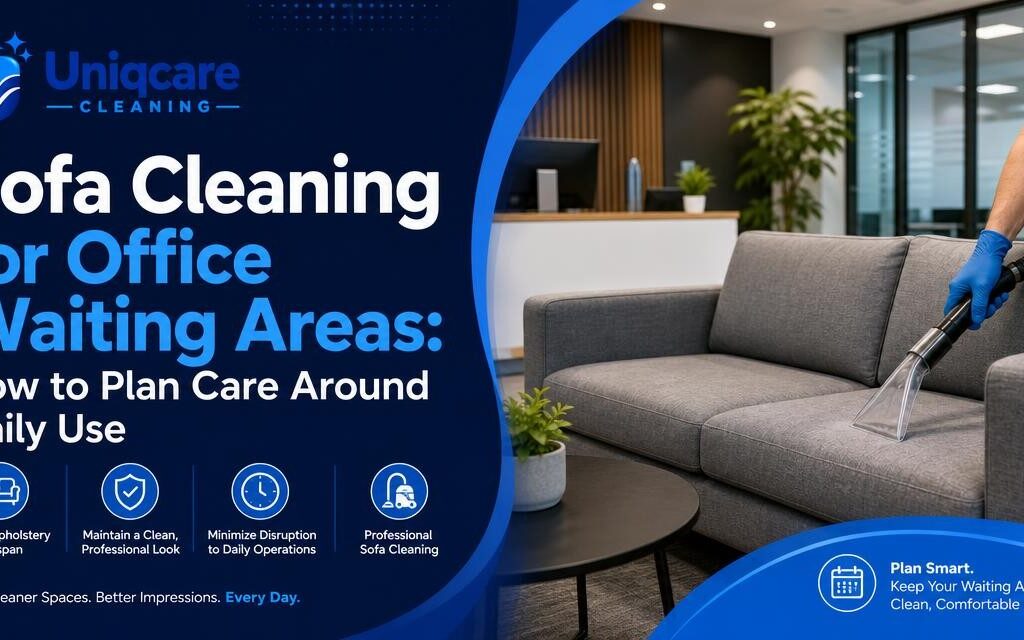
Office sofas, lounge chairs and reception seating may be difficult to remove because they form part of a shared workspace. Cleaning them in place may be worth considering when the furniture is too large to transport easily or when the business wants to avoid rearranging an entire reception or waiting area.
Before arranging service for an office, consider whether the room can be made available for the appointment. Staff may need to work elsewhere temporarily, and nearby items may need to be moved away from the seating. A clear plan is particularly useful when several sofas, chairs or upholstered items are being considered at the same time.
Four practical checks before booking
| Check | What to look at | Why it matters |
|---|---|---|
| Access | Doorways, corridors, lifts, stairs and parking or loading access | It helps the provider understand how equipment and staff can reach the sofa. |
| Furniture size | Length, depth, height, sections, recliners and fixed features | Oversized or complex furniture may require more planning around the working area. |
| Surrounding space | Clearance around the sofa, nearby tables, cabinets, curtains and electronics | A clear area makes it easier to work carefully around the upholstery. |
| Condition and material | Fabric or leather, stains, odours, wear, fading, moisture or previous treatment | Material and condition can affect the suitable cleaning approach and expected result. |
1. Check the access route
Access is relevant even when the sofa will remain in place. Cleaning equipment still needs to reach the room, and the provider may need to bring hoses, tools or other equipment through the property. Note whether the sofa is in a high-rise apartment, a room at the back of a shop, an upstairs office or a building with controlled access.
Useful information includes the building entrance, lift availability, stair access and any narrow passageways. In an office, also check whether security registration, loading-bay rules or building management approval applies. Sharing these details early can reduce uncertainty on the day of service.
2. Consider the furniture’s size and design
Describe the sofa as accurately as possible. A compact two-seater, a modular sectional and a recliner do not present the same practical requirements. Measurements can be helpful, especially for a sofa placed close to a wall, fitted cabinet or large window.
Also mention removable cushions, fixed backrests, adjustable sections, storage compartments and reclining mechanisms. These features may affect which surfaces are accessible. If you are unsure of the furniture type, photographs can help the cleaning company form a clearer initial view before confirming the appointment.
3. Look at the space around the sofa
On-site cleaning is easier to plan when there is enough room to work around the furniture. Look for coffee tables, floor lamps, toys, office equipment, decorative items and other objects that may be close to the sofa. You do not necessarily need to empty the entire room, but removing smaller items can make preparation simpler.
Protective planning may also be relevant for nearby flooring, walls and furnishings. Tell the provider about delicate objects, electrical equipment or surfaces that need particular care. If the sofa is positioned against a wall and cannot be moved, say so when making the enquiry rather than assuming all sides will be accessible.
4. Describe the upholstery and its condition
Upholstery should not be treated as one uniform material. Fabric and leather can have different care requirements, while older or heavily worn furniture may need a more careful assessment. Share the material if you know it, along with any manufacturer care label information available.
Explain what you want addressed: general soiling, food or drink marks, pet-related mess, odour, accumulated dust, visible discolouration or several concerns at once. It is also useful to mention previous cleaning attempts, strong household products or areas where the fabric is thinning. Cleaning results can depend on the material, the age of the mark and the overall condition of the upholstery, so no result should be assumed without an assessment.
Preparing a home for an on-site sofa cleaning appointment
Good preparation does not need to be complicated. Start by removing personal items from the sofa and clearing small objects from the immediate area. Put away remote controls, books, toys, cushions that are not part of the cleaning request and fragile decorations. If the sofa has removable cushions, ask whether they should be separated or left in place before the appointment.
Allow the cleaning team to see the upholstery clearly. Point out marks that are easy to miss, including stains on the sides, rear panels, armrests or beneath cushions. If the sofa is in a frequently used room, plan how people and pets will stay away from the work area while the service is being carried out and while the furniture is being assessed afterward.
- Clear the floor around the sofa where practical.
- Identify delicate objects and electrical items nearby.
- Keep care labels, purchase information or material details available if you have them.
- Tell the provider about previous cleaning products or treatments.
- Discuss access restrictions before the scheduled visit.
Preparing an office or commercial space
Office preparation usually involves more coordination than a home appointment. Decide which seating should be cleaned, identify the rooms involved and confirm when the area can be made available. Reception sofas, breakout seating and office chairs may be close to desks, computers, cables or display equipment, so the surrounding area should be reviewed in advance.
For a larger request, create a simple furniture list with the item type, location and material when known. This does not replace the provider’s assessment, but it helps prevent confusion. Inform staff about the appointment and decide whether the area should be temporarily closed while the upholstery is being cleaned. If the business operates in a managed building, confirm any access or booking requirements with the building manager.
What to ask a sofa cleaning service
A clear enquiry is more useful than a short request that only says the sofa needs cleaning. The provider needs enough information to judge whether the job is suitable for an on-site visit and what may be involved. You can ask:
- Is on-site cleaning available for this type of sofa or upholstery?
- Should I provide measurements or photographs before the appointment?
- Does the material require any special information or care instructions?
- How should the room be prepared before the team arrives?
- Are there access details, parking arrangements or building rules to mention?
- What limitations may apply to older stains, odours, worn fabric or colour changes?
- Are selected office chairs or other upholstered items suitable for the same service?
These questions help set realistic expectations. A professional sofa cleaning service should be able to discuss the furniture’s material and condition without promising that every stain, odour or mark will disappear. The final suitability and cleaning approach depend on the specific upholstery presented at the property.
On-site cleaning versus moving the sofa elsewhere
For many households and workplaces, the main advantage of on-site service is reduced handling of bulky furniture. There is no need to begin by finding a suitable way to remove a large sofa from the room. The decision can also be practical when the upholstery forms part of a fixed office or reception layout.
On-site service is not automatically suitable for every situation. A severely damaged item, furniture with unusual construction, very limited surrounding space or restricted building access may require additional discussion. Likewise, a sofa with delicate, worn or uncertain material should be described honestly before booking. The goal is to choose a realistic cleaning arrangement, not simply the most convenient-sounding option.
Why condition and expectations matter
Professional cleaning can address accumulated soil and visible marks, but upholstery has limits. Some stains may have altered the original colour, affected the fibres or remained in the material for a long time. Wear, fading, scratches, fabric thinning and damage may not be cleaning problems at all.
For this reason, ask for an assessment rather than a blanket promise. Tell the provider what outcome matters most, whether that is improving general appearance, refreshing frequently used seating or addressing particular visible areas. Clear communication gives the cleaning team a better basis for explaining what may be practical.
Is on-site sofa cleaning right for your property?
On-site sofa cleaning may be practical when the furniture is large, difficult to transport or used in a home, office or commercial area where removal would cause disruption. It is worth considering when there is a workable access route, sufficient space around the sofa and a clear understanding of the upholstery material and condition.
Uniqcare Cleaning provides professional deep-cleaning services for residential and commercial clients, including sofa and upholstery cleaning. The company serves Kuala Lumpur, Selangor, Putrajaya and Cyberjaya, and describes on-site cleaning for selected sofa and upholstery services. When contacting a sofa cleaning service, provide the furniture type, material, size, location and main concerns so the suitability of an on-site visit can be discussed clearly.
Frequently asked questions
What is on-site sofa cleaning?
It is a sofa cleaning service carried out at your home, office or commercial property rather than requiring the furniture to be taken elsewhere. Suitability depends on the upholstery, access and available working space.
Can large sectional sofas be cleaned on-site?
They may be suitable for on-site cleaning, but the provider should know the sofa’s size, layout and access conditions in advance. Sectional pieces, fixed features and limited clearance may affect planning.
Is on-site cleaning suitable for leather sofas?
Uniqcare Cleaning describes on-site deep cleaning for fabric and leather sofas. Provide the leather type if known and mention its age, wear, scratches or previous treatments so the service can be discussed appropriately.
Do I need to move all furniture from the room?
Not necessarily. Removing small items and clearing the area immediately around the sofa is usually useful, while larger furniture should be discussed with the provider. Mention anything that cannot be moved.
Can office sofas and chairs be cleaned on-site?
Selected office furniture and chairs are included in the company’s described upholstery cleaning service. Confirm the number, materials and location of the items before arranging an appointment.
Will every stain or odour be completely removed?
No result should be guaranteed without assessing the upholstery. Outcomes can depend on the material, stain type, age, previous treatments and general condition of the sofa.