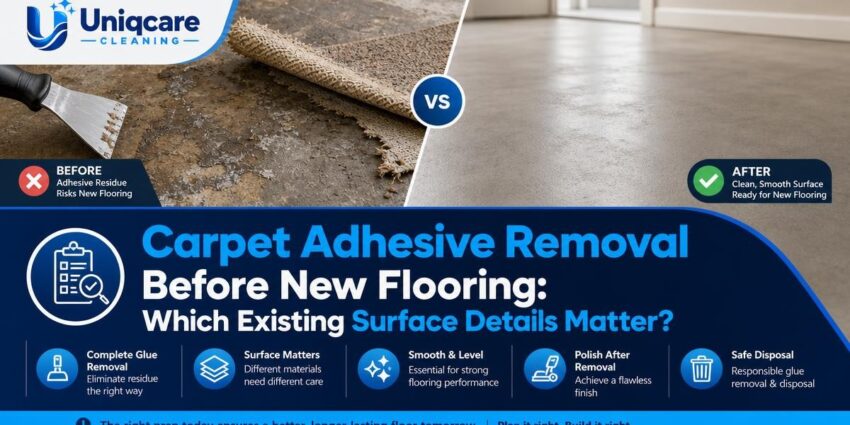
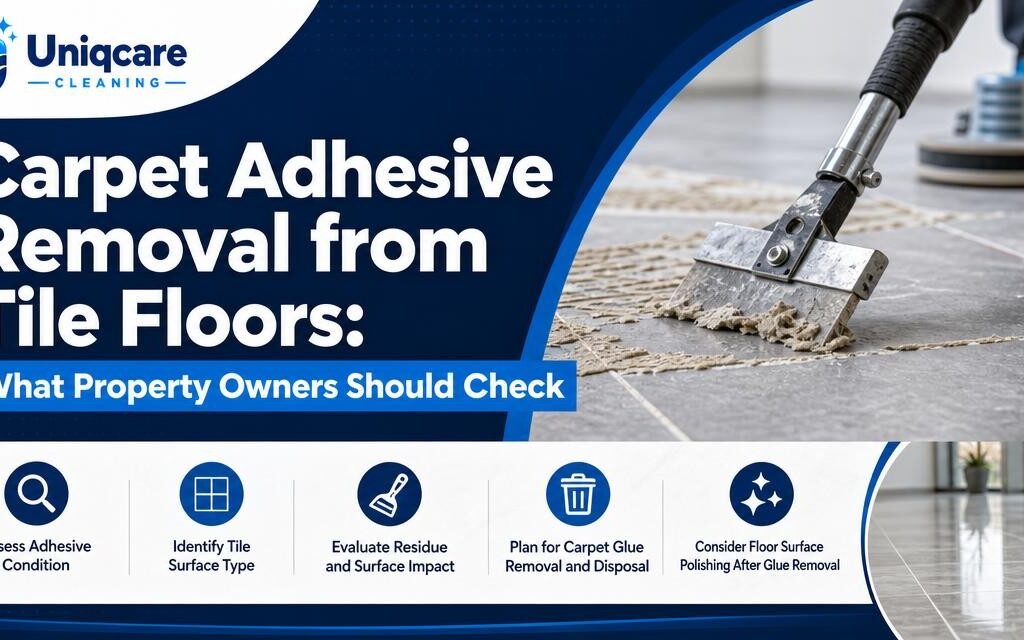
Carpet adhesive removal is an important preparation stage when a property owner plans to replace old carpet with new flooring. The condition of the glue, the material underneath and the remaining residue can all affect what needs to happen before the next floor is installed. Gathering these details early helps create a clearer work plan and shows whether floor surface polishing after glue removal may also be appropriate.
Why existing surface details matter before new flooring
Removing carpet is not always the same as preparing a floor for its next finish. Once the carpet and backing have been lifted, adhesive may remain in patches, strips, thin films or thicker bonded areas. The exposed base may also show marks, unevenness or previous repairs that were hidden while the carpet was in place.
These conditions matter because the next flooring stage usually requires a suitable, reasonably clean and stable surface. The person planning the work should therefore look beyond the visible carpet and record what is underneath it. A useful assessment can help distinguish between adhesive removal, residue cleaning, surface treatment and separate repair work.
The main details to gather before carpet adhesive removal
Before arranging a carpet glue removal service, collect as much information as possible about the room and the floor. Photographs taken after a small section of carpet has been lifted can be useful, especially when the entire area is not yet accessible.
| Detail to check | Why it matters | Useful information to record |
|---|---|---|
| Existing floor material | Different surfaces may require different handling and inspection. | Concrete, tile, terrazzo, wood, vinyl, laminate, epoxy, marble or another material |
| Adhesive condition | Glue may be soft, brittle, thick, thin, patchy or firmly bonded. | Colour, thickness, coverage and whether it lifts easily |
| Residue pattern | Patchy residue and full-spread adhesive create different preparation needs. | Strips, dots, trowel lines, broad areas or isolated spots |
| Surface condition | Damage or existing wear may remain after the adhesive is removed. | Cracks, scratches, stains, uneven areas, loose pieces or old repairs |
| Next flooring plan | The intended replacement affects how much preparation may be needed. | New carpet, hard flooring, tiles or another finish |
| Access and disposal needs | Removed carpet and adhesive debris need to be cleared from the work area. | Room size, access route, furniture and disposal arrangements |
Identify the floor material underneath
Start by identifying the existing base as accurately as possible. It may be concrete, tile, terrazzo, hardwood, vinyl, laminate, epoxy, marble or another flooring type. If the material is uncertain, describe what is visible and provide photographs rather than guessing.
The material is relevant because adhesive removal should be planned around the surface that must remain underneath. A hard mineral surface may present differently from a resilient floor covering or a timber-based surface. The age of the floor, previous coatings and visible wear can also affect the assessment.
Describe how the adhesive is attached
Adhesive can remain in several forms. It may appear as narrow lines from a previous application, isolated patches, a broad film or thick ridges. Some residue may be loose at the edges while other sections remain strongly bonded. The colour and texture can also vary across the same room.
When documenting the area, note whether the glue is dry, tacky, brittle, rubbery or difficult to lift. Avoid assuming that a small exposed patch represents the whole room. Carpet installations may have been repaired or replaced in sections, leaving different adhesive conditions in one space.
How adhesive condition affects the preparation plan
The amount and condition of glue help determine the work involved, but visual appearance alone does not provide a complete assessment. A thin-looking residue may still be spread across a large area, while thicker patches may be limited to carpet edges or high-traffic sections.
It is also useful to consider how long the adhesive has been in place and whether the room has experienced moisture, renovation work or repeated flooring changes. These details do not by themselves determine the result, but they provide context when the existing surface is inspected.
Loose residue versus firmly bonded adhesive
Loose residue may be visible around lifted carpet sections and can sometimes be removed more readily than adhesive that remains tightly attached. Firmly bonded glue may require more controlled attention to avoid unnecessary disturbance of the surface below.
Property owners should not judge readiness only by whether the carpet has been removed. A floor can look mostly clear while still carrying a continuous adhesive film or small areas that could affect the next flooring stage. A close inspection after removal is therefore worthwhile.
Old carpet backing and mixed residue
Carpet removal may leave more than glue. Pieces of backing, fibre, dust and general debris can remain attached to the floor. In some rooms, the residue from the carpet backing may look similar to adhesive, making it difficult to identify the actual condition without a careful review.
Record whether the remaining material is concentrated around seams, along the perimeter or across the full floor. This information can help separate ordinary cleaning from more involved carpet glue removal and disposal work.
What to inspect on the exposed floor
Once the carpet has been lifted, inspect the floor in sections rather than relying on one central area. Look for changes in colour, texture and level. A bright light held at a low angle can make raised residue and surface irregularities easier to see, although it does not replace an on-site assessment.
- Check whether the surface is hard, resilient, timber-based or covered with an existing finish.
- Look for cracks, chips, scratches, dents, loose pieces or visible repairs.
- Note any areas that appear damp, discoloured or affected by previous water exposure.
- Identify whether adhesive is concentrated at joins, edges, transitions or throughout the room.
- Photograph the floor before further work begins.
- Keep separate notes for different rooms because adhesive conditions may not match.
Existing damage is especially important to record. Carpet may have concealed marks or defects for a long time, and removing the adhesive will not necessarily correct them. If the property owner expects a finished hard floor, the removal plan and any repair or levelling work should be considered as separate stages unless the service provider confirms that both are included.
When might floor surface polishing after glue removal be relevant?
Floor surface polishing after glue removal may be considered when the exposed flooring is a suitable hard surface and the owner wants to improve its appearance after the adhesive has been removed. Uniqcare Cleaning lists optional floor surface polishing with its carpet glue removal service, but the suitability of that follow-up depends on the floor material and its condition.
Polishing should not be treated as a substitute for adhesive removal or structural repair. It may be a separate finishing step after the residue has been addressed. Scratches, cracks, missing pieces, deep stains or uneven areas may require a different form of work, and some surfaces may not be suitable for polishing in the same way as others.
Questions to ask about polishing
- What is the existing floor material?
- Is the visible problem adhesive residue, surface wear or damage beneath the adhesive?
- Will polishing be assessed after the glue has been removed?
- Are there areas that need repair or levelling before a finish can be considered?
- Will the owner receive a separate recommendation for the next flooring stage?
These questions help keep expectations realistic. A clean exposed surface may still show age, colour variation or marks that were present before the carpet was installed. The final appearance depends on the material, its history and the condition revealed during removal.
Preparing for the next flooring stage
The intended replacement flooring should be discussed before work begins, even when the final product has not yet been selected. A property owner may plan to install new carpet, tiles, vinyl, laminate, timber or another finish. Each option may have its own requirements for surface cleanliness, flatness and moisture condition.
For this reason, carpet adhesive removal should be planned as part of the wider flooring project rather than as an isolated cleaning task. The removal team can focus on the existing residue, while the flooring installer can explain any additional preparation required for the new material.
- The approximate room dimensions and number of areas involved.
- Photographs showing the exposed floor and remaining adhesive.
- The known or suspected floor material.
- Whether the carpet has already been lifted or still needs removal.
- Whether old carpet, underlay and related debris need disposal.
- The planned replacement flooring, if known.
- Any concerns about access, furniture, moisture or previous renovation work.
Clear information does not guarantee that the final scope can be confirmed without inspection, but it gives the service provider a better starting point. It can also reduce confusion when several rooms have different surfaces or adhesive patterns.
Carpet removal, adhesive removal and disposal are separate considerations
Old carpet disposal should be discussed alongside adhesive removal. Removing the glue from the floor does not automatically explain how the carpet, underlay and loose debris will be handled. If the property owner wants the old materials taken away, this should be stated when requesting the service.
The room may also need to be cleared before work starts. Furniture, fixtures and stored items can limit access and make it harder to inspect the full floor. For offices and commercial premises, it may be useful to plan the work around room availability and other renovation activities.
Uniqcare Cleaning provides carpet glue removal and disposal as a listed service for homes and commercial spaces. The company also provides floor cleaning and related deep-cleaning services. Customers in Kuala Lumpur, Selangor, Putrajaya and Cyberjaya can provide the property details and ask what preparation is appropriate for the exposed surface.
Common planning mistakes to avoid
Assuming every adhesive can be handled in the same way
Adhesive type, age, thickness and coverage can vary between rooms and properties. Avoid planning the entire job from a single small patch or from a photograph that does not show the surrounding floor.
Focusing only on visible glue
Thin films, backing residue and adhesive around room edges can be easy to overlook. Inspect transitions, corners, seams and areas beneath furniture as far as access allows.
Expecting polishing to hide all surface defects
Polishing may be an option for some exposed floors, but it is not a universal answer for damage, unevenness or deep marks. Ask for the surface to be assessed after removal.
Leaving disposal until the end
Old carpet and underlay can occupy considerable space during a renovation. Confirm whether disposal is required and whether the service scope includes the materials that have been removed.
Scheduling new flooring before the base is assessed
A flooring installer may need a clear and suitable surface before beginning. Allow time for adhesive removal, inspection and any additional preparation identified during the process.
A practical checklist for property owners
Use this checklist before requesting carpet adhesive removal:
- Have I identified or photographed the existing floor material?
- Has the carpet and underlay been removed, or does that still need to be arranged?
- Where is the adhesive located: edges, strips, patches or the whole room?
- Is the residue thin, thick, brittle, soft or firmly attached?
- Are there visible cracks, scratches, stains, damp areas or uneven sections?
- Do I need old carpet disposal as part of the service?
- What flooring is planned next?
- Should floor surface polishing after glue removal be considered?
- Is the room accessible, and have movable items been cleared?
- Have I asked what is included in the proposed scope?
Having these answers ready makes the conversation more specific. It also helps the property owner compare the removal stage with the requirements of the next flooring contractor.
Planning carpet adhesive removal with Uniqcare Cleaning
Uniqcare Cleaning offers carpet glue removal and disposal for residential and commercial customers, with optional floor surface polishing described as part of the service. The right approach depends on the existing floor, adhesive condition and the result the property owner wants after the carpet is gone.
When contacting the company, share photographs, the property type, the approximate area and any information about the intended new flooring. Uniqcare Cleaning serves Kuala Lumpur, Selangor, Putrajaya and Cyberjaya. A clear description of the site can help establish which details need to be reviewed before the work is planned.
Frequently asked questions
What does carpet adhesive removal involve?
It involves addressing adhesive and related residue left on the floor after carpet removal. The work scope depends on the adhesive condition, the existing surface and the amount of residue present.
Should I remove the carpet before booking the service?
Not necessarily. Tell the provider whether the carpet and underlay are still in place so the required removal and disposal arrangements can be discussed.
Which floor surfaces can be assessed for carpet glue removal?
Uniqcare Cleaning describes its service as covering various flooring surfaces. Share the known material, such as concrete, tile, terrazzo, vinyl, laminate, hardwood, epoxy or marble, so the surface can be considered properly.
Is floor surface polishing after glue removal always needed?
No. Polishing is an optional follow-up that may be suitable for some hard floor surfaces. The need depends on the material, its condition and the appearance the property owner wants.
Can adhesive removal repair cracks or damaged flooring?
Adhesive removal addresses residue rather than automatically repairing every defect underneath. Cracks, chips, deep scratches and uneven areas should be identified separately and discussed with the relevant flooring professional.
Why should I tell the provider about the next flooring material?
The next flooring stage may have its own requirements for cleanliness and surface preparation. Sharing the plan helps coordinate adhesive removal with the later installation work.
Where does Uniqcare Cleaning provide carpet glue removal?
Uniqcare Cleaning lists Kuala Lumpur, Selangor, Putrajaya and Cyberjaya among its service regions. Customers can provide their property details when asking about carpet adhesive removal and disposal.