
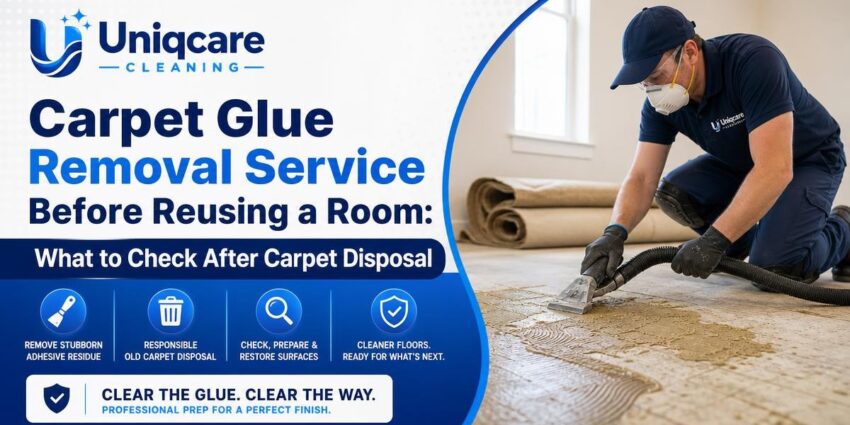
Removing an old carpet can make a room look ready for its next use, but the work is not always finished when the carpet is carried away. Adhesive may remain on the floor, sections of the flooring may be exposed or marked, and loose materials may still need to be cleared. A carpet glue removal service can help with this transition by addressing the remaining adhesive, carpet disposal and possible follow-up surface work before furniture, equipment or a new floor covering is installed.
Why checking the room after carpet disposal matters
Old carpet is often installed over a larger area than is obvious at first glance. Once it is removed, the floor may reveal glue lines, patches of adhesive, underlay fragments, tack-strip marks or areas with different colours and textures. These conditions can affect how the room looks and whether a replacement carpet, rug or another floor finish can be placed properly.
A post-removal check also clarifies what should happen next. Some rooms may only need loose debris and adhesive remnants removed. Others may need additional floor cleaning or surface polishing. The right scope depends on the exposed flooring, the adhesive condition and the intended use of the room.
| Area to check | What to look for | Why it matters |
|---|---|---|
| Adhesive residue | Sticky patches, hardened glue, ridges or thin films | Residue can affect the appearance and preparation of the floor |
| Exposed flooring | Scratches, discolouration, marks or uneven sections | The floor may need cleaning, polishing or another follow-up assessment |
| Carpet remnants | Underlay, fibres, backing and small loose pieces | Leftover material can interfere with cleaning or new installation |
| Edges and access points | Doorways, corners, skirting edges and narrow routes | These areas can be missed during a quick removal |
| Disposal status | Whether removed carpet and waste have been collected | The room is not fully cleared if discarded materials remain on site |
What should be checked on the exposed floor?
1. The amount and condition of remaining adhesive
Adhesive does not always remain in one consistent layer. It may appear as broad patches, narrow strips, isolated spots or a thin coating across much of the room. Some areas may feel tacky, while older glue may have hardened and become difficult to identify from a normal standing position.
Check the entire exposed area rather than only the centre of the room. Pay attention to corners, seams, thresholds and places where the carpet was firmly attached. A proper assessment should identify whether the residue is light and scattered or extensive enough to require dedicated carpet adhesive removal.
2. The type and condition of the underlying floor
Carpet may be removed from different flooring surfaces, including hard floors and other finished substrates. The same adhesive-removal approach may not be suitable for every material. Before work begins, the surface should be identified as far as possible so the cleaning or removal method can be considered with the floor’s condition in mind.
Look for scratches, worn areas, colour variation, moisture-related changes or marks that were hidden by the carpet. These may not be caused by the removal itself; they may simply have been concealed for years. Recording the condition with photographs can help separate pre-existing marks from work completed during the removal process.
3. The edges, corners and transition areas
Adhesive and carpet backing can remain near skirting boards, door frames, built-in cabinets and floor transitions. These locations are easy to overlook because they are narrow or partly concealed. They are also noticeable when a room is reused without a new carpet covering them.
Doorways deserve particular attention. A strip of old adhesive at a threshold can collect dirt, affect movement across the floor or remain visible after the main room has been cleared. Ask for these boundary areas to be included in the inspection rather than assuming that work in the open floor area covers them.
Old carpet disposal: what does “cleared” mean?
Old carpet disposal should be discussed as part of the overall job, not treated as an afterthought. A room can appear cleaner while still containing rolled carpet, backing, underlay, loose fibres or adhesive-contaminated pieces in a corner, hallway or loading area.
Before booking, clarify what materials are included in the disposal scope. The arrangement may depend on the carpet quantity, access to the property and the nature of the removed materials. It is also useful to confirm whether disposal is intended to happen during the same visit or whether collection is handled separately.
- Identify all carpet, underlay and loose backing that should leave the property.
- Confirm whether small adhesive-covered remnants are included in the planned clearance.
- Explain where the waste is located, especially if it is on an upper floor or in a restricted area.
- Check whether parking, loading access or building management procedures may affect removal.
- Keep any materials that are not part of the disposal request separate and clearly identified.
For offices, retail units and other commercial spaces, access can be more complicated than in a private home. Lift restrictions, delivery windows, security procedures and furniture may affect how removed carpet is taken out. Providing these details early helps the service provider assess the job more accurately.
Access information to provide before a carpet glue removal service
Access affects both the inspection and the practical handling of removed carpet. A narrow staircase, occupied room, locked gate or limited parking area can change how equipment and waste move through the property. These details should be shared before the appointment rather than discovered when work is about to start.
| Information | Examples of useful details |
|---|---|
| Property type | Home, office, shop, commercial unit or other premises |
| Room location | Ground floor, upper floor, basement or separate building |
| Entry route | Stairs, lift, corridor, gate, loading bay or shared entrance |
| Room condition | Empty, partly furnished, occupied or awaiting renovation |
| Building rules | Booking requirements, access hours or waste-movement procedures |
| Floor information | Visible surface type and areas where adhesive appears to remain |
Clear access does not mean every item must be removed by the customer. It means the provider should understand what is in the room and what route is available. If furniture, shelving or office equipment remains, mention it so the scope can be discussed properly.
Should the floor be polished after glue removal?
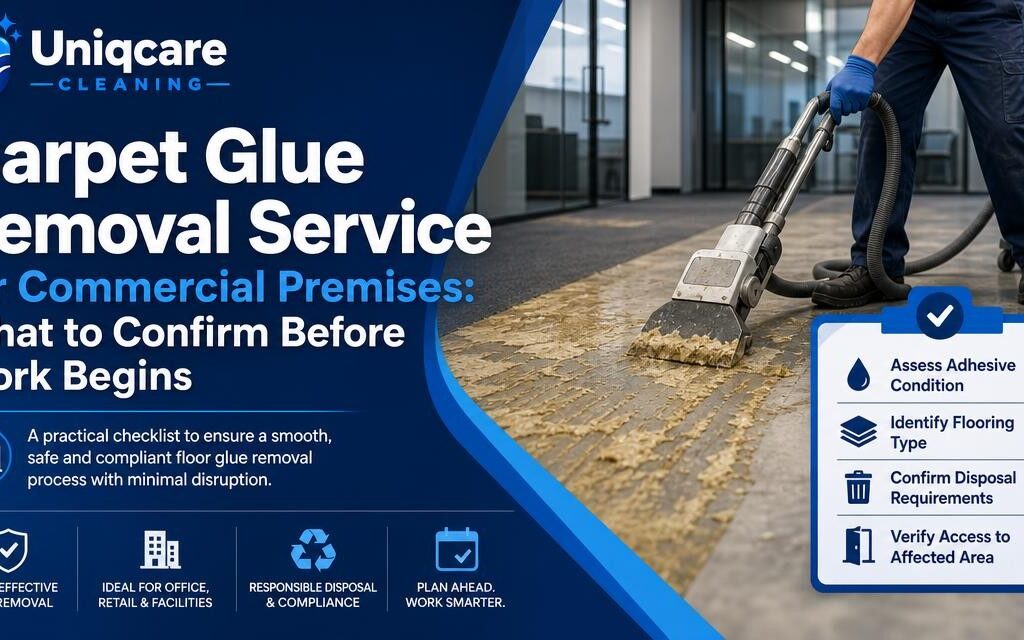
Not every room needs polishing after adhesive has been removed. The decision depends on the flooring material, its existing finish and the appearance desired after the carpet is gone. A floor may need only adhesive removal and cleaning, while another surface may benefit from additional floor surface polishing after glue removal.
Polishing should be treated as a separate follow-up consideration rather than an automatic result of carpet disposal. If the exposed floor has dull areas, visible marks or uneven appearance, ask whether a suitable floor-cleaning or polishing service can be considered. The proposed work should match the floor type and its condition.
Questions to ask about follow-up surface work
- Is the exposed floor suitable for cleaning, polishing or another treatment?
- Will the requested work cover the full room or only selected sections?
- Could colour variation remain because parts of the floor were covered for a long time?
- Does the room need to remain clear for another contractor or flooring installer?
- Are there areas that require separate repair rather than cleaning?
Cleaning and adhesive removal cannot automatically correct damage, wear or defects in the underlying floor. If the inspection reveals broken tiles, damaged boards, deep scratches or other structural issues, those matters may require a different type of floor work.
Preparing a room for reuse after carpet removal
The intended use of the room helps determine the final checks. A bedroom, meeting room, retail space and storage area may have different requirements for cleanliness, appearance and access. Consider what will be placed on the floor next and whether the surface must remain exposed for inspection.
- Remove or identify movable items. Separate furniture and belongings that should stay from items that need to be relocated.
- Inspect the full floor. Check the centre, perimeter, thresholds and concealed edges for adhesive and loose material.
- Confirm the disposal scope. Make sure old carpet, underlay and agreed remnants are included in the clearance plan.
- Discuss surface work. Decide whether cleaning alone is sufficient or whether polishing or another service should be considered.
- Plan the next trade or installation. Coordinate access with flooring installers, painters, movers or building management where relevant.
- Review the completed area. Walk through the room and note any remaining residue or materials that need clarification.
It is usually easier to address questions while the room is empty. Once new flooring, furniture or equipment is installed, reaching a missed adhesive patch or leftover carpet fragment can become more difficult.
When professional help is worth considering
A professional carpet glue removal service may be useful when adhesive covers a large area, the residue is hardened, the floor material needs careful handling or the removed carpet must also be cleared from the premises. It can also make sense when the room must be prepared for a planned renovation or commercial changeover.
Uniqcare Cleaning provides carpet glue removal and disposal services, including removal of carpet adhesive from various flooring surfaces, carpet disposal and optional floor surface polishing as described in its service information. The company serves residential and commercial clients in Kuala Lumpur, Selangor, Putrajaya and Cyberjaya. When requesting an assessment, provide photographs, room dimensions if available, the type of property and details about access.
What to include in your service enquiry
- The property location and type.
- The approximate room size and number of rooms involved.
- Whether the carpet has already been removed or still needs to be taken up.
- Photos showing adhesive, underlay, floor edges and access routes.
- Whether old carpet disposal is required.
- Whether you want the exposed floor assessed for cleaning or polishing.
- Your preferred timing and any building access restrictions.
A detailed enquiry helps distinguish between carpet removal, adhesive removal, disposal and follow-up floor cleaning. Those tasks may be related, but they are not always identical in scope. Confirming them in advance gives you a clearer understanding of what the room should look like when the agreed work is complete.
Frequently asked questions
What is included in a carpet glue removal service?
The scope can include removing carpet adhesive from the exposed flooring. Depending on the service arrangement, carpet disposal and optional floor surface polishing may also be discussed. Confirm the exact inclusions before booking.
Can glue be removed from every type of floor?
Adhesive may be found on various flooring surfaces, but the suitable approach depends on the material, finish and condition. An assessment is useful before work begins.
Do I need to remove the old carpet before booking?
Not necessarily. Explain whether the carpet is already removed or still in place. The required work may differ when carpet lifting, adhesive removal and disposal are all needed.
Does old carpet disposal include the underlay?
It should be confirmed as part of the disposal scope. Tell the provider about underlay, backing, loose remnants and any adhesive-covered waste that should be taken away.
Will the floor look new after glue removal?
Not always. Adhesive removal addresses the remaining glue, but marks, wear, colour variation or damage in the underlying floor may remain. Cleaning or optional polishing can be discussed separately.
What access details should I provide?
Share the property type, room location, stairs or lift access, parking or loading information, building rules and whether furniture remains in the room. These details help with planning the visit.